The most glamorous room ever fitted to an airliner — spiral staircase, swivel armchairs, a bar — started life as nowhere for passengers at all. The Boeing 747's famous upper deck exists because of freight, fuel economics and a supersonic future that never arrived.
When chief engineer Joe Sutter's team shaped the 747 in 1965, Boeing and Pan Am chairman Juan Trippe both assumed supersonic jets would eventually take over the lucrative long-haul passenger routes. So the jumbo was designed with a second career in mind: hauling cargo. The fuselage was sized around two 8-by-8-foot shipping containers side by side, and Boeing wanted a nose-loading door so pallets up to 40 feet long could roll straight in. The problem? The cockpit sat exactly where that door needed to be.
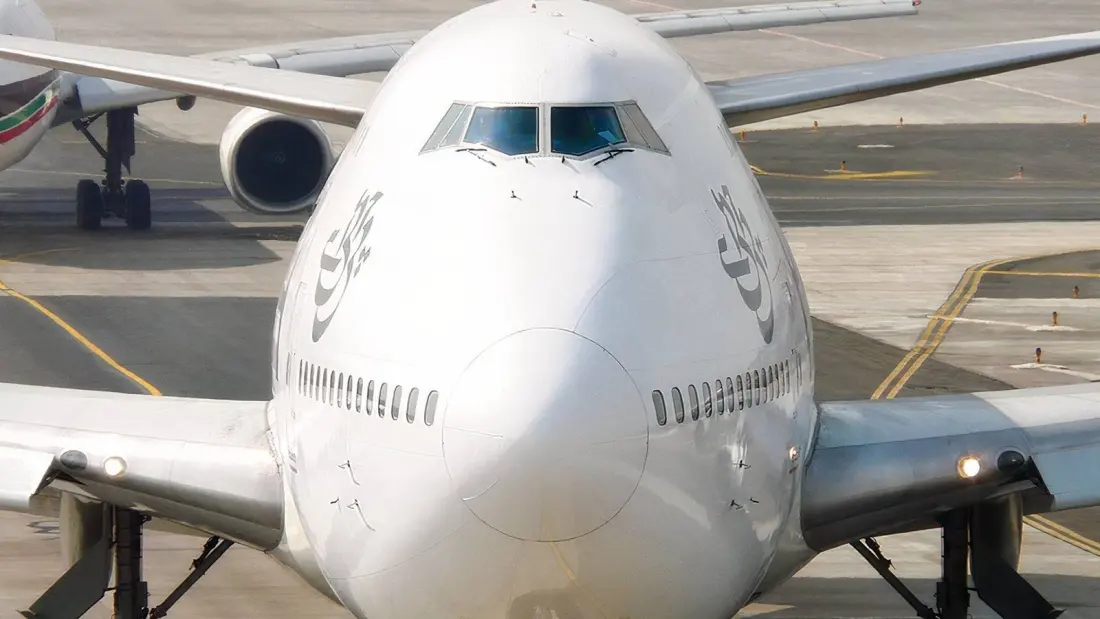
The fix was to lift the flight deck above the main deck, freeing the nose to hinge upward on freighter versions. That raised cockpit left a stubby pocket of fuselage behind it — and the hump was born. Boeing's earliest plan for the space was purely practical: a rest area for flight crews. A full double-decker was studied and rejected in 1965 because the extra weight wasn't worth it, and even the hump's teardrop shape came from drag reduction, not styling.
Then the airlines got creative. In the early 1970s, Pan Am turned its upper deck into a restaurant in the sky, United ran a cocktail lounge, Qantas opened the Captain Cook Lounge and American Airlines installed a piano bar. First-class passengers climbed the staircase into something deliberately styled like an exclusive club at 35,000 feet.
The party didn't last. The 1973 fuel crisis made every spare seat count, and operators stripped out the lounges in favour of revenue passengers. British Airways even branded the space a "first-class lunge" — a typo that stuck. But the space kept growing: the 747-300's stretched upper deck seated up to 70 people, and when the 747-8 Intercontinental entered service with Lufthansa in June 2012, it had the longest passenger upper deck Boeing ever built, with room for ten extra business-class seats.
The cargo logic, meanwhile, outlived everything. Boeing's supersonic bet failed — Concorde stayed a niche premium product — yet the 747 freighter thrived for five decades. Lufthansa launched 747-200F nose-loading service back in April 1972, and the very last 747 delivered, on January 31, 2023, was a 747-8F handed to Atlas Air: the 1,574th jumbo built. Of just 155 orders for the 747-8, most were freighters.
For travellers, it's a neat reminder that aviation's most beloved quirks often come from hard-nosed engineering. If you want to recapture a taste of the original hump experience, Lufthansa's 747-8 upper-deck business cabin remains the closest thing flying today to that private-club feel — minus the piano.