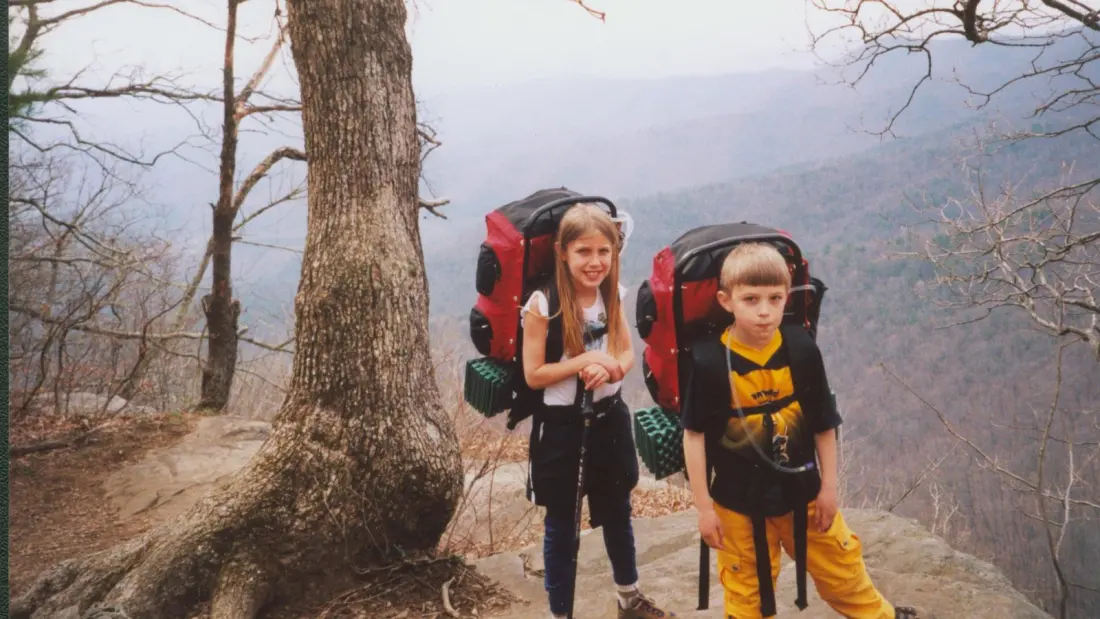
In 2002, the Witcher family of Daleville, Virginia, did something almost nobody was doing: they thru-hiked the entire 2,200-mile Appalachian Trail with kids in tow. Taylor was 11, her brother Bennett just 8. Two decades later, the trek still runs through the whole family's life — three generations now volunteer together maintaining the trail, and the family has collectively logged tens of thousands of hours of trail work.
Homer and Therese Witcher discovered the AT by accident in the early 1980s, on a walk in Shenandoah National Park, and joined the Roanoke Appalachian Trail Club soon after. By the time their kids came along, weekends meant section hikes, shelter painting and shuttling hikers. When Therese proposed a full thru-hike after Taylor turned 8, the groundwork was already laid: both children were seasoned campers, used to double-digit-mile days.
The logistics were the hard part. Homer, then 60, took early retirement at his wife's urging; Therese took a leave from her job as a medical technologist. The kids' school arranged standardized tests in advance and approved a homeschool curriculum for the trail. Crucially, the parents gave the children a genuine exit clause — if anyone stopped having fun, they'd go home, with adult guardians lined up just in case. Nobody bailed.
The hike itself moved at a forgiving 12 to 13 miles a day, with days off earned in advance through big-mile pushes. Strangers kept attaching themselves to what became known as the "Witcher Wagon" — at one point the group hit 16 hikers, including a man with shin splints who walked more than 500 miles with them, playing games with the kids and even babysitting their imaginary twins. Hard days happened too: Therese hit a wall of doubt on a rainy Tennessee climb, and Bennett flatly refused to leave the car after a zero day near Shenandoah. Both passed, helped along by the kids themselves and by the makeshift trail family they'd collected.
Why does any of this matter to a traveller? Because it's a genuinely useful template. Families routinely write off long treks as impossible with children, but the Witchers show the formula: gradual build-up, real buy-in from the kids, flexible pacing, and a willingness to let children help plan. And for solo hikers, it's a reminder that the trail's social pull — sharing miles, splitting shuttles, gathering friends in trail towns like Damascus — is a huge part of what makes a thru-hike worth doing. The family never really left, either. Homer, now 84, is still out on work hikes (a recent spring thru-hike attempt ended early, but he's back mentoring volunteers), and his son and grandson help install the very bear boxes and shelters that keep today's hikers safe.