Before the Ottomans, there were the Seljuks — and if you've ever travelled in central Anatolia and wondered about the ornate brick minarets and domed stone towers dotting the countryside, that was them. Young Pioneer Tours has published a solid primer on this 11th-century Turkic-Persian empire, and it's a genuinely useful read for anyone heading to Turkey beyond Istanbul.
The Seljuk story starts unglamorously: Oghuz Turkic nomads drifting west out of Central Asia. Within a couple of generations they'd gone from tribal outsiders to rulers of a vast state, after defeating the Ghaznavids in the early 1000s and taking over large chunks of Persia. Cleverly, they didn't torch the existing system — they ran their empire in Persian, kept the bureaucracy intact, and became culturally Persianised while staying Turkic at the core. That hybrid identity is essentially the Seljuk signature.
Two moments matter most for travellers. First, the Battle of Manzikert in 1071, where Alp Arslan crushed the Byzantines and opened Anatolia to Turkic settlement — the slow-burn event that eventually made Turkey Turkish. Second, the reign of Malik Shah I, when the empire stretched from Central Asia to the Mediterranean, the Abbasid caliph in Baghdad was kept as a figurehead, and the vizier Nizam al-Mulk founded the Nizamiyya madrasas, some of the earliest organised universities in the Islamic world.
The political empire fragmented after Malik Shah's death — succession fights, breakaway states like the Sultanate of Rum in Anatolia, Crusader pressure, and eventually the Mongols did the rest. But the cultural legacy stuck. Seljuk architecture — intricate geometric brickwork, caravanserais, mosques, mausoleums — shaped Islamic building traditions across the region, and their administrative model informed how the Ottomans would later govern.
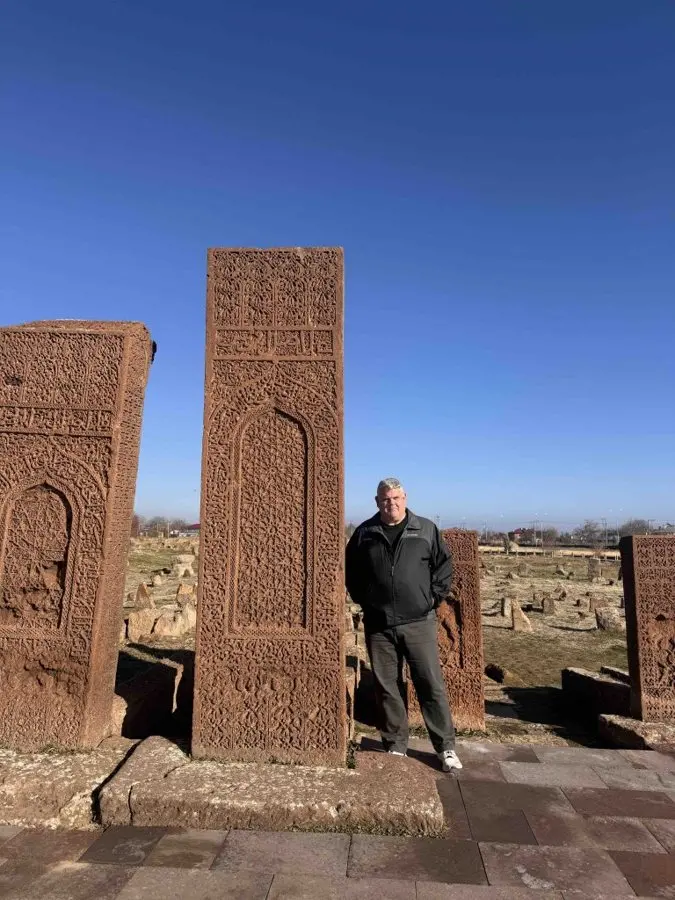
The quirkiest part of the piece covers Seljuk burial customs. Ordinary people were buried simply, fast (within 24 hours), in a white shroud and facing Mecca. But elites got the star treatment: the türbe, those striking tower, dome or polygonal mausoleums in brick or stone, covered in geometric patterns, Kufic inscriptions and sometimes glazed tiles. They were part tomb, part flex — statements of status and piety that still stand across the former Seljuk lands.
Why should a traveller care? Because Seljuk survivals are among the best reasons to visit central and eastern Turkey. Konya was the Seljuk capital, Kayseri and Sivas carry major monuments, and the Silk Road caravanserais between them are some of the most atmospheric ruins in the country. Young Pioneer Tours even runs an 'Alternative Turkey' itinerary that includes one of the largest Seljuk cemeteries in the world — a niche draw, but a memorable one. If your image of Turkey stops at Blue Mosques and bazaars, the Seljuk heartland is the correction.