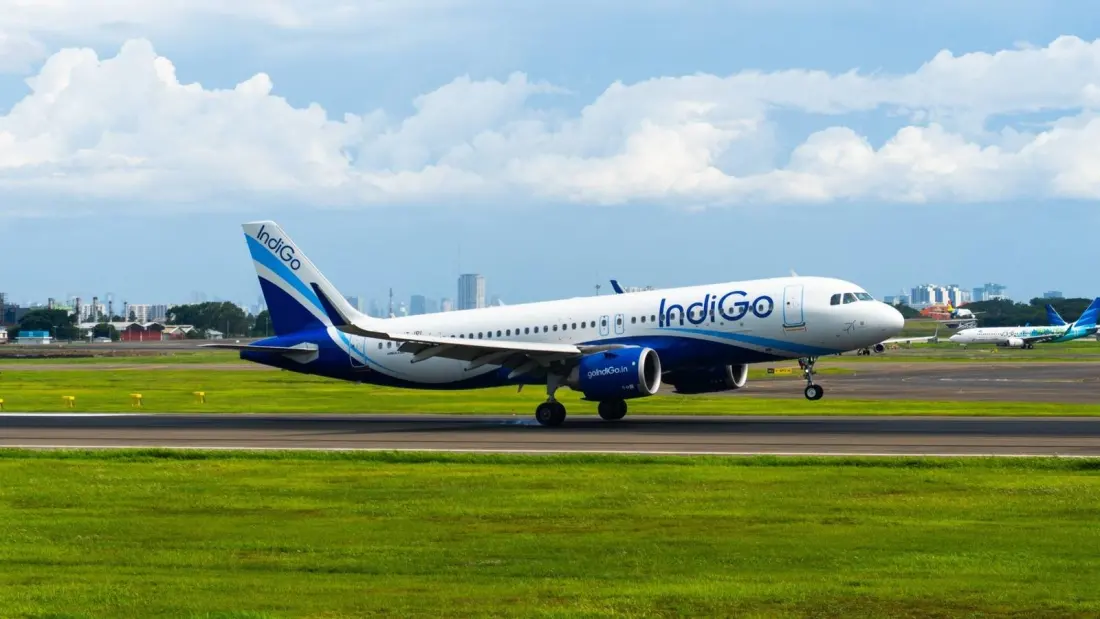
An IndiGo flight from Delhi to Chennai made an unplanned stop in Hyderabad on 11 October after a passenger's power bank caught fire in an overhead bin mid-flight. Video from the cabin, widely shared online, shows passengers and crew scrambling to contain the flames and move people away from the bin before the Airbus A321neo landed safely. No injuries were reported, and IndiGo quickly put the stranded flyers on another aircraft to finish the trip to Chennai.
The flight, 6E 6115, had left Delhi Indira Gandhi International and was heading for the southern coast when smoke was detected from the device. The airline said cabin crew brought the situation under control promptly, and the pilots carried out an emergency descent into Rajiv Gandhi International Airport in Hyderabad. The aircraft involved, registered VT-NOE, faces a full investigation.
There's a rules angle worth knowing: IndiGo's policy allows power banks and spare lithium batteries only in hand baggage, and explicitly bans stowing them in overhead bins or checked luggage — exactly where this one was. A lithium-ion fire isn't a normal fire. It's a chemical chain reaction called thermal runaway, which generates its own oxygen and heat above 600°C. Cells rupture one after another, producing a torch-like flame that can ignite nearby bags and clothing, and the device can reignite even after flames appear extinguished.
An overhead bin makes all of this worse. The enclosed space traps heat and dense smoke, letting a fire smoulder unseen until it can erupt into the cabin in a flashover. Above the bins sit wiring looms and flight control runs, so a fire burning through the ceiling panels could damage critical systems. And it's the smoke — carbon monoxide, hydrogen cyanide and vaporised plastic — that incapacitates fastest. Aviation data suggests crews often have only 15 to 19 minutes to land once an uncontained cabin fire takes hold. On this flight, the crew spotted it early and got down in time.
For travellers, the takeaway is simple and genuinely useful: keep your power bank with you at your seat, not in the bin above it, and check the battery rules of your airline before flying. Larger and more powerful consumer batteries have made these incidents more common in recent years, and where you stow one can be the difference between a scare and a catastrophe. This was a safe ending — but a reminder that the person sitting near that bin had no say in where it was placed.