In Punakha, one of Bhutan's most striking festivals stages a battle. The Punakha Dromchoe, held at the 17th-century Dzong, re-enacts historic fights against Tibetan invaders with costumed warriors called Pazaps, horses and firecrackers standing in for gunfire. Every year, eight gewogs (county districts) coordinate the ritual, and for the first time among those eight, one of them is led by a woman.
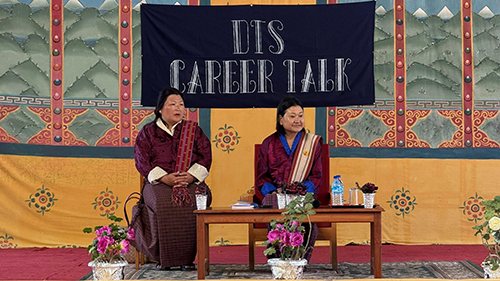
Sonam Zangmo, Gup of Chang Gewog in Thimphu, has spent more than 15 years in local politics, working her way up from village-level Tshogpa to become the first female Mangmi of Thimphu Dzongkhag, then the first female Gup among the eight districts — five in Punakha and three in Thimphu — that run the festival under the Wang Tshochi Gye. She is now in her final term.
The obstacle was tradition itself. Pazaps were volunteer warriors who defended Punakha Dzong under Zhabdrung Ngawang Namgyal in the 1600s, and the role has long been seen as a man's job — one reason villagers assumed a female Gup couldn't do the post properly. There was also the matter of the Tsen Dhar, a warrior flag linked to protective deities, which purity rituals historically kept away from women.
But the rules turned out to be softer than the assumptions. Both the Department of Culture and the Central Monastic Body have clarified that Gups are not required to serve as Pazaps themselves and may send male representatives instead. Sonam coordinates her gewog's roughly 18 Pazaps and attends the festival, but doesn't join the warriors inside the lhakhang — a workaround that has quietly opened a door once thought locked.
Her hope is simple: that the next generation of women leaders won't have to be the first. The numbers explain why she's a rare case. According to the Election Commission of Bhutan, just nine of the country's 205 Gups are women — roughly one for every 22 men. Locals like Tshering Wangmo of Punakha describe how old taboos around leadership are easing, slowly, as women step forward.
For travellers, this is a reminder that Bhutan's festivals aren't frozen pageants; they're living institutions that communities negotiate in real time. If you time a visit to the Punakha Dromchoe (usually February or March, following the lunar calendar), you're watching both history and change happen in the same courtyard — a battle re-enactment and a quiet argument about who gets to lead it.