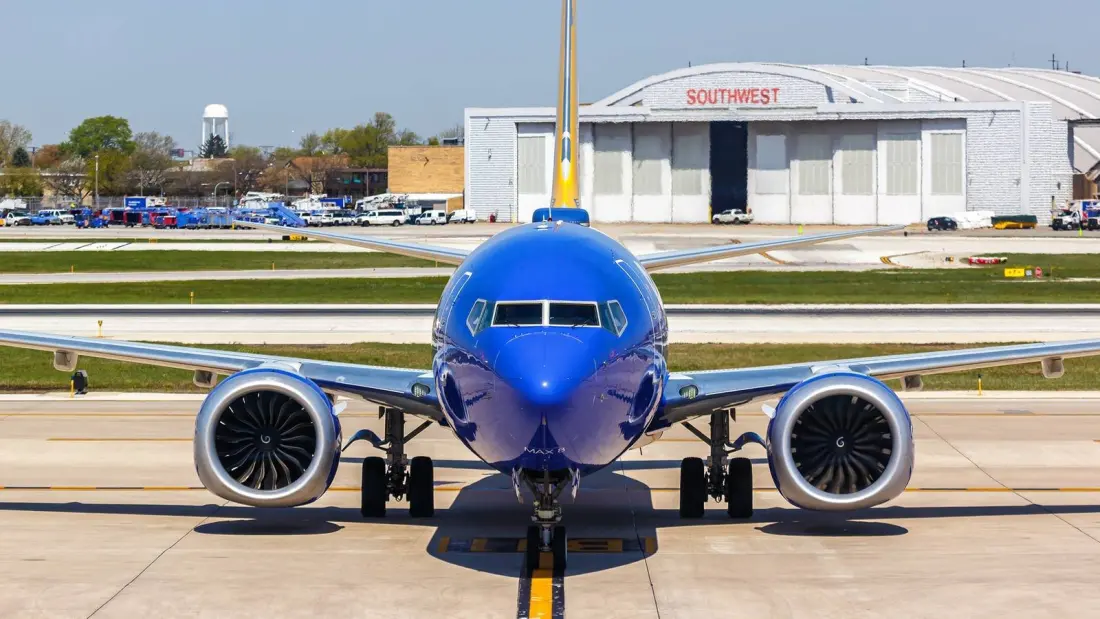
A Southwest Boeing 737 MAX 8 rolled sideways over the Mojave-bound sky in May 2024 after spending nine days flying with storm damage nobody had spotted. The NTSB's final report, released after its investigation of the 25 May 2024 incident, reads less like a drama and more like a chain of small paperwork gaps.
It started in New Orleans. On 16 May 2024, the aircraft — registration N8825Q, less than 18 months old — was parked overnight at Louis Armstrong New Orleans International when gusts reaching 73 knots (84 mph) battered the airfield. The wind damaged the structure around the standby rudder power control unit where it connects to the vertical stabiliser. Externally, the plane looked fine, and because Boeing's 737 maintenance manual lacked a wind-speed threshold and Southwest had no procedure to flag storm-exposed aircraft, no inspection followed.
The jet then flew 38 sectors without a hitch. On 23 May, an overnight check in Houston included a rudder test meant to be witnessed by a mechanic watching the tail. Hangar footage later showed the rudder moving right but not left — with nobody actually standing back there — yet the test was signed off as passed. The day after, one crew disconnected a yaw damper that seemed to overcorrect in turbulence; the system was deferred under the minimum equipment list, passed a functional test in Phoenix, and the plane kept flying.
Then came flight 746 from Phoenix to Oakland. At 34,000 feet the crew felt a few seconds of Dutch roll — the NTSB's term for coupled yaw-and-roll oscillation where the nose and wings swing in opposite directions — and it happened again at 32,000 feet. The aircraft landed safely, and inspections revealed the damaged standby PCU mounting bracket and surrounding tail structure. By then the plane had flown 44 times since the storm.
The fallout is practical rather than alarming. Boeing revised the 737 maintenance manual in May 2025 to require a high-wind inspection at 65 knots (75 mph) on the ground, and Southwest now monitors weather and inspects any aircraft exposed to winds above that figure. As a precaution, the airline checked all 231 of its 737 MAX jets between 17 and 20 June 2024 and found no similar damage. Airbus, for comparison, already used a higher 80-knot (92 mph) threshold on most of its fleet.
For travellers, the takeaway is oddly reassuring: a structural fault slipped through two layers of checks, the aircraft still landed safely, and the safety net — crew reporting, mandatory inspections, a full-fleet audit — caught it afterwards. Regulators and manufacturers have since closed the specific loophole that let it happen. If you're booking a 737 MAX flight, this report shows the system working as designed after the fact, not failing silently.