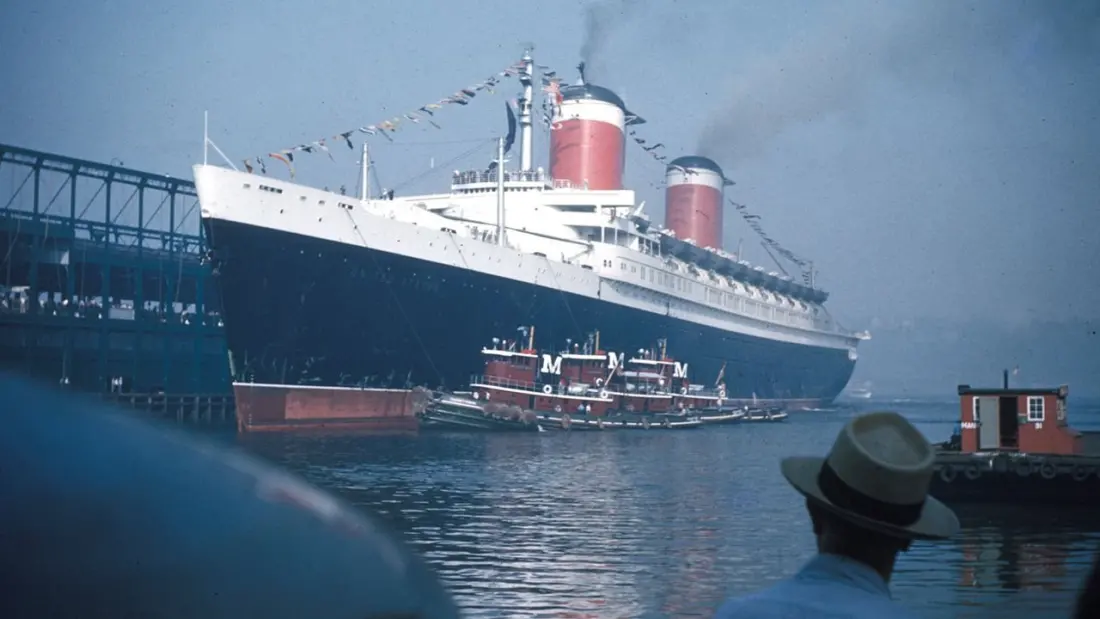
America's most storied ocean liner is trading transatlantic glory for life on the seafloor. On November 12, the SS United States — a nearly 1,000-foot vessel that still holds the record for the fastest ocean liner crossing of the Atlantic — will be deliberately sunk off the coast of Destin, Florida, where she will start a second career as the largest artificial reef on the planet.
The numbers behind the ship are startling. Built in the early 1950s, she was the largest liner ever constructed entirely in the United States, about 100 feet longer than the Titanic with five extra decks. On her maiden voyage in July 1952 she ran from New York to the UK in 3 days, 10 hours and 40 minutes — a record that has never been beaten. Her passenger lists read like a mid-century who's who: Marilyn Monroe, Salvador Dalí, Marlon Brando, plus Truman, Eisenhower and Eleanor Roosevelt.
The good times ended abruptly in November 1969, after her 400th crossing. Cheap jet travel, rising fuel and labour costs and cut government subsidies killed the business after just 17 years of passenger service. She then drifted through nearly six decades of failed rescue plans, including one proposal to turn her into a Manhattan attraction, while moored in Philadelphia under the care of the SS United States Conservancy.
The reef idea came from Alex Fogg, natural resources chief for Destin-Fort Walton Beach tourism, who has been building out artificial reefs in the area since 2017 — more than 600 so far, from concrete blocks to whole ships. The local waters lack the natural reef structure found elsewhere in Florida, and sunken vessels fill that gap nicely. Buying the ship from a conservancy reluctant to sink her, then negotiating her passage out of Philadelphia with the Coast Guard, was only the start. She arrived in Mobile, Alabama in March 2025, where crews spent the better part of a year scrubbing her safe: clearing roughly 120 fuel tanks, stripping loose paint and toxic materials, and removing the elevators so air can escape quickly during the sinking. No explosives involved — engineers will simply open valves and flood her, with full submersion expected in about 45 minutes.
For travellers, this creates something genuinely new. Marine life should move in within hours, though Fogg estimates the ecosystem needs about a year to fully develop. Divers are expected at the wreck from the day after sinking, and recreational fishers stand to benefit too. On land, a museum and visitor centre filled with conservancy-preserved artifacts will keep the ship's above-water story alive — handy for anyone in the party who'd rather not strap on a tank. Warren Jones, a conservancy board member who sailed on her as a child in the early 1960s, summed up the mood: bittersweet, but far better than the scrapyard.
If you dive or fish in the Gulf, Destin-Fort Walton Beach just gained a one-of-a-kind site with serious history attached.