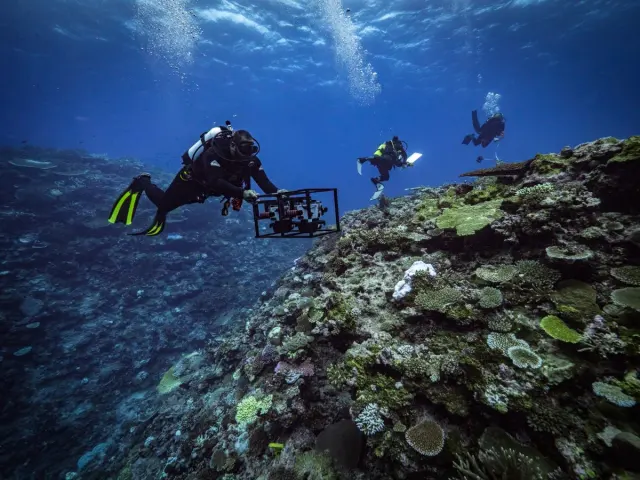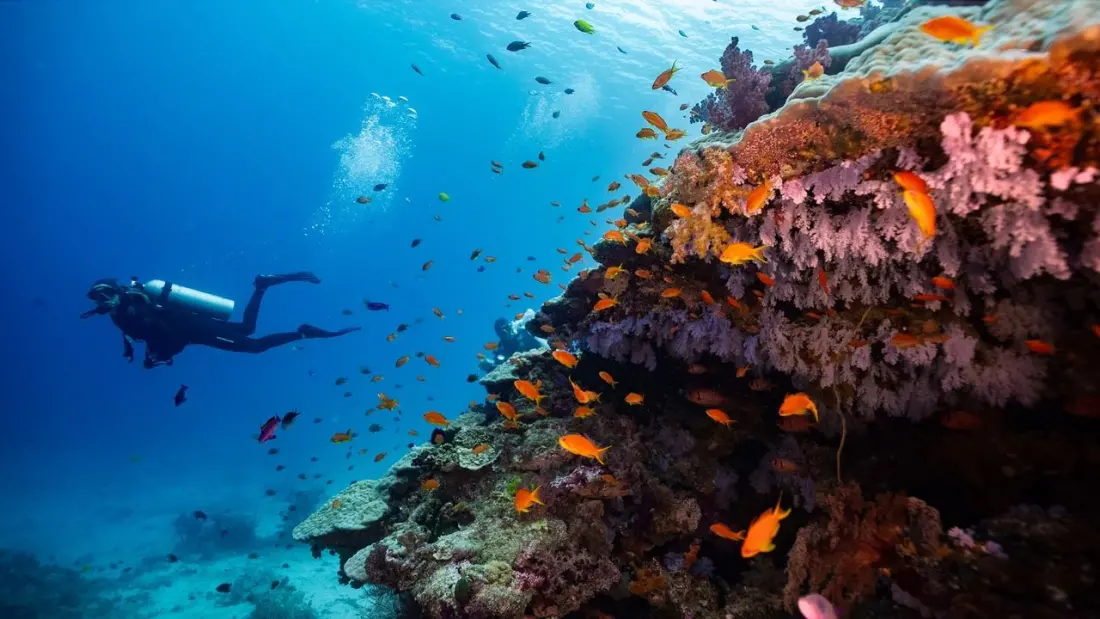
Somewhere off Fiji's northern coast lies a reef so big it ranks third in the world: the Great Sea Reef, known locally as Cakaulevu. Stretching 280 miles, it hosts more than three-quarters of all known coral species and over half of all recognized fish species. Yet it remains barely on the dive map, because only one lodge has direct access to it — Nukubati resort.
That's changing, not because of crowds (there's essentially one boat out there) but because of science. In 2026, PADI, its NGO arm PADI AWARE, and WWF launched a partnership built around the Global Shark & Ray Census: divers log sightings in an app, the data gets vetted with help from James Cook University, and the results feed into government plans for new Marine Protected Areas. Since the census launched, over 212,000 people have taken part, and the data is already paying off — verified submissions confirmed four shark and ray species in nearby Vanuatu, including the critically endangered great hammerhead.
A recent visit described sharks on every single dive — bull sharks, leopard sharks, whitetip reef sharks, gray reefs, even a zebra shark — all entirely wild, with no feeding or baiting. Logging a dive takes about six minutes in the app: location, depth, species, numbers. PADI AWARE frames the effort as part of the UN's 30x30 goal to protect 30% of the world's oceans by 2030, and research suggests fully protecting dive sites could generate billions in tourism revenue, much of it flowing to locally owned operators.
Nukubati itself is part of the story. Opened in 1992 by Jenny Leewai and Peter Bourke, it's now run by their daughter Lara and her husband Leone Vokai, who founded Great Sea Reef Divers. It takes just 14 guests, runs on solar power, staffs entirely with locals, and earned PADI Eco Center status in September 2026. The reef matters here beyond tourism — in the northern dialect it's called Bainivualiku, "the fence of the north," the barrier that once shielded communities from seaborne invaders.
For divers, the pitch is simple: world-class, crowd-free reef diving where your holiday data does actual conservation work. And it's beginner-friendly — snorkellers, novice divers and veterans can all take part. Roughly 500,000 people travel to dive with sharks each year in a $314 million industry; this is a way to do it with purpose.
Story via Condé Nast Traveler.