
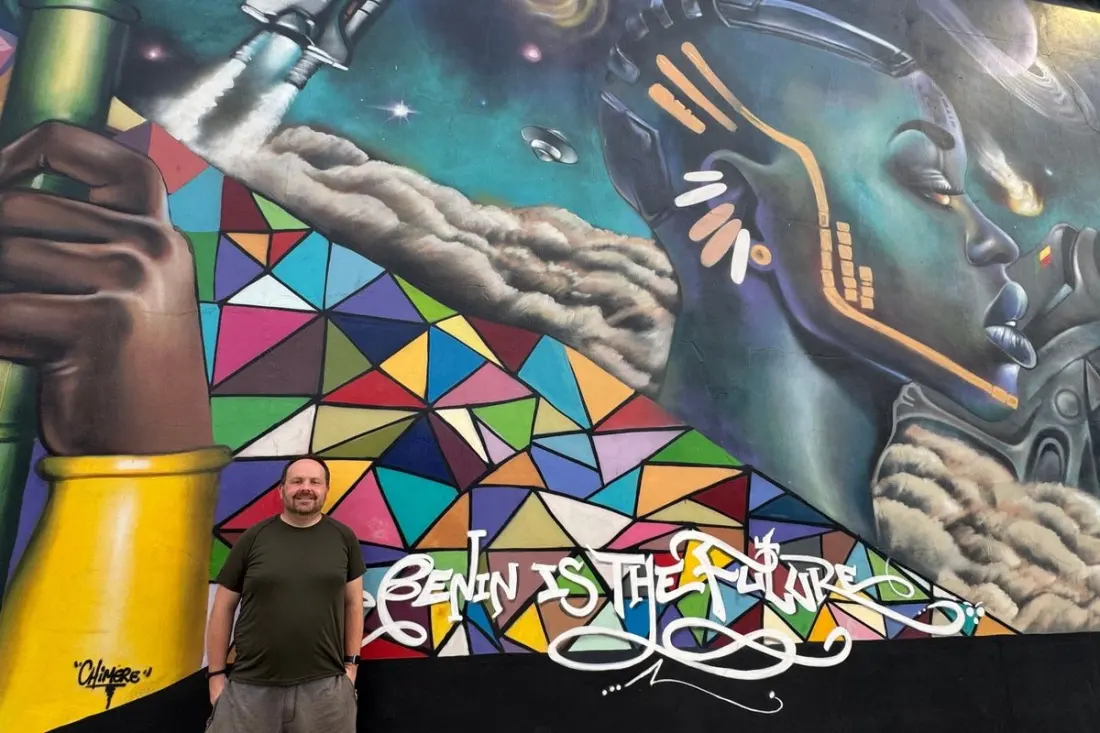
A 30-foot spaceman staring out from a wall in Cotonou is probably not what most people picture when they think of West Africa. But then Benin — the torch-shaped country wedged between Ghana and Nigeria — keeps confounding expectations. A recent trip through its twin highlights of Cotonou and Ouidah shows why it deserves a spot on more itineraries.
Start with the Marina Boulev'art, unveiled in 2024 and now Africa's largest street art wall. Nearly a kilometre long and growing, it carries work from 40 local and diaspora artists: a mask split open to reveal a teenage girl's face, scenes of religious harmony, playful and political pieces side by side. It's a fitting gateway to a country investing heavily in its cultural identity.
An hour west in Ouidah, the mood turns sober. The 17-metre 'Door of No Return' arch marks where millions of captives were forced onto ships, the Rue des Esclaves the route that carried them to the Atlantic. Carved figures of the chained walk towards the sea, past the Tree of Forgetfulness where, in Vodun tradition, captives circled to sever their ties to home. Benin has reckoned with this history openly — it dropped the name Dahomey in 1975, partly because of that kingdom's role in the slave trade.
Ouidah's other draw is the Python Temple, where snakes are sacred messengers between the living and the gods. Visitors can handle them, and the temple sits across from an early 20th-century basilica — a neat illustration of how many Beninese blend Vodun (an official religion here) with Catholicism. Pythons that wander into homes are good omens, calmly escorted back to the temple.
The trip's finale is Ganvié, a town of some 25,000 people living in stilt houses above Lake Nokoué. Founded by the Tofinou people fleeing slavers — the name means 'we survived', and a giant crocodile is the town's symbol — it has sheltered residents for four centuries. Kids paddle pirogues and cast nets with uncanny ease, and visitors might be invited aboard a fishing boat, as a 'yovo' (white person) on board is said to bring luck.
The village faces real pressures — pollution, overfishing, invasive water hyacinths — but locals weave the choking plants into baskets and mats, and tourism is hoped to fund infrastructure and slow the drift of young people to the mainland.
For anyone after a West African trip without the crowds, Benin hits hard: history that's confronted rather than hidden, a living spiritual culture, striking contemporary art, and a 30-metre bronze to the Dahomey Amazons — the second tallest statue in Africa — anchoring Cotonou's confident new look.