A travel writer who plans holidays with multi-tabbed spreadsheets and dinner reservations made 90 days out found herself on a US road trip with no accommodation booked. Thanks to new jobs and no planning time, she agreed to let TikTok - and its famously uncanny algorithm - plan a New England lobster roll road trip through Rhode Island and Maine.
The premise matters because TikTok has quietly become a serious travel search engine. The company claims billions of searches a day, growing more than 40 per cent year on year, with 84 per cent of users watching travel content monthly and 66 per cent calling it their most useful source of inspiration. Unlike a review site or an AI itinerary, TravelTok shows you what a hotel looks like when someone actually checks in, and what the food looks like on the plate. Its big gap: it can't yet tell you if a room is free. The TikTok GO booking feature works in the US but hasn't launched for Australians.
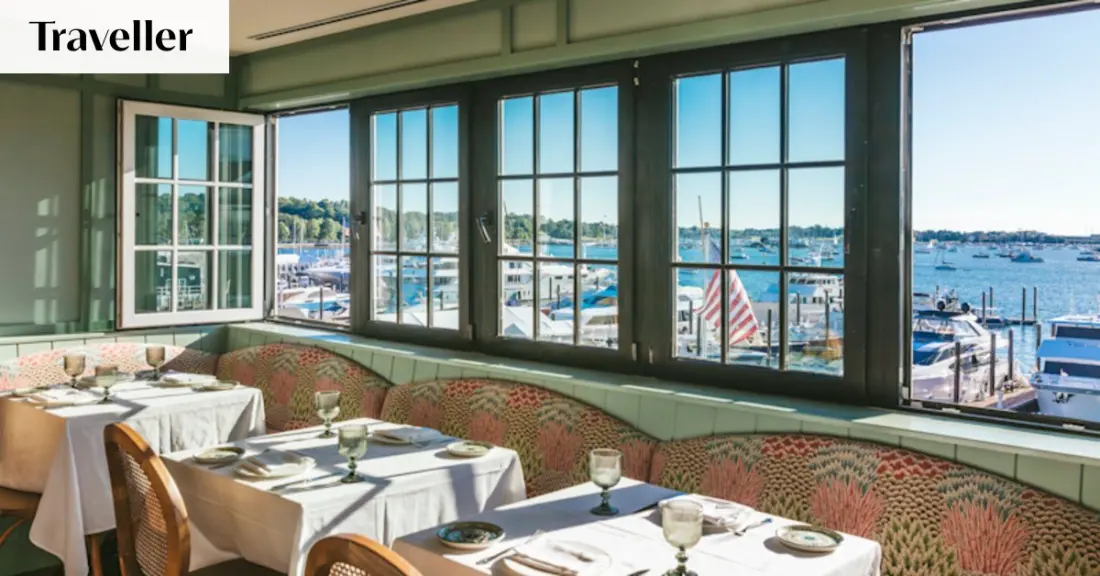
In Newport, Rhode Island, the algorithm kept pushing one boutique hotel - the Gardiner House - which was fully booked, so the trip started at Newport Harbor Island Resort instead, a waterfront property with rooms overlooking bobbing boats (and, pre-Halloween, a pumpkin patch). Food was where the app shone. It steered them to Clarke Cooke House on the historic wharves for a classic lobster roll and the viral Snowball in Hell - vanilla ice cream rolled in toasted coconut in a dark chocolate goblet of hot fudge. Castle Hill Inn, a drive out of town, delivered the trip's best lobster roll, served with tarragon dressing and fried onion strings on a lawn overlooking Narragansett Bay. A lucky last-seat booking at Flora, the Gardiner House restaurant run by ex-Necker Island private chef Miguel Somoza, turned into the meal of the trip.
The algorithm's personal touch proved its real edge. Scrolling for stops en route to Portland, Maine, the writer's feed surfaced Orchard House in Concord, Massachusetts - where Louisa May Alcott wrote Little Women - purely because the app had learned her interests. Her husband's feed, by contrast, served him golf, clam chowder and the Patriots. Their route also took in a roadside barbecue detour to The Rusty Can in Byfield, and in Portland, a speakeasy called The Broken Dram hidden behind a bookcase near the queued-out Blyth & Burrows.
There are downsides. Viral fame means queues - the famous Co-Dough cinnamon rolls came with too long a wait - and watching so many video tours of Newport's Gilded Age mansions nearly convinced her she'd already seen them. Standing inside The Breakers, the Vanderbilts' 70-room summer cottage, fixed that quickly.
Who's this for? Anyone comfortable surrendering a bit of control. The lesson isn't that algorithms replace good planning - it's that a visual, personalised feed can surface detours and institutions you'd never find on a spreadsheet, then leave room for the spontaneous stuff no app can predict.