In 1956, in the small Swedish town of Älmhult, an IKEA designer named Gillis Lundgren had a problem every mover of house recognises instantly: a table wouldn't fit in his car. Rather than drive back for a bigger vehicle, he pulled off the legs, laid them beside the tabletop and got on with his day. IKEA has told that story ever since as the birth of flat-pack furniture — though, like most origin myths, it's tidier than the truth.
The table in question was the LÖVET, a small three-legged piece shaped like a leaf. Lundgren, widely counted as IKEA's fourth employee, started out illustrating and photographing for the catalogue before moving into furniture design. The car story, as the company frames it, was a simple flash of insight: why not take off the legs?
Here's the catch: flat-pack furniture wasn't actually new in 1956. The IKEA Museum points out that Thonet chairs were shipped disassembled back in the nineteenth century, and Swedish department store Nordiska Kompaniet launched its Triva flat-pack range in 1944. More strikingly, IKEA itself was already selling self-assembly furniture before the famous car moment — supplier Ovendals had shown Ingvar Kamprad a table with clever fittings, and the 1953 catalogue offered three tables (DELFI, RIGA and KÖKSA) for customers to put together at home. Even Guinness World Records' claim that Lundgren invented flat-pack in 1956 sits awkwardly against the museum's fuller history. The better read: Lundgren didn't invent the format, but he helped popularise it and push it across the whole IKEA range.
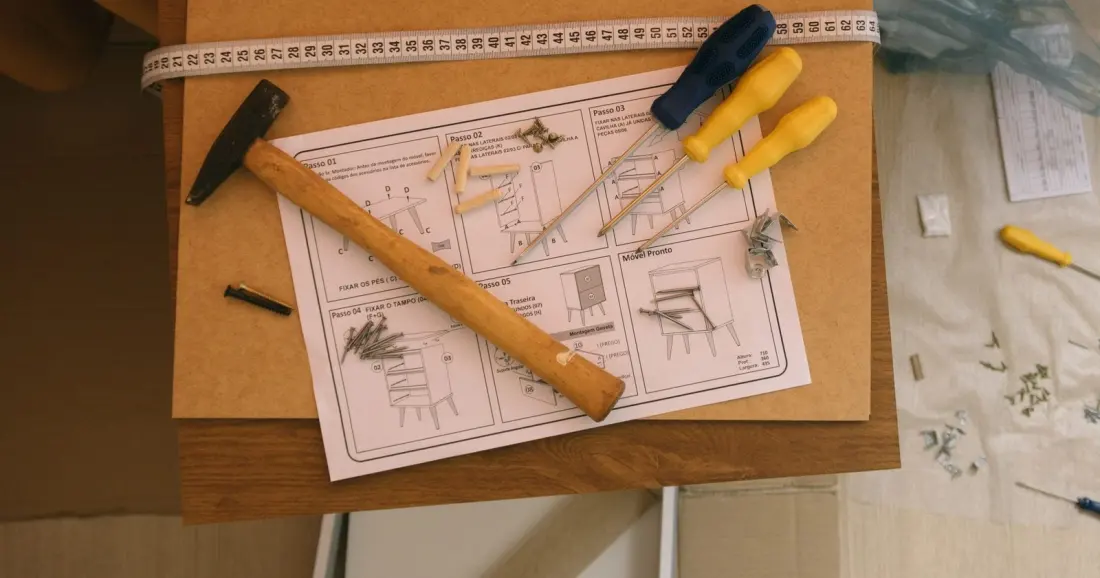
What the story really captures is the moment a packing workaround became a business system. Flat, stackable boxes squeeze far more product into trucks, containers, warehouses and store shelves, cutting freight costs and damage — and shifting assembly work to the customer. Eventually, IKEA designers began thinking about packaging while products were still on the drawing board. Flatness stopped being a storage trick and became a design philosophy.
Lundgren himself went on to design more than 200 pieces for the company. His most famous is the BILLY bookcase from 1979, of which over 140 million have been sold worldwide — possibly the most successful piece of furniture ever made.
Why should a traveller care? Because Älmhult, where it all happened, is a genuinely fun stop for anyone with even a passing interest in design. The IKEA Museum sits in the original store building, tracing the company's history from 1950s catalogue culture to modern design classics — and, fittingly, the 1956 story itself. Pair it with Småland's lakes and forests for an unusual Swedish road trip well south of the usual Stockholm-Gothenburg circuit. If your home is full of BILLY bookcases, there's a certain satisfaction in visiting the town where the idea took root.