Oslo's Rådhuset draws hundreds of thousands of visitors a year. It's where the Nobel Peace Prize is handed out each December, and most tourists file through the main halls, snap a photo, and leave. Up on the second floor, though, there's a detail almost nobody spots: a small painted boy, mid-raspberry, aimed straight at a door that shouldn't exist.
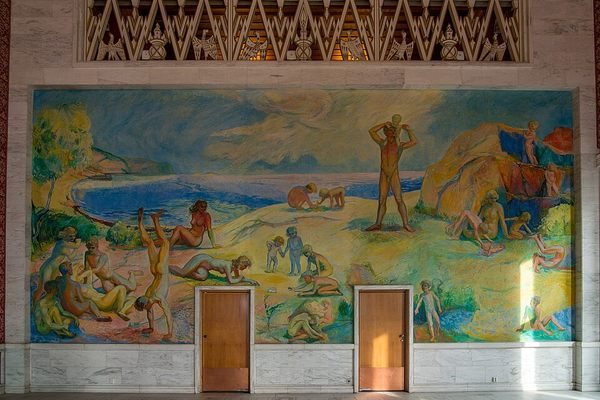
The story goes back to 1937–38, when artist Willi Midelfart was commissioned to paint "Det gror" ("It Grows"), a monumental fresco for the banquet hall. Drawing on summers spent at Holmsbu on the Oslofjord and the influence of Edvard Munch, he filled the wall with families swimming, playing and lounging in nature — a warm, sun-soaked celebration of Norwegian summer life.
Then the architects intervened. The original plan had one door on the left side of the wall. Partway through the work, the architect decided the room needed a second, matching door on the right, purely for symmetry. Midelfart was not consulted and was not amused. His revenge was subtle but permanent: he painted a small boy pointing at the new doorway with his tongue stuck out. The fresco stays officially cheerful; the grudge is there for anyone who knows where to look.
The kicker? That second door was never even functional. Walk through the neighbouring room — the kitchen — and you'll see the right-hand door is bricked up. A symmetrical gesture that cost the artist his calm, and serves no purpose beyond appearances. It's a lasting lesson in what happens when you get between an artist and their canvas.
While you're in the banquet hall, there's more to hunt for. The west wall carries royal portraits that caused controversy when they were unveiled — worth a closer look if you like your sightseeing with a side of scandal. And if the second floor is closed during your visit, don't take it personally: the hall regularly hosts official events, plus weddings on Wednesdays, Fridays and Saturdays, which can shut off the upper floor without much notice.
Who is this for? Anyone who thinks city hall sightseeing sounds dull. It's free, it's indoors (a solid rainy-day option in Oslo), and knowing the tongue-boy story turns a quick walkthrough into a small treasure hunt. The building is open daily from 10:00 to 16:00, but check the official website before you go — closures for state events pop up regularly, and you don't want to climb all the way there only to find the banquet hall behind a wedding party.