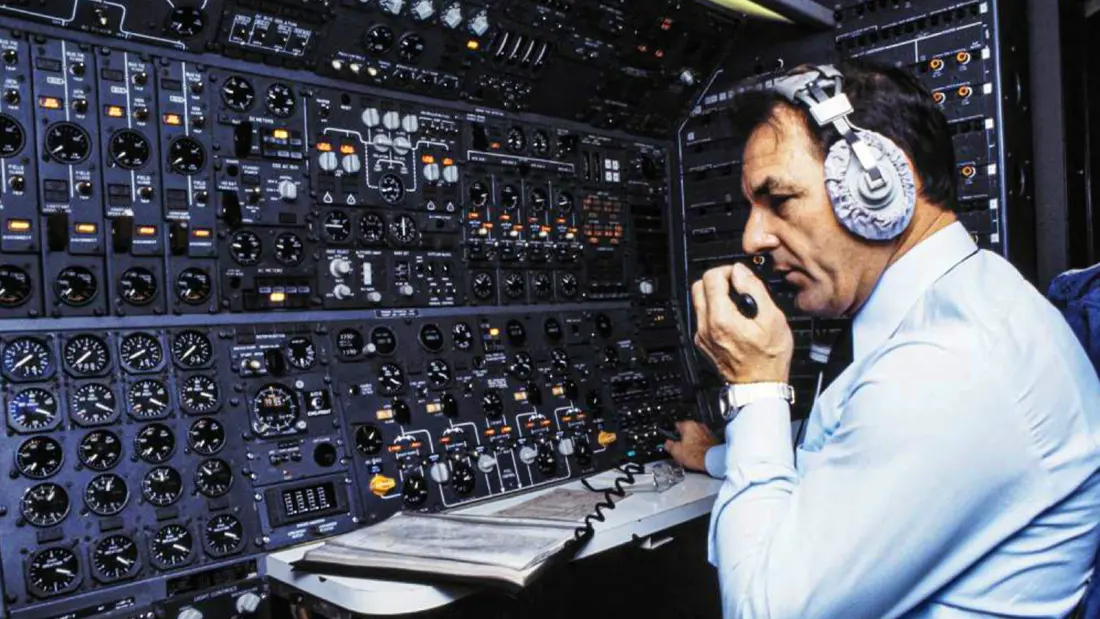
Before two-pilot cockpits became the norm, most airliners carried a third crew member: the flight engineer, seated sideways or behind the pilots, managing fuel, hydraulics, electrics and engines while the flying pilots looked after the flying. A recent roundup of ten classic three-crew airliners is a nostalgia trip for anyone who loves aviation history — and a reminder of how differently we used to fly.
The Douglas DC-6, which first flew in June 1946 and entered service with American Airlines and United in 1947, helped cement the role. Over 700 were built, and its four complex Pratt & Whitney R-2800 radial engines plus a pressurized cabin made a dedicated systems specialist essential. Delta initially flew it with two pilots before regulators required a third crew member. The Lockheed Constellation, flying commercially with TWA from 1946, took the same logic across oceans on long, demanding routes with its famous triple tail.
The Jet Age inherited the arrangement rather than replacing it. The Douglas DC-8 (service entry 1959 with Delta) kept a captain, first officer and flight engineer throughout its 556-aircraft production run. The Boeing 727 went further: 1,832 built, the first jet to top 1,000 sales, with the engineer on a sideways seat behind the pilots. Its three rear-mounted engines were a compromise among United, American and Eastern, born from United's need for strong performance at hot-and-high airports like Denver.
Some aircraft pushed the idea into unusual territory. The Soviet Tu-154, over 1,000 built from 1972, was designed for three crew but often flew with a navigator on top of that — cockpit staffing East and West simply didn't match. Concorde, in service from 1976 with British Airways and Air France, cruised at roughly 1,350 mph near 60,000 feet, and fuel had to be pumped between tanks to control the centre of gravity as it accelerated. Its flight engineer worked until the fleet retired in 2003. Even the technologically advanced Lockheed L-1011 TriStar, capable of automatic landings, kept a third crew member — though the 1972 Eastern Flight 401 crash, where the crew became distracted troubleshooting a landing-gear light, reshaped thinking about cockpit coordination.
The story ends with the DC-10, which entered service with American in 1971 and later received the MD-10 glass-cockpit conversion that finally removed the engineer's seat. That makes it the clearest example of the transition from three-person flight decks to today's two.
Why should a traveller care? If you're old enough to remember flying in the 70s, 80s or 90s, there's a decent chance your jet had someone back there monitoring the systems. Aviation museums — the Delta Flight Museum in Atlanta, the Smithsonian's Constellation displays, or the Airline History Museum's TriStar and Constellation restoration work — let you see these cockpits up close, and a few preserved airframes still offer walkthroughs. It's also a fun bit of context for aviation-enthusiast trips: spotting a restored 727 or Constellation at an airshow tells you a lot about how far cockpit design has come in two generations.