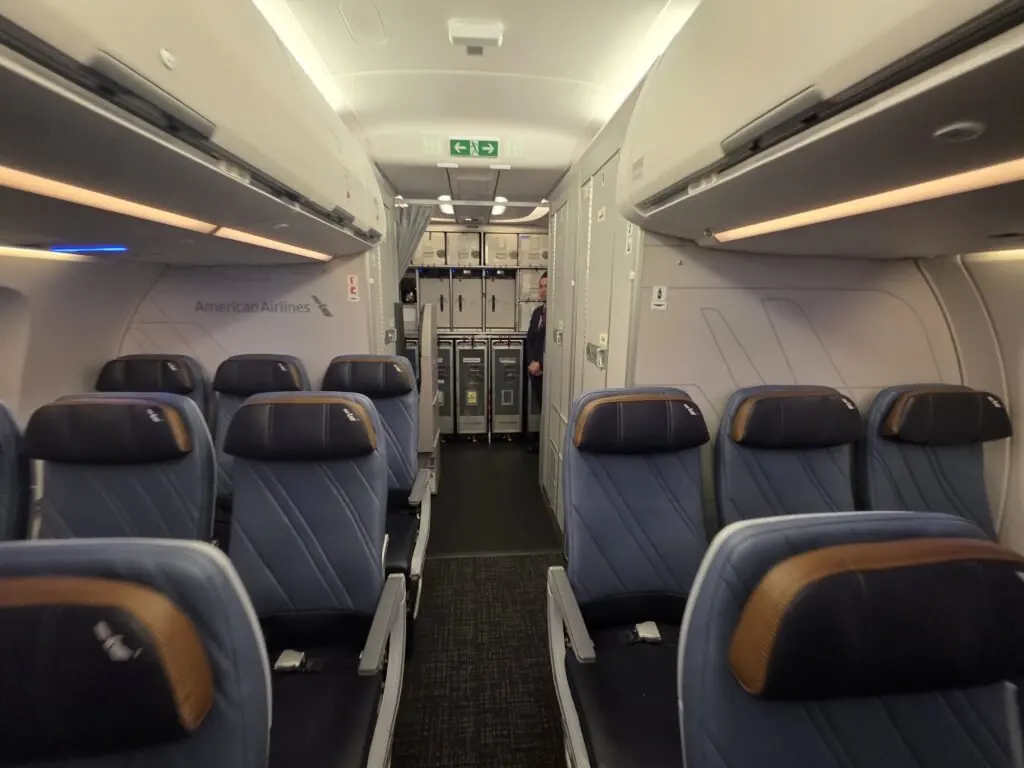
The Airbus A321XLR is meant to be a game-changer: a single-aisle jet that can cross the Atlantic economically, opening nonstop routes too thin to support a widebody. But American Airlines and United Airlines have configured theirs with unusually generous premium cabins — and that may create an unexpected problem. On lightly booked flights, the planes could be so heavy at the front that they need extra ballast in the tail to stay within weight-and-balance limits.
The numbers tell the story. Iberia's XLR seats 182 passengers with just 14 business seats. American squeezes in 155 seats across 20 business suites, 12 premium economy and 123 coach. United goes further: 150 seats including 20 Polaris suites and 12 premium economy, leaving only 118 in the back. Big lie-flat seats are heavy, and if the premium cabin sells out while economy stays empty, the aircraft's centre of gravity can drift too far forward — potentially making it harder to raise the nose for landing.
According to industry site Enilria, Iberia already loads ballast at the rear of some XLR flights, and has occasionally re-seated business class passengers in economy to even things out. The worry is that American and United, with proportionally more premium seating, could face the issue more often. Ballast works — it can sit far enough aft to punch above its weight — but it costs fuel, needs handling and eats into limited cargo hold space.
Not every theory holds up, though. The idea that United put a snack bar at the extreme rear of the XLR to shift galley weight backwards is undermined by the fact that its domestic A321neo Coastliner has the same rear snack bar without the XLR's distinctive rear fuel tank. And the suggestion that airlines will simply slash economy fares to fill the back of the plane? The View from the Wing analysis is sceptical: cheap fares to add weight can cannibalise the premium revenue the whole business case depends on.
Why should travellers care? Because the economics of these jets hinge on people paying for suites and premium economy. If weight-and-balance constraints force last-minute seat shuffles — like downgrading business passengers to economy, as Iberia has reportedly done — that could occasionally affect who sits where. It also shapes route planning: the more flexible the aircraft, the more secondary cities get direct transatlantic service, which is genuinely good news for anyone who doesn't fancy a connection.
For the airlines, the bet is that enough passengers will pay for a better seat to offset the XLR's higher per-passenger operating cost. For the rest of us, it means watching which routes get assigned these planes, and possibly snapping up premium cabin awards before load-planning quirks reshuffle the cabin.