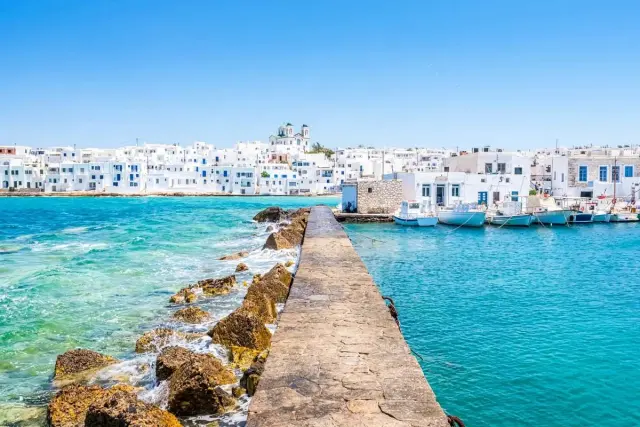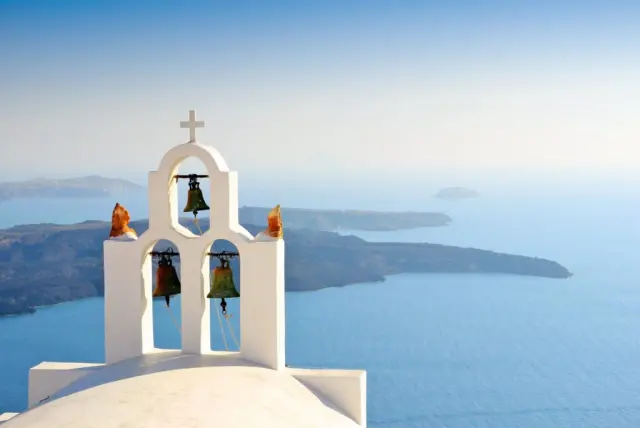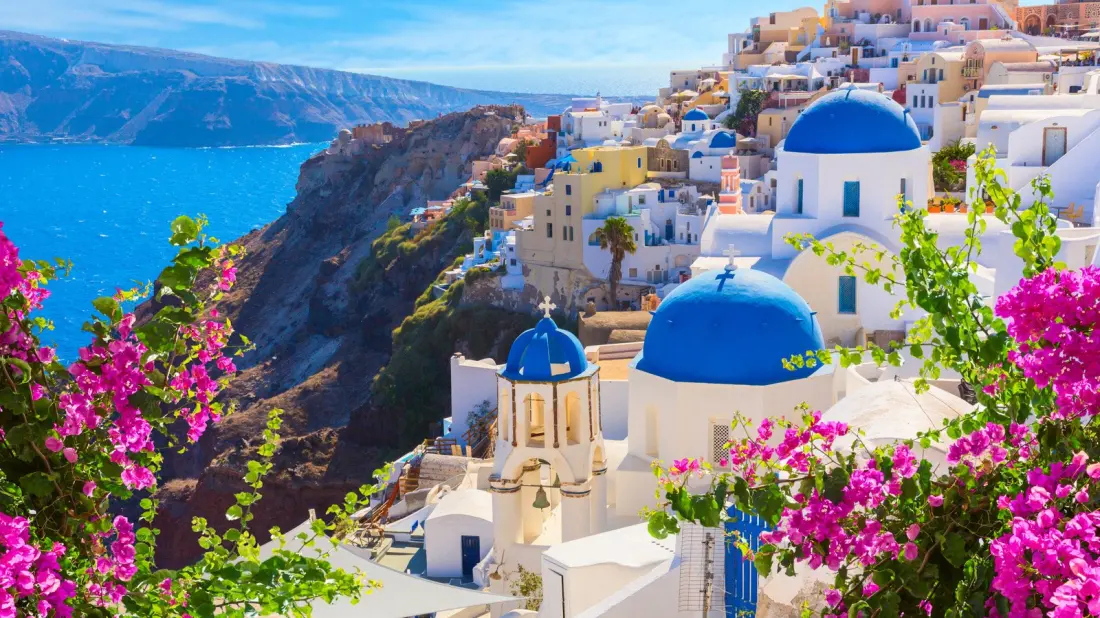
Santorini's cliffside villages and blue-domed churches are the image most people have of Greece, but the famous colour scheme actually belongs to one island group only: the Cyclades, an archipelago of 24 inhabited islands in the central Aegean. And the story behind the palette has nothing to do with the Greek flag. It's a mix of practical problem-solving, public health policy and politics.
Start with the practical part. Early islanders built with what they had — dark stone and mud — which turned houses into ovens during the summer heat. Whitewashing with a cheap mixture of water, lime and salt reflected sunlight and kept interiors cooler. Blue came courtesy of sailors and fishermen, who used a cheap pigment called loulaki, made from limestone, on their boats and brought the leftovers home to paint doors and shutters.
The colours also have a medical backstory. Lime is a strong disinfectant, and when cholera swept Greece in the 1930s, the government under Ioannis Metaxas ordered homes whitewashed to kill bacteria. The same logic explains whitewashed towns elsewhere in southern Europe, such as Ostuni in Puglia, Italy. Then, after the 1967 military coup, the dictatorship made blue and white mandatory across the Cyclades as a display of national unity. The rule was dropped in 1974, but by then the look had become the islands' signature — and a tourist magnet no one wanted to lose.
Today nobody is forced to keep the aesthetic, yet most islanders still do, and it's easy to plan a whole trip around it. Santorini and Mykonos get the attention (and the crowds), but the Cyclades offer plenty of alternatives. Milos pairs whitewashed villages with beaches like Sarakiniko, a surreal moonscape of volcanic rock popular for cliff jumping. Sifnos suits food lovers and anyone interested in traditional Greek pottery, while Koufonisia draws slow travellers with car-free roads and a quieter pace of life.
Timing matters. July and August bring peak prices and sunset spots in Santorini packed shoulder-to-shoulder. For good weather with thinner crowds, aim for May-June or September-October. Most islands are a three-to-eight-hour ferry ride from Athens, and Santorini, Naxos and Paros also have airports. Budgets swing widely: hostel beds on Ios run around $30 a night, while high-end Mykonos resorts can top $500. Hopping between three or four islands is a popular way to sample several beaches and postcard views in one trip.
For travellers chasing that iconic Greek image without the mob scene, the Cyclades beyond the big two are the answer — same white walls, same blue domes, a fraction of the jostling.