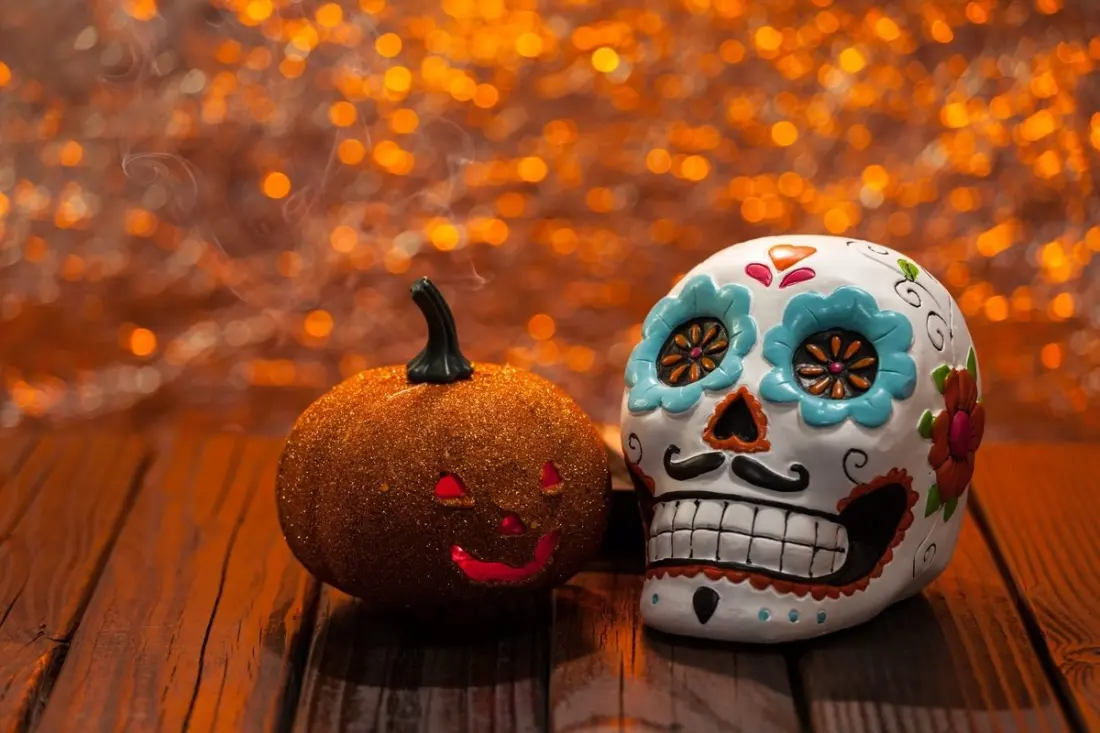
Forget "trick or treat". In Mexico, the children who knock on your door around November 1st arrive singing. They want their calaverita — a little offering of sweets to "feed" the hungry little skull — and if you're visiting during Day of the Dead, hearing those verses echo down a dim street is one of the season's most charming small moments.
The custom is a neat example of how Mexico absorbs foreign traditions without losing its own flavour. Halloween's trick-or-treating has been folded into Day of the Dead celebrations: kids dress up, carry pumpkins (the traditional version carved from a chilacayote, a squash, though plastic versions now fill the shops) and work the neighbourhood in the evenings running up to November 1st.
Instead of a demands-and-threats exchange, they sing. The most common opening verse asks whether there's "a little bone" lying around, and pleads with the household not to eat it all — leave them half. Other verses mix the macabre with the playful: the skull wants dinner, five of sweet and five of salt; the dead man asks for a sweet potato and warns his moustache will droop if refused. Some households answer with more than wrapped candy — fresh fruit, small tamales or other homemade snacks are traditional in some places. As the children leave, there's often a polite farewell verse, thanking the house for receiving the calaverita so graciously.
For travellers, the timing matters. The action happens after sunset, in the evenings before and on November 1st, in residential streets as much as in the plazas. If you're staying in a local neighbourhood — especially one with young families — expect small costumed visitors, and stock a bag of sweets if you're renting a place. Oaxaca City and Pátzcuaro in Michoacán are the classic destinations for the full Day of the Dead experience, where this door-to-door tradition sits alongside candlelit cemeteries, altars (ofrendas), marigolds, pan de muerto and the elegant Catrina figures.
It's worth noting that November 2nd is a public holiday in Mexico, so expect banks and some businesses to close, and book accommodation early if you're travelling in that window. The calaverita rounds are a lovely warm-up to the more solemn and spectacular cemetery vigils that follow.
Who is this for? Anyone planning a Day of the Dead trip who wants to understand what's actually happening on the streets, beyond the postcard images. The singing children are the accessible, family-facing side of the festival — a reminder that this is a celebration of life and community as much as a commemoration of the dead. And if you know even one verse of the song, handing over candy gets a lot more fun.