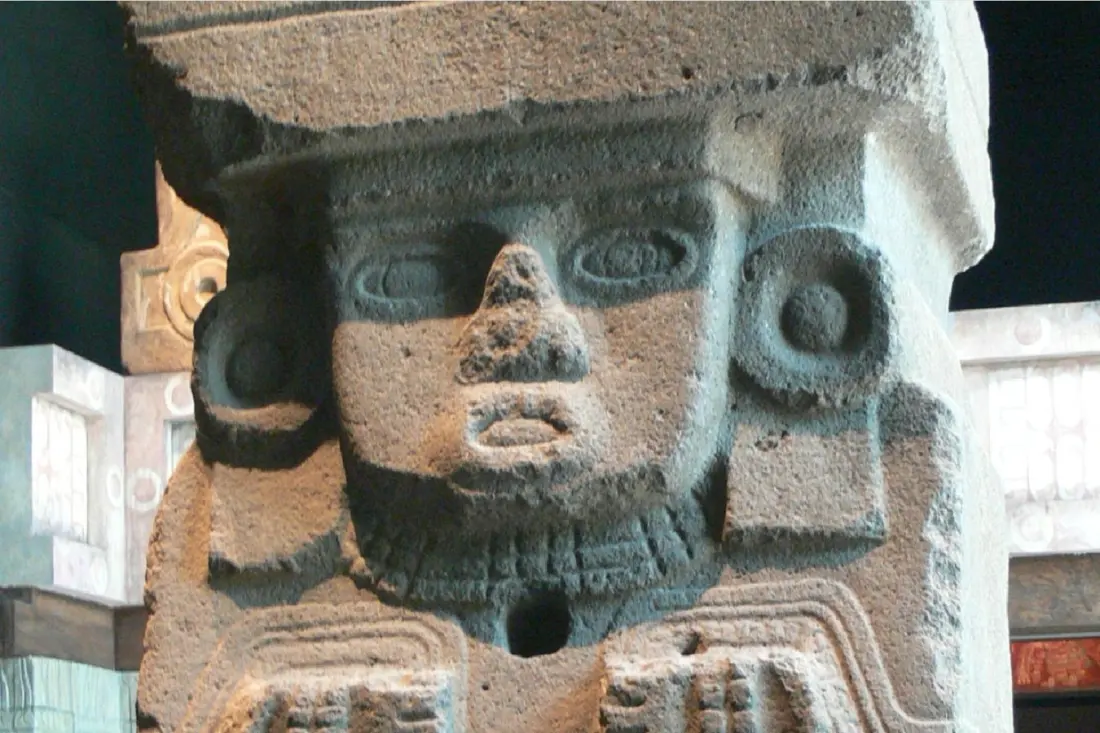
One of the Americas' greatest ancient cities might not be silent after all. Two researchers at the University of Copenhagen, Magnus Pharao Hansen and Christopher Helmke, believe the symbols scattered across Teotihuacan's murals and pottery are more than decoration — they could be a previously unknown writing system.
The study, published in Current Anthropology, analysed hundreds of markings on surviving artwork from the vast Mexican site. The team focused on logograms, symbols that stand for whole words or sounds. Some work like visual shorthand: a drawing of a coyote, for instance, might represent the word "coyote" itself, or act as a sound building block when paired with other signs.
To crack the code, Hansen and Helmke worked with early forms of Nahuatl, the language family spoken by the Aztecs and still used in parts of Mexico today. Their conclusion? The symbols likely record an early version of that language. But there's a catch — modern Nahuatl won't simply unlock the text, much as modern English won't get you through an Old English manuscript.
The implications stretch beyond linguistics. Scholars had assumed Nahuatl speakers only arrived in central Mexico after Teotihuacan collapsed. If these symbols really do record an early Nahuatl-related language, the language's roots — and possibly a link between the Aztecs and Teotihuacan's original population — go back far further than anyone thought.
That's a big deal for a city we know surprisingly little about. Founded around 100 B.C. and abandoned roughly 700 years later, Teotihuacan was home to more than 100,000 people at its peak, yet its people's culture, language and identity remain largely a mystery. A readable script would finally give them a voice.
The researchers are upfront about the limits: many symbols appear only once or in fragments, so proving a full system will take repeated patterns and new finds. They plan to run workshops with international scholars to push the work forward.
For travellers, this is a good excuse to look closer the next time you walk the Avenue of the Dead. Those geometric motifs and animal figures on walls and ceramics around the Pyramid of the Sun and Pyramid of the Moon may not just be art — they might be messages. Even if the code isn't cracked for years, standing in a city that may turn out to have had its own script adds a whole new layer to a visit that already delivers scale, mystery and some of the best archaeology in the Americas.