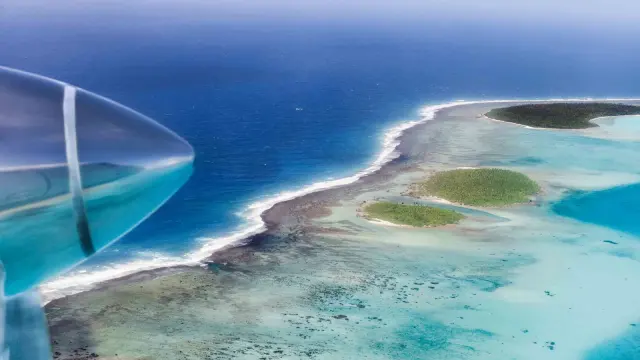
Cyclone Wati, a category 2 system, is making a beeline for the southern Cook Islands, with the popular lagoon island of Aitutaki taking a direct hit on Sunday local time before the storm tracks on towards Mauke and Mangaia.
Overnight, Aitutaki already copped minor damage: a few homes lost power after debris fell on overhead lines, and one house had a roof damaged by a fallen coconut tree. Mayor Nick Henry said the island had fared reasonably well, helped by the fact that most of its power lines run underground, but warned the community was bracing for the worst, with crews patrolling and clearing roads in case of medical emergencies.
The Cook Islands Meteorological Service has issued a storm warning for Aitutaki, gale warnings for Mauke and Mangaia and a strong wind warning for the rest of the southern group. Storm-force winds of 100 to 141 km/h were expected, along with heavy rain, thunderstorms, damaging swells and a risk of coastal flooding around high tide. By 8am Sunday, gusts of 78 to 113 km/h were already blowing on Aitutaki, while Rarotonga recorded a much milder 57 km/h — so the main island's flights and resorts may be less affected than Aitutaki's.
If you have a trip to the Cook Islands booked in the coming days, check with your airline and accommodation before travelling: inter-island flights to Aitutaki are the most likely to be grounded, and boat tours on the lagoon will be off. The southern group is in cyclone season territory roughly from November to April, so travel insurance that covers weather disruptions is worth having year-round — Wati is an early reminder that storms can arrive outside the textbook window too.
For travellers already in the country, the advice is standard but real: follow Cook Islands Met Service updates, stay off the coast during high tide, and expect localised power outages and blocked roads in the worst-hit islands for a day or two after the system passes.
The wider Pacific bulletin carrying this story also flagged items on regional internet safety, Fiji's constitution debate and a teacher shortage in Papua New Guinea, but for holidaymakers it is the weather warning that matters right now.