
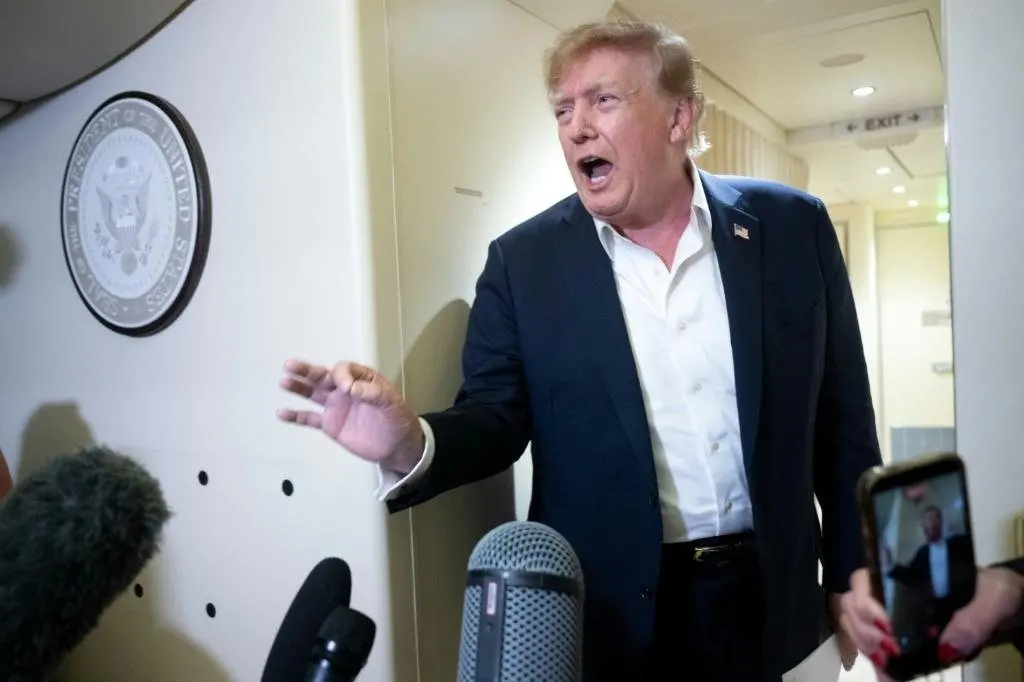
US President Donald Trump has launched an unusually sharp public attack on the Supreme Court after it blocked his attempt to restrict mail-in voting, just weeks out from November's midterm elections.
The dispute began in March, when Trump signed an executive order aiming to limit mail-in ballots, claiming without evidence that the method is vulnerable to fraud. Democratic-led states challenged the order, arguing that the US Constitution gives states — not the federal government — broad authority over how elections are run. On Monday, the court denied Trump's request to lift a lower-order halt on the plan, with justices reasoning that there simply wasn't enough time for state and local election officials to implement the change before the November 3 vote.
What made the ruling awkward for the president is that the court leans conservative, and three of its justices — Amy Coney Barrett, Brett Kavanaugh and Neil Gorsuch — were his own nominees. On Truth Social, Trump called them "a shell of their original selves" and accused unnamed justices of being intimidated by Democrats, while conceding that a president publicly attacking the court is rare. Kavanaugh, voting with the majority, suggested the restriction might survive legal scrutiny in future but couldn't be rolled out in time. Only Clarence Thomas and Samuel Alito dissented.
Democrats celebrated. Senate Minority Leader Chuck Schumer said the plan was so plainly unconstitutional that even a conservative court had to reject it. Trump, meanwhile, repeated his long-running — and unproven — claims that mail-in voting invites cheating, despite having used a mail-in ballot himself in Florida's Republican primary last month.
The stakes are high. Republicans hold narrow majorities in Congress, but Democrats are favoured to take the House and possibly the Senate, with voters frustrated by living costs and the ongoing war with Iran. Losing Congress would hobble Trump's agenda for the final two years of his term and could open the door to investigations, or even a third impeachment. The voting fight also sits alongside partisan redistricting disputes in roughly a dozen states.
For travellers, this is mostly background context rather than trip-breaking news: election season in the US brings heavy political advertising, occasional rallies and demonstrations in big cities, and a busier-than-usual news cycle through early November. City-centre hotels near government buildings or rally venues can see short-notice crowd control, but day-to-day travel is unaffected. If you're visiting the US around November 3, expect the topic to dominate TV screens in bars and lobbies — and maybe plan your dinner conversation accordingly.