
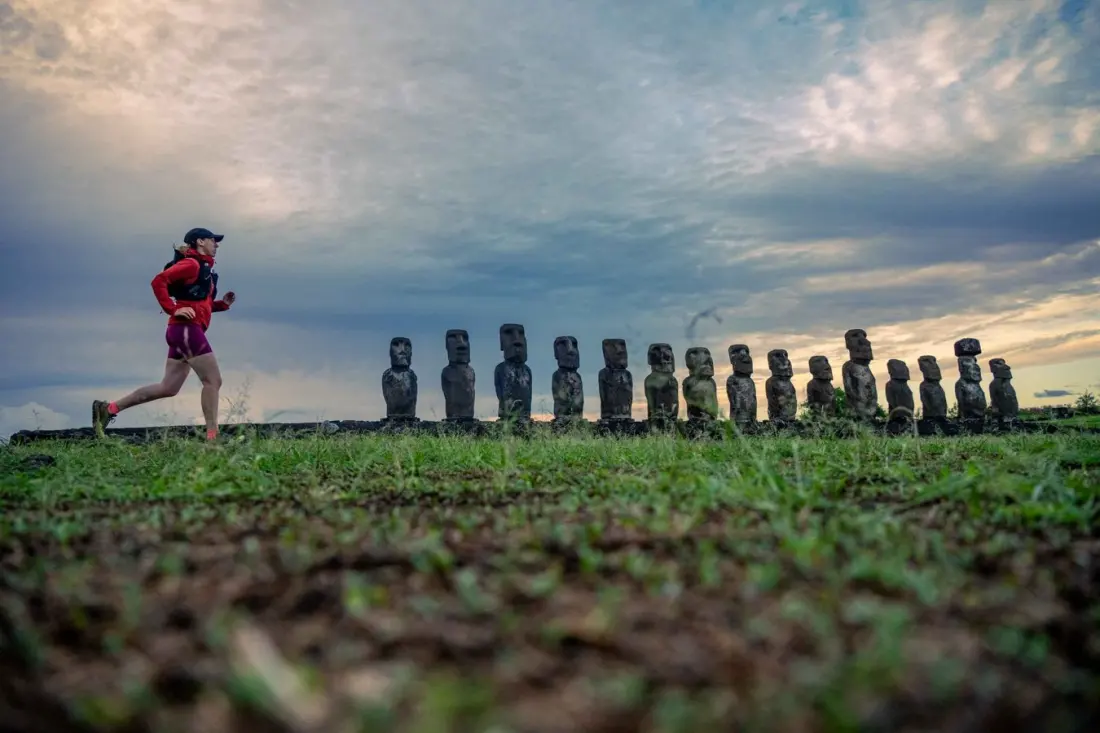
Rapa Nui — still often called Easter Island — sits more than 3,700 kilometres west of mainland Chile, a triangular volcanic speck about 23 kilometres across and home to roughly 1,000 moai, the giant stone human figures that made it famous. It is one of the most remote inhabited places on Earth, and it feels like it: empty coastal roads, horses and cattle grazing in open grassland, and fallen statues lying where centuries left them.
The heart of any visit is Rano Raraku, the extinct volcanic quarry where most moai were carved. Hundreds of figures still stand half-buried in the slopes, appearing to rise straight out of the earth. Travellers who take the time to move beyond the main sites — on foot, by bike, or even running the island's quiet roads over several days — find a stillness that's increasingly rare anywhere on the planet.
But that calm is only part of the story. Rapa Nui is a living Polynesian community, not a frozen open-air museum, and it's in the middle of some difficult conversations. How many visitors can the island actually absorb? How much say should Chile, which administers the territory from 3,700 kilometres away, have over its future? And who gets to decide what happens to the land?
Overtourism pressure led Chile to cap stays: visitors have generally been limited to 30 days, and entry to Rapa Nui National Park — which covers much of the island, including the quarry and the famous ahu platforms — requires a ticket that helps fund conservation. For travellers, that means planning ahead matters more here than almost anywhere else in the Pacific.
The upside for those who make the effort is an experience few places can match: an island you can genuinely cross end to end under your own steam, where the moai are only the beginning. The Indigenous Rapa Nui people, their language, and their traditions are very much present, and supporting locally run guesthouses, guides, and food spots is the clearest way your visit gives something back.
If your idea of a holiday involves ticking off a wonder from a tour bus, Rapa Nui may frustrate you — flights are long, capacity is limited, and costs run high. But if you want remoteness that's real, archaeology you can walk through at your own pace, and the chance to see a culture actively negotiating its own future, it's hard to think of anywhere else like it.