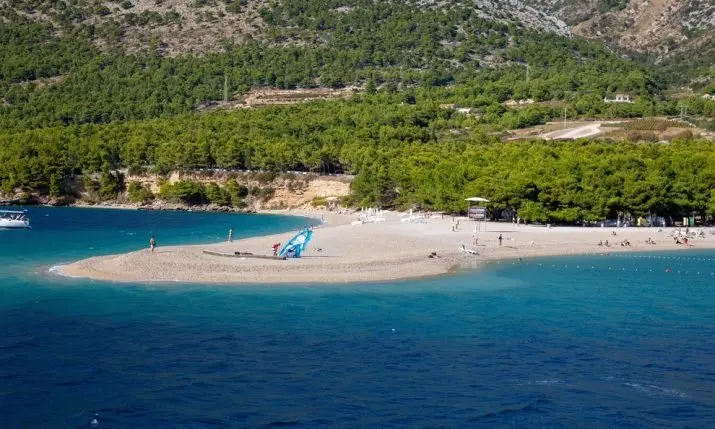
Another pine has come down at Zlatni Rat, the pebble 'golden horn' beach near Bol on the island of Brač — and it's not an isolated incident. News of the latest fall was shared in early reports by a local Facebook group called Spasimo Zlatni rat (Save Zlatni Rat), with a photo showing the tree toppled in the wooded strip behind the beach. Locals and fans of the beach say the losses keep adding up.
The cause, according to reporting by Slobodna Dalmacija, is soil erosion eating away at the ground that holds the pines upright. That's only half the story. Zlatni Rat is a natural oddity: a gravel spit that stretches roughly 500 to 1,000 metres into the Adriatic, its tip constantly reshaped by waves, currents and wind. That ever-shifting form is exactly what makes it one of Croatia's most photographed places — and exactly what makes it fragile. The spit is a protected landscape, and falling trees are a visible symptom of stress on the whole site.
Humans are part of the pressure too. The summer crowds that make Zlatni Rat a tourism powerhouse also trample and compact the ground, and boat anchoring has been flagged as a problem for the seabed around the beach. Together, natural coastal processes and heavy visitor traffic have reignited debate about how the site should be managed — how to protect it without fencing off one of the Adriatic's signature experiences.
Why should this matter to you if a Brač trip is on the cards? First, go with realistic expectations: the beach you see may differ from the postcards, and the pine shade behind it is thinning in places. Second, your behaviour counts — anchor only where permitted (or moor at buoys if provided), stick to marked paths, and avoid disturbing the roots of the remaining trees. Third, consider visiting outside the peak July–August crush; the beach is calmer in June and September, and lighter footfall is kinder to the ground.
There's no suggestion the beach is closing or off-limits — Zlatni Rat remains open and as striking as ever, with Bol's waterfront, windsurfing spots and the climb up to Vidova Gora all nearby. But the falling pines are a reminder that the golden horn is a living, moving piece of coastline, and its future shape depends on how carefully it's treated now. If it's on your Croatia list, it's worth seeing — and treading lightly while you do.