Everyone raves about Munich and Stuttgart, but roughly halfway between them sits a city most travellers scroll straight past. Ulm, on the Danube in Baden-Württemberg, packs in a 1,200-year history, a genuinely weird skyline and the bragging rights of being Albert Einstein's birthplace.
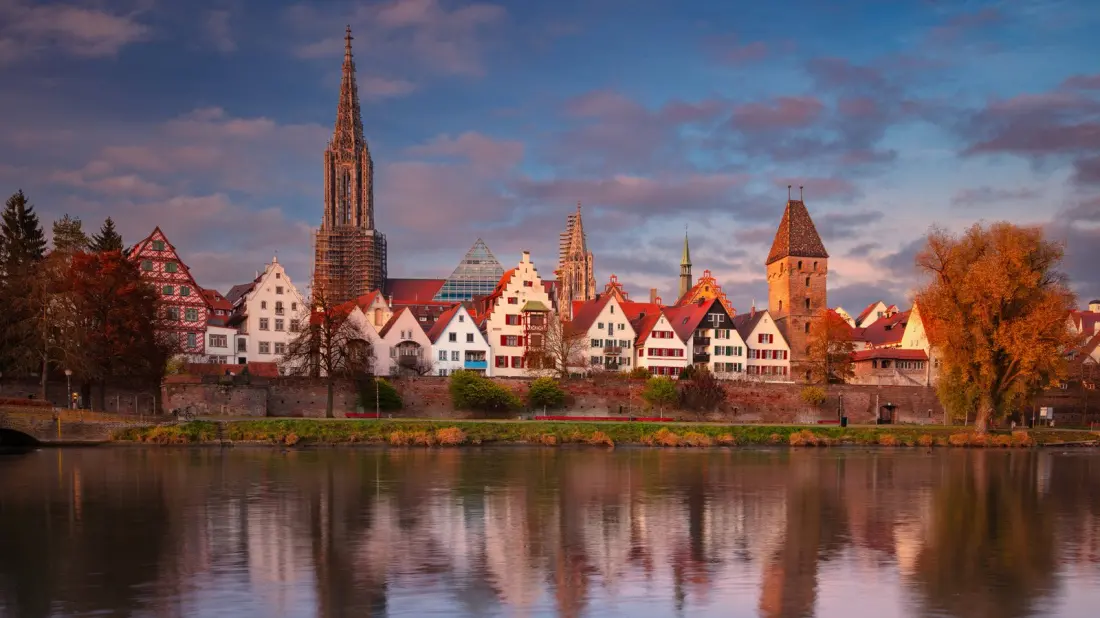
Its showstopper is the Ulm Minster, a Gothic cathedral with the tallest church steeple in Germany. Construction began in 1377 and took 613 years to finish — generations of stonemasons worked on a building they knew they'd never see completed. Climb the tower for the best aerial view of the city and the river, then step back into Münsterplatz square, where the medieval church shares space with the Stadthaus, a stark white modern building hosting art and photography exhibitions.
The Danube splits Ulm from its Bavarian twin, Neu-Ulm, and there are plenty of ways to enjoy it. Remnants of the old fortified city wall still stand along the waterfront and can be walked for river views. Bridges with pedestrian lanes connect the two cities, and from May to September the Ulmer Spatz runs one-hour round-trip boat tours past both banks.
For atmosphere, head to the Fischerviertel — the Fisherman's Quarter — a maze of narrow alleys and small waterways lined with crooked half-timbered houses that once belonged to fishermen and tanners. It's now full of restaurants and shops, and you can even sleep in one of its quirks: the Hotel Schiefes Haus, a half-timbered 'crooked house' that has been leaning for centuries and perches partly over the River Blau.
Culture-wise, the Kunsthalle Weishaupt has shown modern and contemporary heavyweights like Warhol and de Kooning since 2007, while the Danube Swabian Central Museum covers centuries of life along the river. Time a visit for winter and you'll get one of Germany's most atmospheric Christmas markets, held in Münsterplatz beneath the Minster in a tradition dating back to the 14th century.
Ulm works well as a low-effort detour: direct Deutsche Bahn trains run from both Munich (about 90 miles east) and Stuttgart (roughly 60 miles northeast), and it's an easy drive from either. If you've already done Bavaria's big names and want somewhere with real history, walkable streets and far fewer tour groups, this is your city.