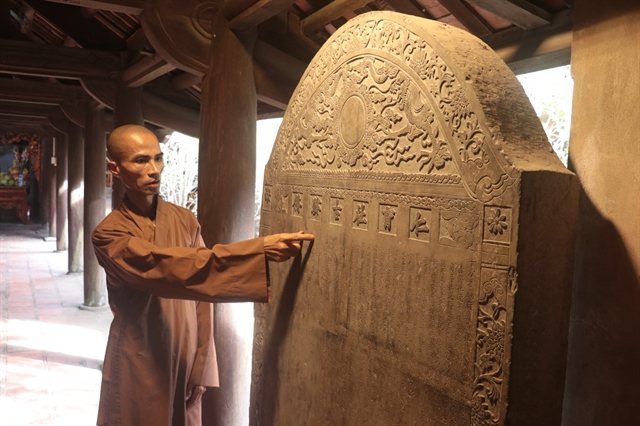
Forty-one stone steles in Hưng Yên Province, south-east of Hanoi, have just earned a place on UNESCO's Memory of the World Regional Register for Asia and the Pacific, recognised on November 5. The carved stones record the rise of Phố Hiến, a trading port that flourished in the 16th and 17th centuries and ranked among Southeast Asia's busiest commercial hubs.
The inscriptions, written in Chinese and Nôm (Vietnamese demotic script), date from the 17th century to the early 20th century and remain at their original sites within the Phố Hiến special national relic complex. Local communities have kept them in place and in good condition for centuries — a big part of why UNESCO flagged them as authentic documentary heritage.
What do the stones actually say? Quite a lot. Steles at Hiến Pagoda from 1625 and 1709, and one at Chuông Pagoda from 1711, record that Phố Hiến once had 25 commercial quarters and markets selling dyed cloth, earthenware, wooden beds and fresh fish. One inscription describes a busy thoroughfare that likely linked the port to the old capital of Thăng Long, today's Hanoi. Crucially, the 1625 stele shows commerce was already thriving before the Dutch set up their trading post — evidence that a home-grown commodity economy existed here before Western merchants arrived.
Beyond trade, the steles document centuries of cultural exchange. Chinese and Japanese traders came first, joined by Dutch, Portuguese and British merchants from the late 17th century. The inscriptions also record how different religions and beliefs coexisted in the port, and they reflect Hưng Yên's long tradition of valuing education. For history-minded travellers, the varied shapes and decorative motifs of the stones double as a timeline of Vietnamese sculpture and fine art.
Why does this matter for visitors? Phố Hiến has long sat in the shadow of Hoi An, Vietnam's better-known heritage port. The UNESCO listing puts it firmly on the map, and it makes an easy day trip or overnight stop from Hanoi. You can pair the stele sites — Hiến Pagoda, Chuông Pagoda, Thiên Hậu Pagoda and the Xích Đằng Temple of Literature — with Hưng Yên's famous longan orchards and old-world streets, all without the crowds of the major tourist towns.
Locals, understandably, are thrilled. Residents like Nguyễn Phương Lan, who grew up walking past the inscribed stones without grasping their significance, say the recognition has sparked a fresh wave of pride and curiosity about their hometown's past.