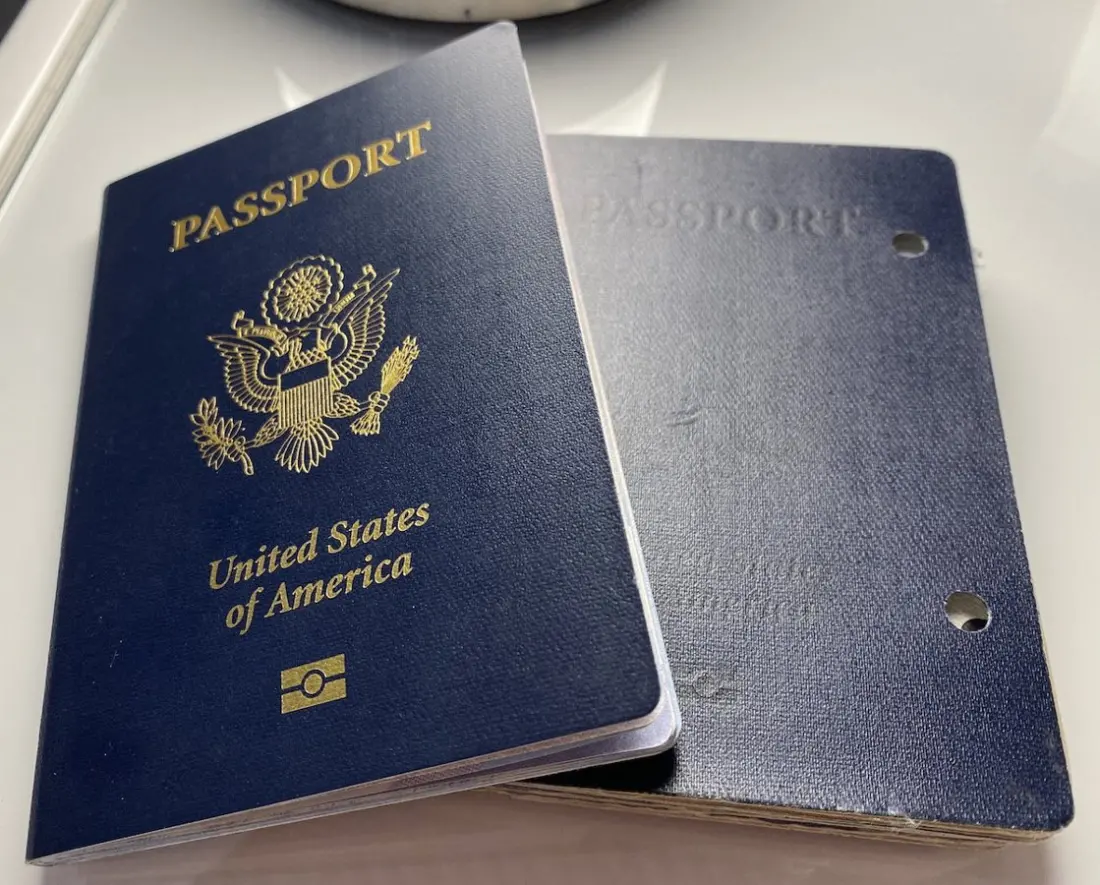
If you've arrived in the United States lately, you may have noticed your passport came home suspiciously blank. That's now official policy: US Customs and Border Protection (CBP) has confirmed it is phasing out the routine use of entry stamps, leaning fully into the biometric systems that have quietly been doing the heavy lifting for years.
The agency frames the move as part of a broader modernisation push — automating forms, rolling out mobile technology, and expanding facial matching at borders. Dropping the stamp saves processing time at primary inspection and cuts operating costs. Admission records aren't disappearing entirely, though: travellers can pull up their entry date, authorised length of stay, and five years of arrival history on the CBP I-94 website, which effectively replaces what the stamp used to prove.
There are carve-outs. Officers may still apply a stamp during secondary inspection, in limited primary-processing situations such as immigrant visas, or if a traveller specifically asks for one. So the souvenir isn't strictly extinct — just no longer standard.
In practice, this change is less dramatic than it sounds. US stamping has been inconsistent for a long time. Global Entry members haven't been stamped for years, and plenty of foreign visitors arriving at major airports have skipped the ink as well, thanks to various trials and kiosk-based processes. What's new is that CBP has made the phase-out official rather than leaving it to chance.
For frequent flyers, the practical upside is real: passports fill up fast when every border adds a stamp, and fuller books mean earlier renewals — and in the US's case, buying extra pages or a whole new passport. Fewer stamps means more room for the visas that actually matter. Security-wise, it's a sensible swap too. A biometric record tied to your face is a lot harder to fake or lose track of than an ink stamp, and the data was being captured anyway.
The trade-off is sentimental. Stamp collectors and casual travellers alike will miss the little rectangle of ink that said 'you were here' — the passport equivalent of a fridge magnet. If that matters to you, your window to ask for one at US entry is narrowing, and other countries are likely watching this space as biometric gates spread through Europe and beyond.
Why it matters for travellers: your passport is no longer your travel log. If you rely on stamps to track your US entries — for visa compliance, immigration records, or employer checks — get familiar with the I-94 website instead, and download your records after each trip. And if you want the ink for the memory, you'll need to politely request it at the booth.