A SWISS flight out of Zurich needed three attempts before it even got airborne — and the culprit turned out to be a single jammed switch.
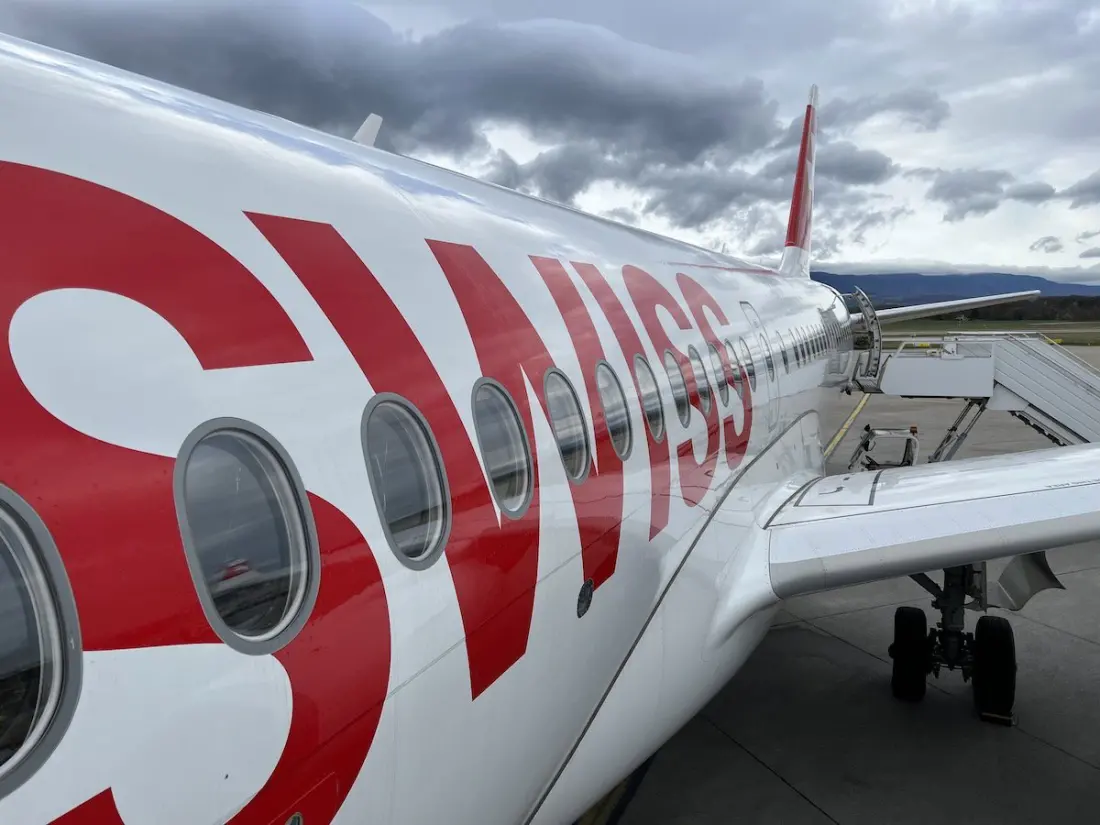
On Tuesday, November 17, 2026, flight LX2110 was scheduled to fly from Zurich to Malaga, departing at 9:35AM on an Airbus A220-300 registered HB-JCM. The plane pushed back on time and lined up on the runway. Then the pilots braked and stopped — at low speed. They ran their checklists, tried again, and stopped again. The captain told passengers that the thrust levers had popped out during the takeoff roll. A third attempt produced the same result, at which point the captain admitted he'd never seen anything like it in 12 years of flying and taxied back to the gate.
A replacement A220 (registration HB-JCO) eventually took off at 1:29PM and landed in Malaga at 3:52PM — roughly three and a half hours late. Not ideal for a sunny-escape route, but a safe one.
So what actually went wrong? SWISS confirmed the aborted takeoffs all happened at around 50 km/h (about 30 mph), so nothing dramatic in terms of speed. On the A220, once the auto-thrust system is armed and the levers are advanced for takeoff, the system takes over and moves the levers forward on its own. Pilots rest their hands on them without applying force; if the system senses resistance, it assumes the crew wants manual control and disengages itself.
That's precisely what kept happening: the auto-thrust wrongly detected resistance that wasn't there, cutting out mid-roll each time. The aircraft's real-time monitoring system showed no errors, so the crew had no obvious fault to work with — hence the repeated attempts. Only when technicians examined the plane did they find the switch that disables auto-thrust was stuck, causing the system to shut down during each takeoff attempt.
Here's the reassuring part: this wasn't a direct safety hazard. The pilots could simply have flown the throttles by hand. But knowingly departing with a faulty thrust switch isn't sensible, and the decision to return to the gate after the third attempt was the right call. It's also a neat illustration of why rejected takeoffs exist — brakes, crews and procedures are built for exactly this, and at 30 mph the whole thing was more inconvenient than frightening.
For travellers, the takeaways are simple. Rejected takeoffs are routine safety tools, and even a triple is more oddity than emergency. Delays from aircraft swaps are handled by the airline, and in this case passengers still reached Malaga the same day. And if your pilot explains a technical quirk on the PA before trying again, it usually means the crew is being thorough, not improvising. Rarely does a departure this strange end so benignly — which is exactly how it should work. Credit: One Mile at a Time.