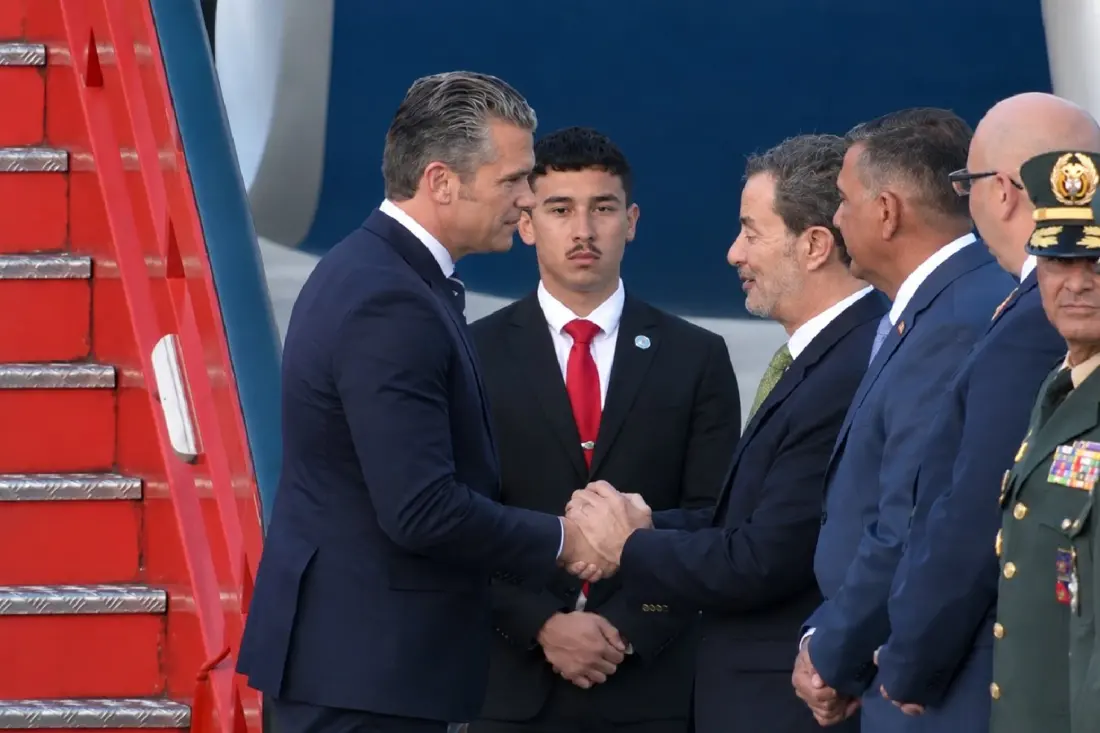
US Secretary of War Pete Hegseth touched down in Bogota on Wednesday, November 18, at the centre of a diplomatic wrangle over how far US military involvement in Colombia's drug war should go.
Reporting citing The New York Times claimed President Abelardo de la Espriella had refused to allow US troops to conduct airstrikes and joint ground operations against trafficking organisations on Colombian soil — reportedly a key aim of Hegseth's trip. The reported reason: the president lacks enough votes in Congress to approve such operations. Colombia's presidential spokesperson, Miller Soto, publicly rejected the claims, calling the New York Times report "absolutely false" and insisting nothing of the sort had been communicated to Washington.
Hegseth's arrival at Bogota's CATAM military air terminal went ahead as planned, though with an unusual twist: he had first made an unannounced stop in Caracas, which was originally listed as the first leg of his regional tour. He landed in the Colombian capital at 5:00 p.m. and was greeted with military honours by Foreign Minister Omar Bula and Defence Minister Jorge Eduardo Mora, alongside the military and police high command.
The agenda covered security cooperation and Colombia's role in the US-backed Shield of the Americas alliance. One tangible outcome: the delivery of a Hercules C-130 transport aircraft to bolster Colombia's security forces' mobility. Mora framed the talks around continued US support for "restoring security for Colombians."
The Venezuela stop was the bigger headline. At Caracas' Miraflores Palace, Hegseth signed a military cooperation agreement with interim President Delcy Rodriguez, announcing a "reinforced defense" pact aimed at narco-terrorists and "foreign actors." He declared Venezuela had shifted from "the most aggressive regional threat" to a "reliable partner" — a change he credited to a US military operation on January 3 that he said resolved a "27-year problem." The trip followed a censure attempt against Hegseth in Congress over strikes on alleged drug-running boats in the Caribbean and Pacific, which have killed more than 200 people. US media suggest Ecuador may be his next stop.
For travellers, this matters as context rather than an immediate warning: US-Colombia relations remain close, Bogota is operating normally, and the visit signals deepening security cooperation rather than instability. But anyone planning trips to Colombia, Venezuela or Ecuador should keep an eye on how this regional anti-drug campaign evolves, since strikes at sea and heightened military activity in the Caribbean could affect regional travel perceptions and insurance assessments over the coming months.
Colombia One