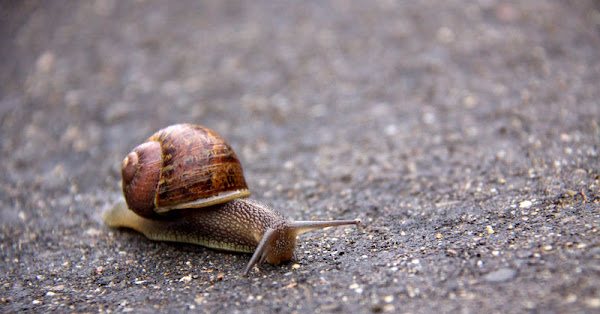
Long before anyone had heard of Wi-Fi, a French inventor claimed he could send messages across the world using mated snails. In 1850, Jacques-Toussaint Benoît announced the Pasilalinic-Sympathetic Compass — a device that would have beaten Marconi's wireless telegraph by 45 years, had it actually worked.
The theory was delightfully odd. Benoît believed that two snails which had mated shared a permanent 'sympathetic' link through an invisible fluid, so touching one would provoke a reaction in its distant partner. Pair up enough snails, he argued, and you could spell out messages letter by letter over any distance — no wires required.
He talked his way into funding courtesy of Monsieur Triat, manager of a Parisian gymnasium, who was promised the whole machine needed 'only two or three bits of wood.' A year, a steady allowance and a lot of carpenter's time later, Benoît unveiled something far grander: two enormous scaffolds, each holding 24 zinc basins (one per letter of the French alphabet), lined with copper sulphate-soaked cloth and glued-down snails. Both machines ended up in the same room, facing each other, since Benoît's apartment lacked two suitable spaces.
The 1850 demonstration in front of Triat and journalist Jules Allix went badly. The word 'gymnase' arrived as 'gymoate'; 'lumière divine' became 'lumhere divine' — across roughly one room. Benoît kept wandering between the two devices, supposedly to 'supervise' the snails. Triat smelled a rat; Allix, remarkably, did not, and published an enthusiastic endorsement in La Presse on 27 October.
Triat then demanded a proper test: instruments in separate rooms, no roaming, and a prize of a thousand francs a day for every day the device kept working. La Presse's publisher Émile de Girardin matched the offer and floated a public demonstration at the Jardin d'Hiver. On the appointed day, Benoît vanished. He was later seen destitute on the streets of Paris and died in 1852, never having proved a thing.
Why does this matter to anyone visiting Paris today? The story survives through Sabine Baring-Gould's account in Historic Oddities and Strange Events, and it's a wonderful slice of the city's eccentric history — the era when electricity was new, biology and physics blurred together in the public mind, and a persuasive man with a bucket of snails could convince a gym owner and a major newspaper that molluscs were the future of telecoms. It pairs nicely with a visit to the Musée des Arts et Métiers, where the genuine story of the telegraph is told, and it makes a great anecdote over dinner in the Marais, roughly where Benoît's fateful apartment once stood.