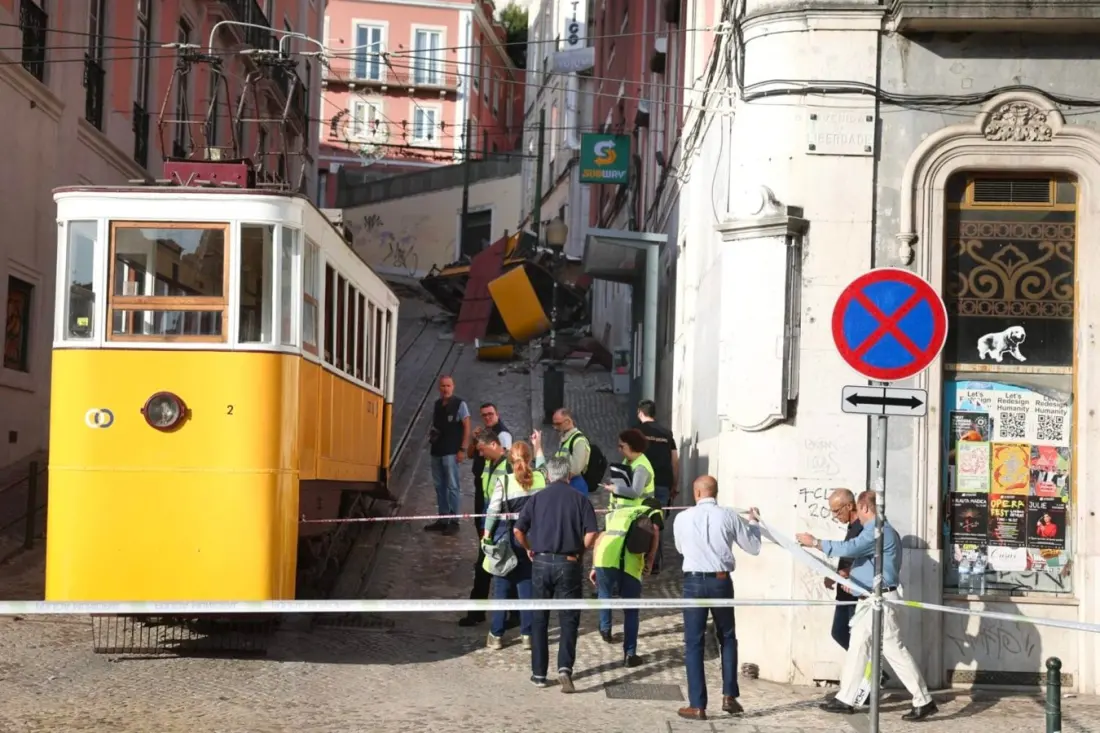
A year on from one of Portugal's deadliest transport disasters, the legal fallout is getting messy. Fidelidade, the insurer of Lisbon's municipal transport operator Carris, has filed a defence at the Lisbon Administrative Court contesting a compensation claim tied to the Glória funicular derailment of September 3, 2025 — while at the same time conceding, in writing, that the famous funicular "could not be regarded as a highly reliable means of transport".
The claim in question comes from the family of Ana Paula Lopes, a charity employee who was killed in the crash. Her widower, Isaque Adam, is seeking around €1 million. His lawyer, Nuno Pinto Coelho de Faria, told the Lusa news agency that the insurer's wording left the family bewildered — and could cut both ways. If the insurer itself admits the funicular was unreliable, he argued, then the accident was hardly unforeseeable, which strengthens the case for civil compensation. He called the filing "a clear and explicit admission" and suggested it "may serve as a useful starting point when it comes to determining liability".
The numbers behind the case are grim. The derailment killed 16 people and injured 24, many of them foreign tourists riding one of Lisbon's most photographed attractions — a Victorian-era funicular that has hauled passengers up the steep slope between Restauradores and the Bairro Alto district since 1885.
The legal manoeuvring is as significant as the concession. The lawyer suspects Fidelidade is trying to steer everything toward criminal liability, because if a court finds an intentional offence, insurance cover can be excluded entirely — leaving individuals, not the insured operator or the insurer, on the hook. He called that approach "an evasion of responsibility". The family, notably, is not waiting for any criminal determination; it is pursuing a civil compensation claim, which under Portuguese law runs independently of any criminal case. Compensation proceedings for other victims, and the official investigation into the cause of the crash, are still ongoing.
Why should travellers care? Beyond the obvious human tragedy, the case is shaping up to define accountability when a heritage tourist transport fails. Lisbon's funiculars and the Santa Justa lift are staples of any city break — charming, historic, and, as this filing inadvertently confirms, subject to real questions about maintenance and reliability. If you're heading to Lisbon, the Glória remains out of the picture pending the investigations, and it's worth checking Carris's official channels before riding any of the historic elevators. The story also shows how long these processes take: a year after the crash, victims' families are still fighting simply to establish who pays.
For now, the insurer's own words have become the most striking piece of evidence in the compensation battle — and a sobering footnote for anyone who rode the Glória for the view.
Portugal Resident, citing Lusa and Correio da Manhã