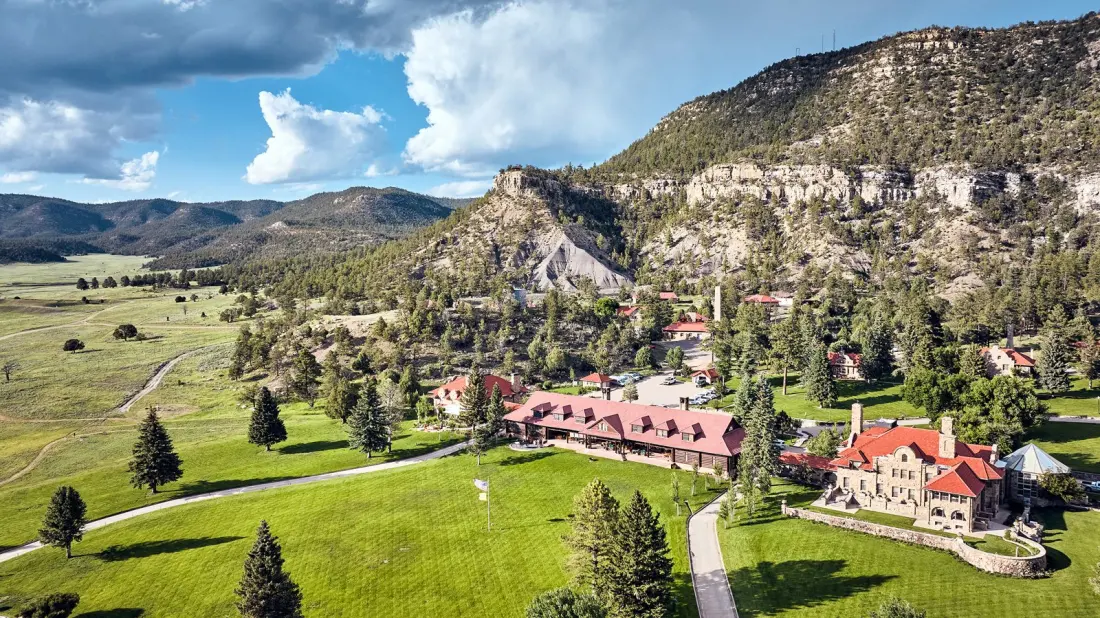
A trout the size of your palm is doing most of the storytelling at Vermejo, a sprawling private wilderness preserve about 40 miles west of Raton near the New Mexico–Colorado line. The Rio Grande cutthroat trout, reduced to fragments of its historic range across New Mexico and southern Colorado, is being carefully reintroduced to the preserve's mountain streams — one small piece of a restoration experiment that spans nearly 1,000 square miles.
Vermejo was the passion project of Ted Turner, the CNN founder who died this spring at 87 and who at one point owned roughly two million acres across the United States and Argentina. His idea flipped conventional ranching on its head: buy degraded Western cattle land, restore the ecosystems first, then build a business — luxury lodging, guided wildlife experiences, regulated hunting — that pays for the land's own protection. Vermejo, acquired in 1996, is the flagship of his Ted Turner Reserves, alongside Ladder and Armendaris in New Mexico.
The scale takes a while to sink in. The preserve runs more than 30 miles north to south, climbing from shortgrass prairie through ponderosa forests to alpine terrain above 12,000 feet, with two mountain ranges inside its boundaries. Elk, mule deer, pronghorn and black bears roam freely; bison graze where cattle once overworked the grass. Turner's bison programme is one of the largest privately managed herds in the world, tens of thousands of animals strong — a childhood promise made after reading about the species' near-extinction in the late 1800s.
Guests stay at Casa Grande, Turner's historic home turned lodge, where mornings start in a double-height library and days unfold however you like: horseback rides across open prairie, fly-fishing for native trout, truck-based wildlife watching, clay shooting, or high-elevation hiking. Meals lean on the land — bison steaks and vegetables from the on-site greenhouse. There's even a geeky bonus for geology fans: the K-Pg boundary layer, the thin seam marking the asteroid impact that wiped out the dinosaurs 66 million years ago, runs right through the property.
What makes Vermejo unusual is that it's managed less like a resort and more like a giant ecological restoration site. Biologists monitor creek recovery, vegetation and predator-prey dynamics; creeks are being re-shaded and re-beavered to cool water for the trout; non-native fish are removed. The trade-off for all this is price and exclusivity — it's an all-inclusive, high-end operation, and a genuinely quiet one, since guest numbers are tiny relative to the acreage.
For travellers, this is the anti-theme-park version of the American West: no crowds, no queues, just enormous space and wildlife that behaves as if you're not there. If you've done the national parks and want something closer to having your own — with a conservation story you can literally fish for — Vermejo belongs on the shortlist.
Story reported by Sunset.