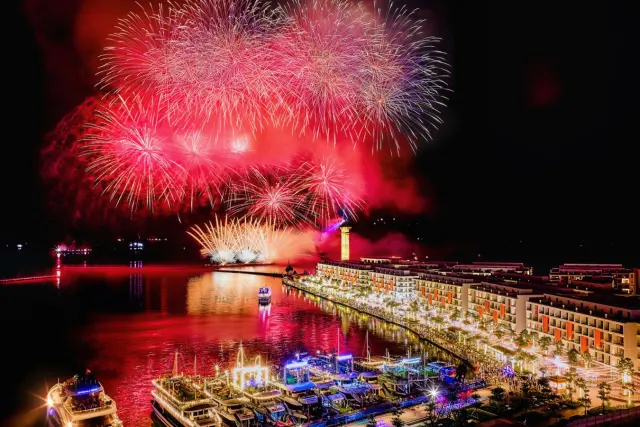
Vietnam has quietly become one of Asia's tourism success stories. In the first nine months of 2026 it welcomed roughly 17.7 million international arrivals, up 14.5% year-on-year, plus about 126 million domestic trips, generating an estimated VNĐ874 trillion (US$33.8 billion) in revenue. It also ranked second worldwide in the World Economic Forum's Travel and Tourism Development Index improvement, and at the 2026 World Travel Awards it took home Asia's Leading Destination for the eighth time and Asia's Leading Heritage Destination for a fourth.
So why is the industry now talking about a rethink? Because the people driving that growth — from the Vietnam National Authority of Tourism to major operators like Vietravel — believe broad awareness campaigns are no longer enough. With every destination on earth fighting for attention, Vietnam wants its marketing to become surgical: targeted markets, tailored messages, specific products and named distribution partners, all aimed at turning promo events into actual bookings.
The tactics have already evolved. Vietnam has appointed tourism ambassadors, leaned on cinema to showcase destinations, built out digital marketing ecosystems and focused campaigns on high-potential markets including Japan, India, Russia, Australia and the UAE, using fairs, festivals and food-led cultural events as entry points.
What's holding it back, insiders say, is coordination and money. Cooperation between central agencies, provinces and private businesses is patchy, and promotion funding is limited and unstable, so the national image abroad remains inconsistent. Politburo Resolution No 26-NQ/TW now calls for a unified, professional national promotion programme that bundles tourism with the country's broader image — its culture, heritage, people and investment appeal.
Vietravel chairman Nguyễn Quốc Kỳ argues the country has plenty of great destinations but still no strong, recognisable national brand that connects emotionally with travellers. His fix: sustained, coordinated promotion using data, AI, digital platforms and content creators. Nguyễn Anh Tuấn of the Institute of Tourism Economics goes further, suggesting Vietnam rank its priority markets for 2026–30 — core, expansion and long-horizon — and give each one its own message, flagship products and performance indicators, with proper follow-up after every trade fair and familiarisation trip.
For travellers, this means Vietnam will likely get easier to research and book in your language, more flights and packages from emerging markets, and sharper niche products — heritage routes, community-based ecotourism spots like Pù Luông in Thanh Hóa, culinary tours — rather than one-size-fits-all beach-and-city combos. If you've been waiting for a sign to plan that Vietnam trip, the destination is only getting more polished from here.