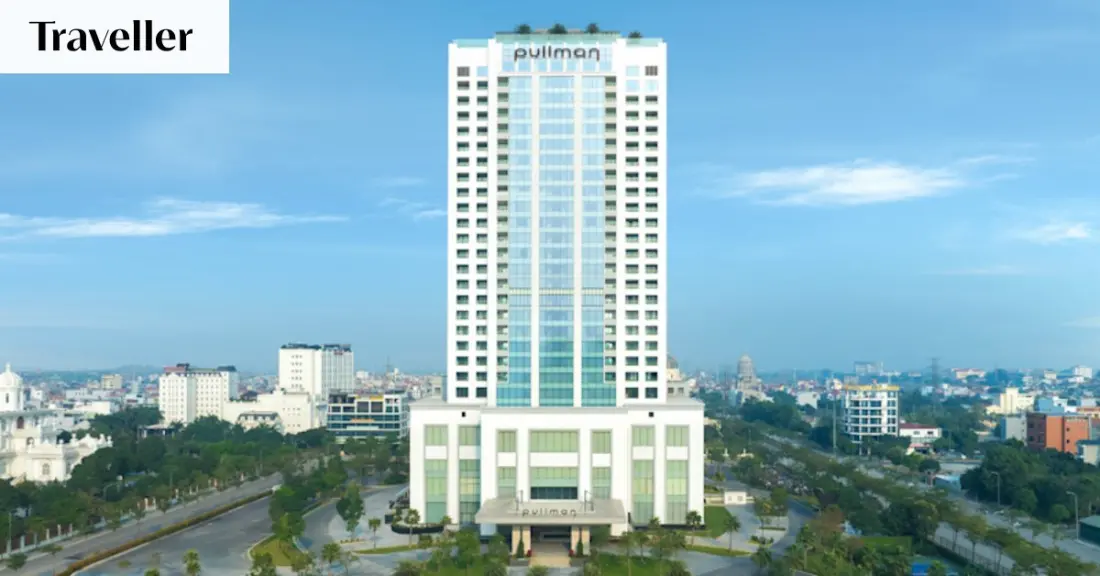
The limestone karst country of Ninh Binh, two hours south of Hanoi, has long been the Vietnamese capital's laid-back weekend escape. Rice paddies, caves, rivers and village lanes sit under UNESCO World Heritage protection, and the region's skyline has stayed stubbornly flat. That changed this year, when Pullman became the first international hotel brand to open here — in a 29-storey tower that's now the tallest building in the entire delta.
That height turns out to be a genuine selling point. The reviewer behind this piece notes that no taxi or ride-share driver could possibly miss the place, and finding your way back after dinner is as simple as looking up. The tower was originally designed as residential apartments, which gives the 283 rooms generous bones: balconies, floor-to-ceiling windows, and floor plans from 50 square metres up to a 268-square-metre presidential suite with views on three sides. Even entry-level rooms are roomy by international standards.
Facilities lean resort-style: three pools, a gym, event spaces, a wellbeing centre, plus two ground-floor restaurants and a lounge. An executive lounge serves suite guests. A second phase lands by January 2027, adding a spa, mini-golf and two more restaurants. The decor nods to the surrounds — limestone textures and rice-paddy colours, with contemporary art throughout.
The hotel is two months old, and the review is honest about the seams. Weekend occupancy has already hit 90 per cent, but midweek the huge social areas feel empty, and staff are still finding their feet with hotel-style service — though the writer praises the warmth typical of Vietnamese hospitality. Oddities like missing hand towels and towel hooks are forgiven thanks to one small triumph: every light switch is labelled, works, and glows gently in the right place at night. Superior rooms start from $130.
One quirk of the location adds unexpected theatre. The building belongs to Ninh Binh's self-made "cement king", whose neighbouring development includes several mini-replicas of the Vatican — surreal from street level, fascinating from the writer's 23rd-floor suite.
The real draw, though, is what's outside. The old town is a short walk away, with a riverside night market, lantern-lit strolls, local specialities like goat and snails, and family-run restaurants the reviewer ranks among the best meals of their time in Vietnam. UNESCO protection means the karst scenery won't be changing — but the arrival of a global hotel brand suggests this once-under-the-radar corner of Vietnam is about to get a lot busier. For now, midweek stays offer a rare combination: an international-standard room, near-empty facilities, and a World Heritage landscape at your window.