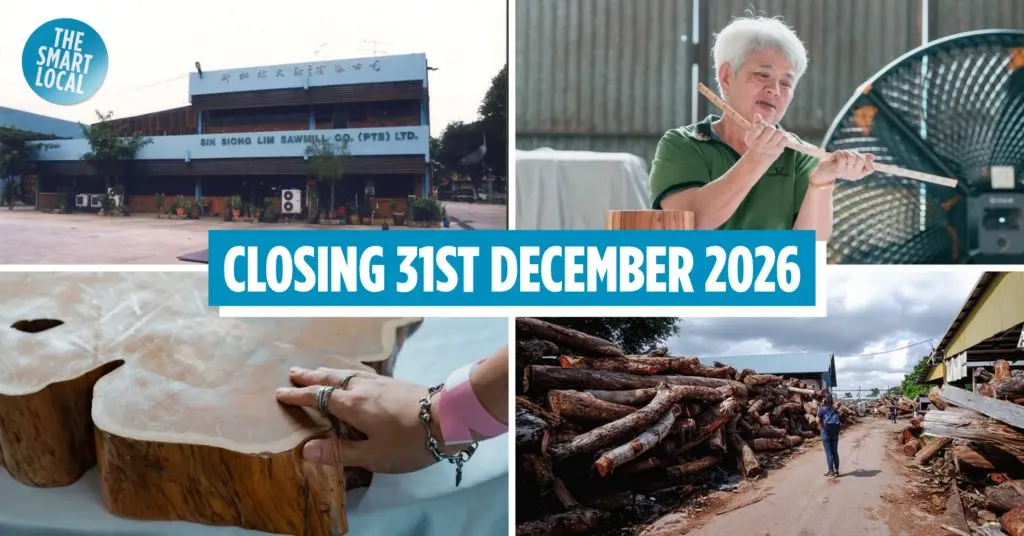
Sin Siong Lim Sawmill, the final working sawmill in Singapore, will shut its doors on 31 December 2026, ending more than 110 years of history. Tucked away in the Sungei Kadut Industrial Estate in Kranji, the family-run operation has long been the place where the city-state's felled trees get a second life as usable timber instead of ending up as waste.
The business dates back to 1912, when it opened on Syed Alwi Road in Jalan Besar, an industrial stretch that also housed slaughterhouses and factories. During WWII the premises were repurposed by occupying forces as an internment and screening centre. In 1975 the sawmill relocated to Sungei Kadut, where it has been ever since. Founder Lim Woon Khuan arrived from China in the early 1900s, worked his way up through the company, and eventually took it over; today his daughter Ms Lim Woon Khim, 70, runs it with her siblings, having joined full-time at 17.
Originally the mill imported wood from Sarawak and then Peninsular Malaysia, but rising shipping costs and export restrictions in the 1980s forced a pivot. It became the de facto destination for repurposing locally felled trees, its main customers being shipyards that use sturdy wooden blocks to support vessels during repairs. Rain tree wood, from Singapore's most common tree species, is prized for tabletops, though Ms Lim notes it needs special termite-treatment oil or the insects will eat right through it. Rarer stock can be startlingly valuable: a sample of sandalwood on display was valued at around $20,000 per kilogram.
Before closing, the mill opened its doors through OH! Open House's Departures programme, which pairs tours of vanishing spaces with artist installations. Visitors saw a short film by contemporary artist Robert Zhao Renhui reflecting on urbanisation and deforestation, plus sculptor Lewis Choo's The Wound, a fallen trunk sprouting ceramic lingzhi fungus. Ms Lim also demonstrated the machinery, including an 80-year-old hand saw and a European cutting machine that cost $80,000 but replaced a four-person operation with a single, safer one.
The closure leaves a genuine gap. With forested areas like Maju Forest, Tengah and land near Gillman Barracks slated for development, Ms Lim worries about what happens to the resulting green waste once Singapore loses its only ethical outlet for felled timber; disposal by the truckload can cost landscaping firms tens of thousands of dollars a day, raising the risk of less scrupulous dumping. She has no plans to move into another industry, and no extensions to the lease were possible despite a pandemic-era reprieve.
For travellers interested in Singapore beyond the hawker centres and malls, this is a reminder that the city's disappearing trades are its most compelling stories, and that organisations like OH! Open House offer rare access to them through guided tours of industrial and heritage sites. The sawmill itself is not open for walk-ins, and its Departures tours have wrapped up, but the programme continues elsewhere, with past editions covering one of Singapore's last working kelongs. Watch their website or social channels for the next outing, and pair it with nearby heritage tours of wartime relics and industrial Kranji for a side of the island most visitors never see.
Story via The Smart Local