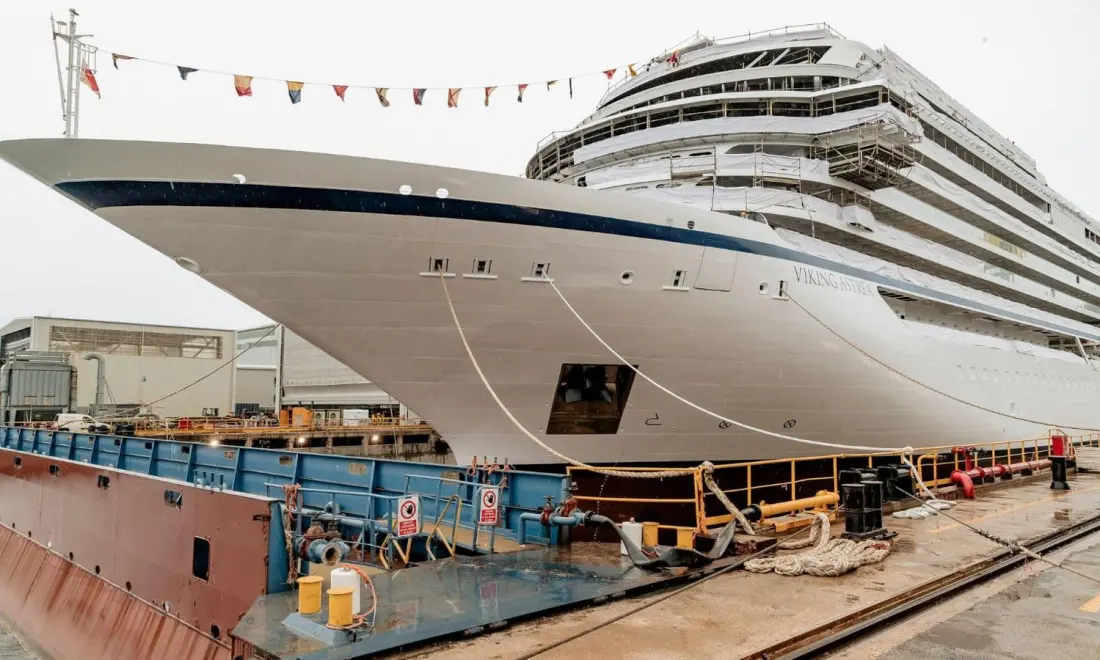
Viking's newest ocean ship has touched open water for the first time. The Viking Astrea completed its float out at the Fincantieri shipyard in Italy, where a ceremonial cord was cut before the vessel sailed out of the build dock. It now heads into an outfitting dock for interior fit-out ahead of a May 2027 debut.
What makes the Astrea notable is its propulsion. It's the second Viking ship, after the Viking Libra, designed to run partially on liquefied hydrogen and fuel cells as part of a hybrid system — which means it can operate with zero emissions when needed. That capability matters increasingly for where a ship can actually go. Norway, for one, is moving towards admitting only zero-emission cruise ships in sensitive waters, and European environmental rules generally are tightening. Ships like the Astrea are built to stay welcome in fragile and remote destinations that stricter regimes might otherwise close to conventional vessels.
In terms of size, the Astrea is classic Viking: 54,300 tons with 499 staterooms carrying a maximum of 998 guests — small by modern ocean-cruise standards, which suits the kind of port calls and expedition-adjacent itineraries the line favours. The first season will be spent in the Mediterranean and Northern Europe.
Viking CEO Leah Talactac framed the float out as another step in the company's push for more efficient ship design, and the timing is no accident. As ports and governments raise the emissions bar, hydrogen-capable ships give a line like Viking a route to keep selling Norway's fjords and other environmentally protected corners of the map without a fleet overhaul later.
For travellers, the practical takeaway is simple: if you've been eyeing a Viking sailing for 2027 and care about how your ship performs in ports like Bergen or Geiranger, the Astrea and Libra are the ships built for that future. Bookings for a May 2027 launch season in the Med and Northern Europe will appeal both to Viking regulars and to anyone who wants a smaller-ship experience with a lighter footprint.