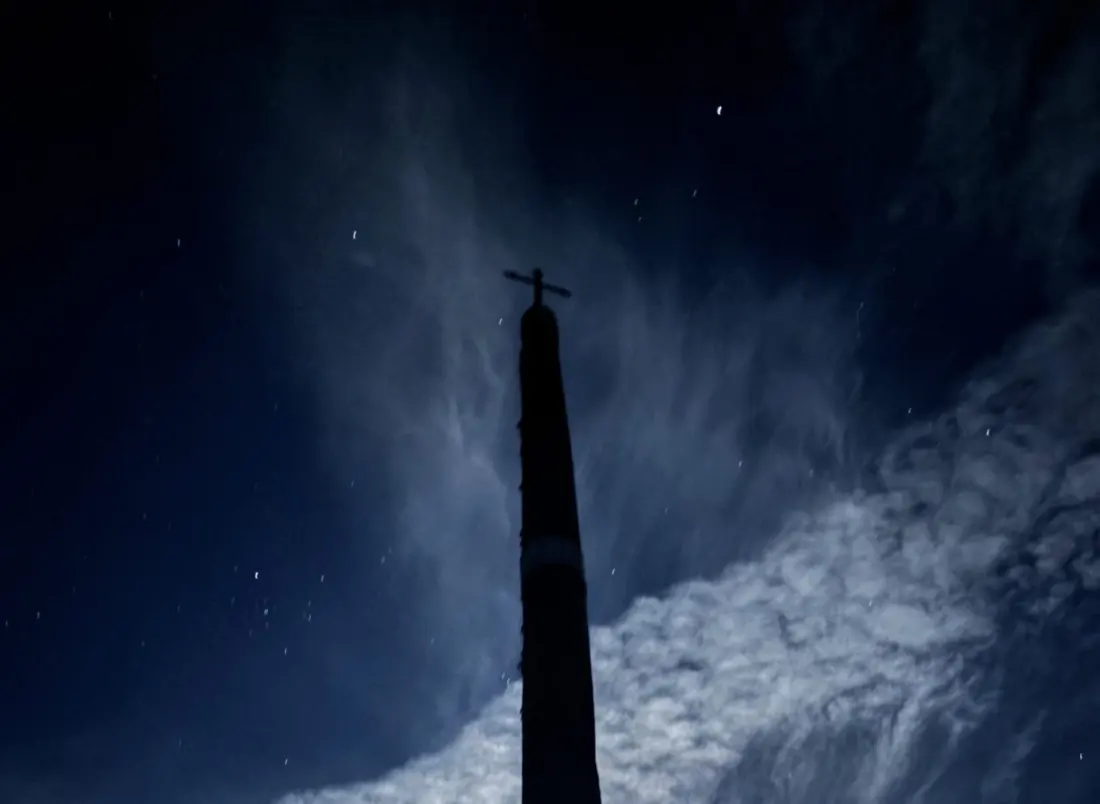
The Cruz del Ferro, an iron cross mounted on a huge pile of stones along Spain's Camino de Santiago, draws pilgrims who carry a symbol of their burdens to leave at its base. One hiker on day 30 of her pilgrimage turned that tradition into something unforgettable: a midnight walk from Astorga to the cross, timed to arrive at sunrise under a full Taurus moon.
Setting out at 11 p.m. with an Argentinian friend she'd met on the trail, she walked the first hour together, talking in a mix of Spanish and English about what they each hoped to let go of at the cross. Both had been inspired to walk the Camino partly by Paulo Coelho's The Pilgrimage — a coincidence that felt like more than chance. Then they split up, each walking alone under a moon so bright it cast shadows.
The night walk had its rough stretches: aching feet, heavy eyelids, and a final hour of tripping over loose rocks in the dark. Somewhere in the middle she prayed aloud for more than an hour and a half, working through the people who had shaped her life before turning to her own intentions. Around 4:15 a.m., a cow appeared on the path and silently led her forward for a few minutes — a surreal bit of company she took as encouragement.
She reached the cross at 5:55 a.m., dozed against a post, then reunited with her friend beside the stone building. Shivering in the pre-dawn cold, they wrapped in sleeping bags and huddled for warmth as cows mooed in the distance and the sky caught fire. Keen to honour the site's older, possibly Roman or Celtic history beneath the Christian cross, they waited until most other pilgrims had moved on.
The ritual itself is simple but powerful: you throw a stone — or whatever represents your burden — backward over your shoulder, leaving it at the foot of the cross. She carried through on everything she'd prayed about during the walk, and described walking away feeling genuinely lighter.
The final stretch delivered, too. The pair covered the last nine kilometres together, descending past a valley so flooded with cloud it looked like a white sea, before reaching El Acebo, a tiny mountain village on the León stretch of the French Way. They took bunks at Hostel Mesón El Acebo, showered, slept, and spent the afternoon in slow recovery — journaling and a low-budget dinner of leftover pasta, tuna and sweet pepper, capped with flan from the albergue bar.
Why care about this? The Cruz del Ferro is one of the most emotionally charged stops on the Camino Francés, and walking to it overnight is a legitimate option for pilgrims chasing cooler temperatures, quieter paths, or a sunrise arrival. It's a reminder that the Camino's magic isn't just the cathedral in Santiago — it's these strange, personal nights on the trail, and the small mountain villages like El Acebo that catch you at the end of them.