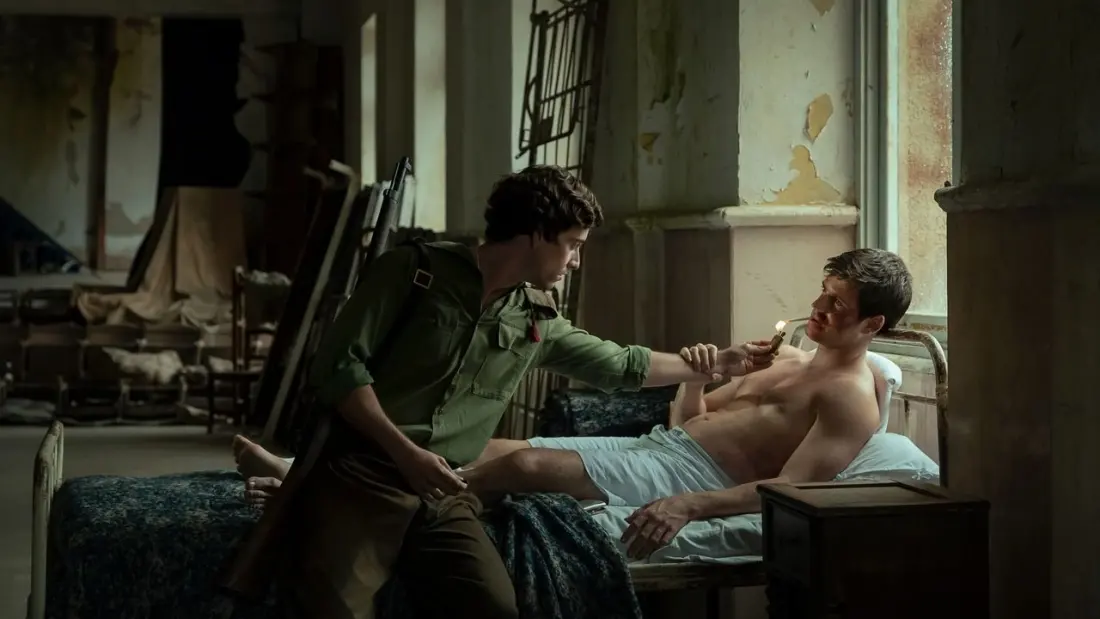
A new film is shining a light on a side of southern Spain that beach resorts and flamenco shows rarely touch. La Bola Negra, from Spanish filmmaking duo Javier Calvo and Javier Ambrossi (the pair behind Veneno), weaves Federico García Lorca's final unfinished play into a story about Civil War Spain and the queer lives that history tried to erase. Singer Guitarricadelafuente makes his acting debut as a young conscript coming to terms with his sexuality, and performs the film's theme song, La Nieve.
For travellers, the film doubles as an itinerary. In Granada, the whitewashed Huerta de San Vicente farmhouse where Lorca spent summers from 1926 to 1936 and wrote Blood Wedding and Yerma is now a small house museum. He left it for the last time on 9 August 1936; he was executed days later, likely in the pine ravine of Barranco de Víznar near the village of Alfacar, where his remains have never been found and a simple stone monument reads "Lorca era todo".
The region's queer history goes back far beyond Lorca. Near Córdoba, the excavated Umayyad palace city of Madinat al-Zahra recalls 10th-century caliph al-Hakam II, who openly kept male partners. Seville's Alcázar preserves the Hall of Ambassadors, once the throne room of poet-king al-Mu'tamid, whose passionate bond with poet Ibn Ammar ended in imprisonment and murder with an axe above the palace gate. At the Alhambra, poetry carved into the walls connects to the Nasrid court, where sultans like Yusuf III wrote homoerotic verse before the dynasty's fall in 1492 opened the door to the Inquisition.
There are darker chapters too. In Alhama de Granada, a plaque near the parish church honours Eleno de Céspedes, born around 1545, an intersex former slave who served as a soldier and licensed surgeon before the Toledo Inquisition punished them in 1587. On the coast, Torremolinos's Pasaje Begoña alley hosted Spain's earliest gay bars from 1962; a 1971 police raid arrested over a hundred people, but the town rebuilt into an international gay resort, and in 2019 the alley became Spain's first officially designated Place of LGBT Historical Memory, twinned with New York's Stonewall Inn. Huelva's abandoned provincial prison, one of only two Franco-era facilities for the "rehabilitation of homosexuals", closed in 1996 and carries a commemorative plaque today.
Why does this matter for a holiday? Because it gives Andalusia's famous sights a second reading. The Alhambra and the Alcázar aren't just architectural wonders; seen through the lives of the people who lived and loved there, they become stories of desire, power and survival. Pair Lorca's Granada with coastal Torremolinos and you get a trip that spans a millennium of queer Spanish history, from caliphs to cabarets.