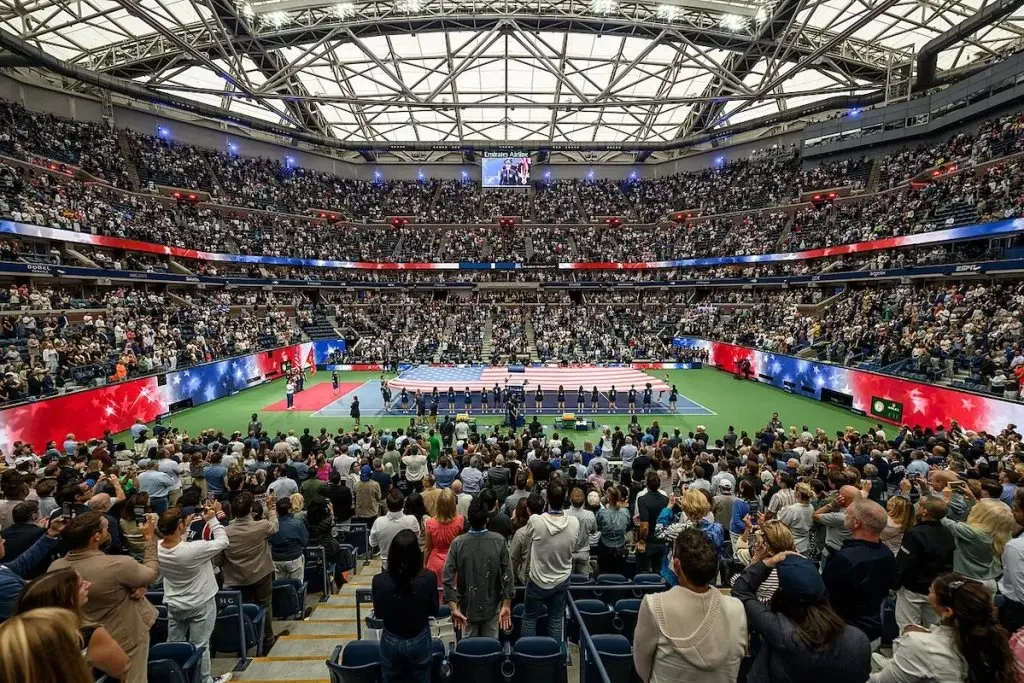
The U.S. Open handed out almost 100 creator credentials this year, nearly double last year's total, and not everyone in the stadium was thrilled about it. A TikTok showing an influencer filming with a ring light while a point played out behind her racked up more than 750,000 views, with the caption summing up the mood: disbelief that this is what live sport now looks like.
It wasn't just online grumbling. Chair umpire Kader Nouni had to pause and address a group taking photos in a hospitality suite mid-match, asking them to sit down. The clash between spectacle and sport is becoming a recurring headache for live events that lean hard into social media coverage.
Why do organisers keep inviting the creators in? Because the tournament is a tourism machine. Over one million people attended this year's event in New York, and the USTA estimates more than 40% of visitors came from outside the local area, with 8% travelling from other countries. That kind of footprint makes the US Open one of the biggest annual draws on the New York calendar, and creator content is seen as free marketing to keep those numbers growing.
The tension, though, is real for regular ticket-holders. Fans who pay serious money for seats increasingly find themselves sharing space — and sightlines — with people there primarily to film. Cruise lines, music festivals and other tourism operators are running into the same friction as they court creators with perks, backstage access and dedicated zones.
For travellers, the takeaway is practical rather than philosophical. Expect creators to be a visible presence at big live events, expect some of the best seats to be occupied by people filming, and consider whether a smaller tournament or an off-peak session gives you a better experience than the headline event. If you're going to a major sports event purely for the atmosphere, weekdays and early rounds are usually where the actual tennis fans are.
The debate isn't going away. Live tourism is booming and creators are now part of the commercial model, but as the US Open showed, there's a limit to how much filming an audience — or an umpire — will tolerate before someone says something.
Original source: Skift