Everest in autumn is a strangely quiet place. The fixed ropes are gone, the ladder bridges over the Khumbu Icefall's crevasses have been pulled out, and the mountain belongs almost entirely to whoever shows up. This month, that's a four-person Russian team — Andrei Vasiliev, Natalya Belyankina, Serguey Kondrashkin and Valery Sipilov — who left Lobuche on 9 October planning to force a route through the Icefall without any of the usual infrastructure.
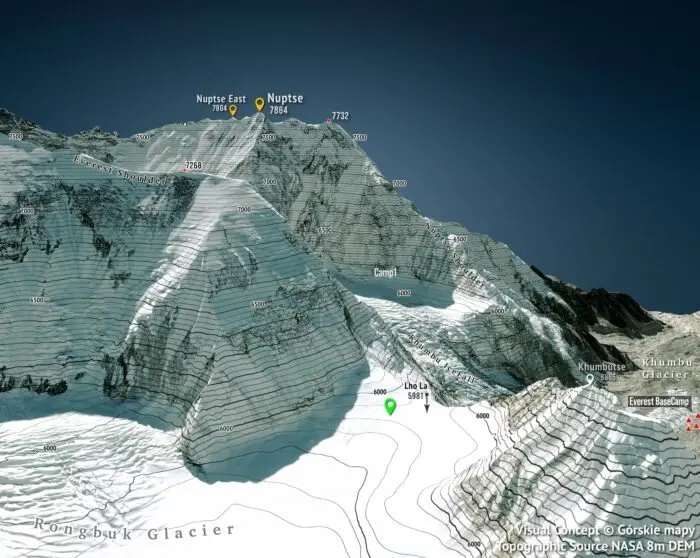
It didn't go well. Setting off at 5 am, they picked a line through the central section of the icefall, describing the terrain as looking like pure chaos until you break it into sections. Fresh snowfall in Nepal had plugged some crevasses, but it also meant relentless trail-breaking. Kondrashkin described sinking waist- or chest-deep again and again. They managed 5,700 metres by nightfall, camped on a scraped-flat platform, then gained just 100 metres in six hours the next day before calling it. Two days for a fraction of the route was enough.
The pivot is the interesting part. Rather than retreat all the way down, they re-crossed the icefall in three hours — versus a day and a half going up — and camped below Lho La, the col between Khumbutse and Everest's West Shoulder, sitting right on the Nepal-Tibet border. From there, they climbed the 600-metre mixed wall to the col in a single day, scouted toward the base of the West Ridge, and dropped back to Lobuche with their objective now clear: an autumn attempt on the long West Ridge route, which almost nobody touches outside of winter expeditions.
That route has some company coming. German climber Jost Kobusch is due to try the same ridge solo in about two months, on his fourth attempt at a winter Everest. The Russians will effectively have done the reconnaissance for him.
For travellers, the quieter details in the team's reports are the most evocative. Belyankina described trekkers clustering at the famous Everest Base Camp rock — one visitor playing saxophone — and then, a couple of moraines later, nothing but silence and empty mountain. Late autumn in the Khumbu offers crisp weather, thin crowds and a base camp experience stripped of its spring circus. You won't be crossing the Icefall, but the trek to stand where these climbs begin is very much open, and right now, wonderfully empty.