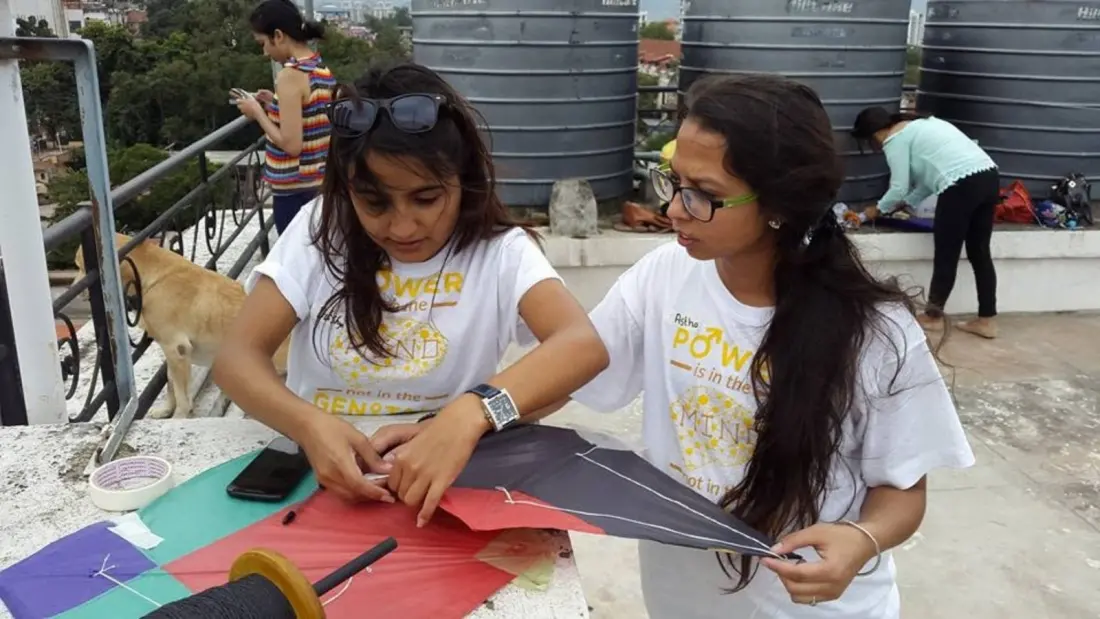
If you're in Kathmandu in early October, look up. The skies over the city fill with paper kites duelling for territory, and every so often a cry of "Chet!" rings out from the rooftops — the victory shout when one kite line slices through another.
Kite flying is inseparable from Dasain, Nepal's biggest festival, which this year puts 17 October in the spotlight. The tradition carries real cultural weight: flying a kite is a message to Indra, the rain god, asking him to wrap up the monsoon now that the rice paddies have had their fill. It is also thought to bring prosperity, honour dead ancestors, and guide recently departed souls heavenward. But screens nearly killed it off among the young — it took the Covid-19 lockdowns to bring kites back to the rooftops, and they've been up early this year on the fresh afternoon breezes.
One of the more interesting twists is who's flying. Kite culture in Nepal has long been a boys' club: girls typically watch from the sidelines while brothers and fathers battle it out. Priya Joshi is changing that. Her father passed on the obsession, spending Dasain on the roof taking on the neighbourhood, and a decade ago she founded the All Girls Changa Party — an annual women-only kite-fighting gathering, running again this year on 17 October. Children aged seven and under are welcome too.
The point isn't just fun, though there's plenty of it. Mainstream kite fights can be intimidating for newcomers, especially women, so Joshi built a space where no one gets mocked for being a beginner. Her logic is quietly empowering: many women refuse at first, scared of embarrassing themselves in public, but once they try, they discover it isn't hard — and end up having the time of their lives. Social media, she notes, has been crucial in connecting people who share the passion and getting older generations to pass the culture on.
And make no mistake, Nepali kite fighting is a contact sport. Where Western fliers are happy to watch their kites drift, Nepali kites are built to kill. The line is coated in majha — ground glass mixed with starch — turning the string into a saw that cuts rival lines clean through. Technique matters too: pulling the lattai (reel) makes the kite climb or turn, letting out string gives it reach, and the last kite flying wins. There's even a rich local vocabulary for it all, from the mandali (a stone on the string for hunting low-fliers) to the affectionately named chakchake, a kite with attention deficit disorder.
For travellers, this is a genuine slice of living intangible heritage you can join rather than just watch. Rooftops across Kathmandu welcome visitors during Dasain, kites and string are cheaply available in local bazaars, and someone will almost certainly teach you the pull-and-release basics. Timing your trip to the festival means monsoon's end, clear Himalayan views, and a citywide celebration — with a good chance of losing your kite to an eight-year-old with better glass-coated line.
First published by Nepali Times.