Sake isn't a rice wine — it's brewed more like beer, and right now it's having a creative moment. With thousands of breweries across Japan pushing new styles every brewing year, a panel of top sake sommeliers has shared which bottles deserve a spot on your shelf and which bars are worth planning a night around.
Start with place. New York sommelier Fayee Wong points out that water, not just rice and yeast, shapes a brewery's character — most Japanese brewing water is soft, with mineral content that varies by region. That sense of terroir is increasingly the whole point: bottles from Yamagata, Nara and the Tohoku region are leaning into local identity, often via traditional kimoto and yamahai methods. Andrea García of Nobu Hotel Madrid singles out Tohoku for its climate and the quality coming out of it.
If you want one name to hunt down, try Toko in Yamagata — brewing since 1597 and among Japan's oldest producers, known for pure, elegant sake made from local rice. For something wilder, London's Honey Spencer recommends Te To Te from Gunma, a natural-yeast kimoto sake she pairs with smoked fish — though she warns it demands attention rather than easy sipping. On the rare end sits IWA 5 from Toyama's Shiraiwa Kura, a Junmai Daiginjo blended like champagne for balance, which Spencer calls proof there's still room to innovate in an ancient category. Classicists should note Anthony Yukio Takamoto's producer list: Senkin, Hananoka (Ubusuna), Aramasa, Ryuusei and Iwashimizu. He's also excited about 'zaku concentration,' a thick, luscious 30% ABV sake made with moisture-extraction tech borrowed from Mitsubishi.
For collectors chasing the unusual, look at koshu — aged sake matured at least three years, sometimes decades, and just 1% of production. It drinks nutty and savory, with caramel and dried fruit notes. A proper namazake (unpasteurized) from a small brewery is the other insider flex; general manager Francisco Afonso reckons either one will reset your expectations.
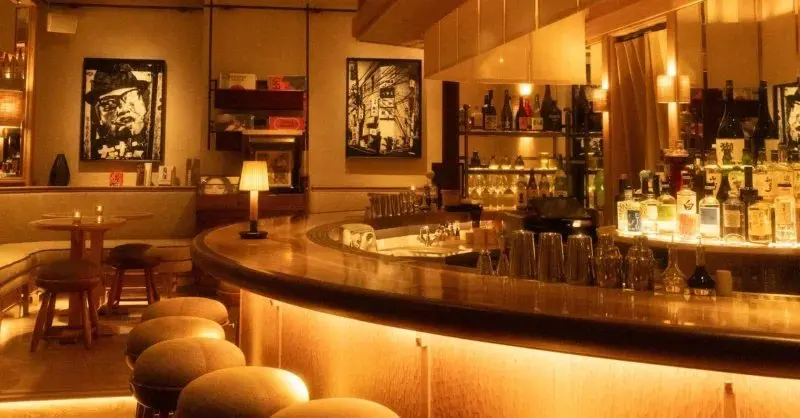
As for where to drink: Tokyo remains the gold standard, particularly bars focused on regional or aged bottles. In New York, experts rave about the list at Sushi Nakazawa, while Wong's personal pick is Yagi Noodles in Newport, Rhode Island — a carefully curated selection of nama sake, kept properly chilled. Paris punches hard with La Maison du Saké and EnYaa Saké & Champagne, and Madrid's Shuwa Shuwa, staffed by certified kikisake-shi, runs tastings and courses for anyone wanting to learn. In London, the consensus spot is Kioku Bar inside Raffles at The OWO, where 'Sake Samurai' Natsuki Pim built the list and sommelier Anthony Yukio hosts.
Why care? A sake-focused detour — whether a dedicated bar in Paris or a pilgrimage to Yamagata breweries — adds real depth to a Japan trip or an evening in any of these cities, and the bottles travel home well too. This is a solid primer before you book.