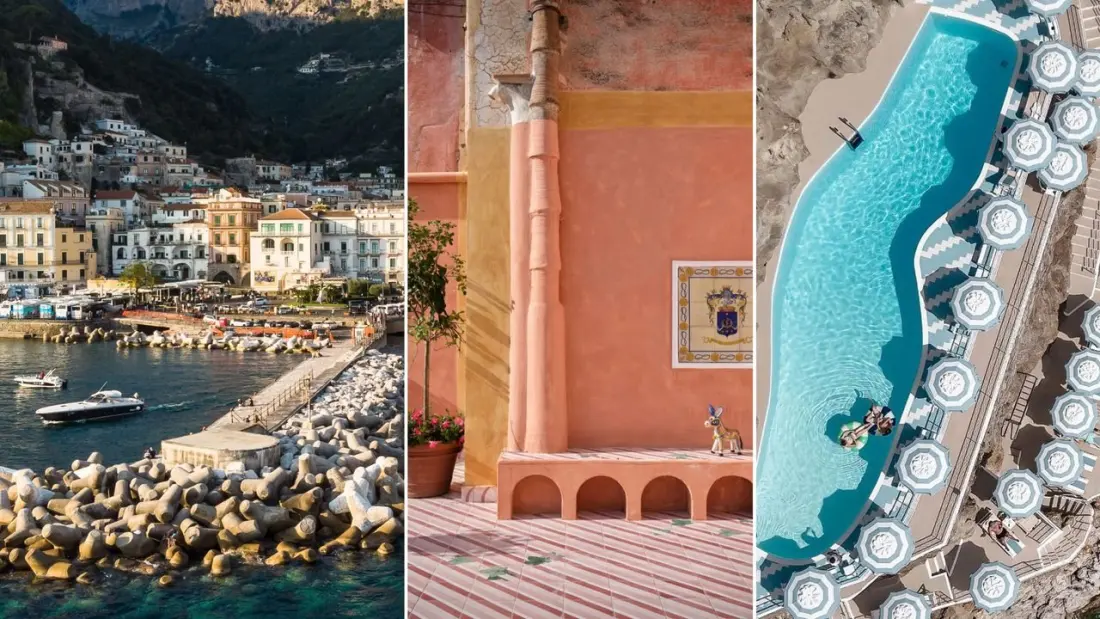
The Amalfi Coast needs little introduction: 30-odd miles of Italy's Campania coastline, stacked with cliff-hugging towns, lemon terraces and Byzantine-Arab architecture, and a UNESCO listing all of its own. But the case for visiting in spring or early fall is getting stronger — the weather holds, festival season kicks in, and the day-trip crowds that flood Positano and Amalfi thin out enough to let the place breathe.
The drive in from Naples is famously dramatic, hairpinning through the forested Lattari Mountains past chestnut woods, olive groves and lemon gardens before the sea appears. Locals will tell you the landscape itself is the region's most important monument — but there's more depth here than views alone. Amalfi was one of Italy's four Maritime Republics alongside Venice, Genoa and Pisa, a heritage still celebrated each May with a regatta of traditional galleons. Its papermaking tradition goes back to the Middle Ages, and the Museo della Carta, set in a 13th-century paper mill, is a genuinely worthwhile stop — La Scuderia del Duca nearby sells handmade paper that doubles as a souvenir.
Getting around is easier without a car. The SITA SUD bus, ferries between towns, and taxis spare you Italy's notoriously narrow mountain roads. Walkers should aim for the Path of the Gods, a 4.3-mile former shepherd's trail ending above Positano, with a descent of 1,700 stone steps into town. In Ravello — the so-called jewel in the crown, where Wagner composed and the Bloomsbury set held court — Villa Cimbrone's Terrace of Infinity, nearly 1,200 feet above the sea, is the viewpoint worth the climb.
Food is a core reason to come. Da Nonno Alfonso in Ravello is widely considered the best pizza outside Naples; Cetara's Acquapazza celebrates the town's anchovies and colatura fish sauce; Lo Scoglio da Tommaso in Nerano serves fish and produce from the family's own farm. For dessert, Pasticceria Pansa in Amalfi does the classic lemon-cream delizia al limone. Vietri sul Mare, on the eastern edge, still buzzes with centuries-old ceramics workshops.
Hotels range from the grand to the quietly secluded: Caruso, a Belmond property built into an 11th-century palace in Ravello, has one of the coast's most photographed infinity pools; the pink Palazzo Avino next door pours 100 kinds of martinis at sunset; Monastero Santa Rosa is a converted 17th-century convent with just 20 rooms. In Positano, Le Sirenuse is an institution — even without a room, Franco's Bar makes a fine aperitivo stop — and its new beach club, Le Sirenuse Mare, is worth a boat arrival and a full day. If privacy is the goal, the private island of Isca near Positano can reportedly be rented outright.
For travellers who want the Amalfi Coast without the July crush, the shoulder seasons deliver: easier bookings, working kitchens, local festivals, and lanes and courtyards you can actually explore rather than shuffle through.
Story via Condé Nast Traveler.