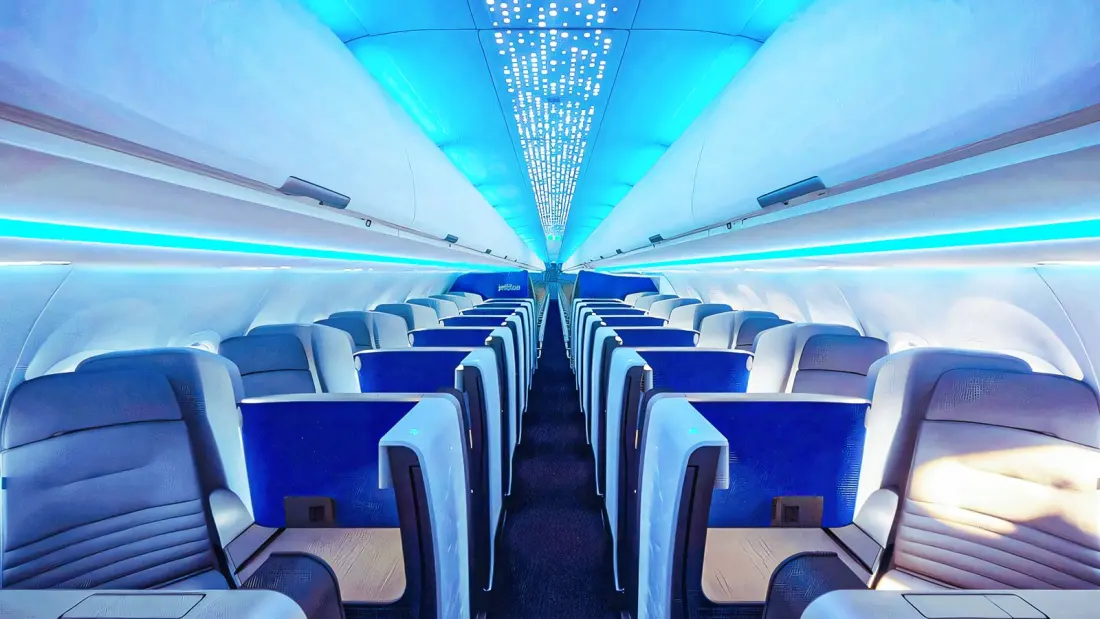
Book a Mint business-class seat on JetBlue's transatlantic A321LR and you'll find one pod permanently off-limits. The cabin physically contains 24 suites, yet only 23 ever show up for sale. The missing one, seat 12A, has a job that has nothing to do with passengers: it's where a relief pilot sleeps mid-Atlantic.
The A321LR is JetBlue's bet on connecting New York and Boston with European cities using a narrow-body jet instead of a widebody. That works commercially because the aircraft is efficient on thinner routes, but the longer flight time means a standard two-pilot crew can't legally cover the whole trip. Enter the augmented crew: a third pilot comes along and rotates between the flight deck and a rest period. Rather than install a dedicated crew bunk, JetBlue designates one of its own lie-flat Mint suites as the rest spot, curtained off from the cabin.
There's an official framework behind this. FAA rules under 14 CFR Part 117 define three classes of crew rest facility. Class 1 is a proper bunk in a separate compartment; Class 2, which covers JetBlue's arrangement, is a seat that reclines flat or nearly flat, screened from passengers by a curtain that blocks light and some noise; Class 3 is a seat reclining at least 40 degrees with leg support. The class of facility matters beyond comfort — better rest provision can extend the maximum duty period an airline is allowed to plan, which is why regulators require approval of the setup before it's used.
JetBlue isn't unusual here. United reserves four extra-reclining economy seats on some Boeing 767s (often rows 43 and 44) as flight-attendant rest spots on long-haul routes. Those seats are blocked at booking but can be released to passengers close to departure when a shorter routing doesn't need them — which explains why you might occasionally snag a weirdly roomy economy seat with a leg rest. Labour agreements can add requirements on top of FAA minimums, specifying which seats are reserved and what features they need.
For travellers, the takeaway is simple: a mysteriously unavailable seat on a seat map usually isn't a glitch or a revenue squeeze. It's a sign the flight's crew-rest plan is doing its job. On JetBlue's A321LR, that blocked Mint suite is part of what makes nonstop narrow-body transatlantic service possible at all. If you're booking Mint, you'll get one of the 23 passenger suites, including the larger Mint Studios at the front — just don't expect 12A to ever open up, no matter how far out or last-minute you book.