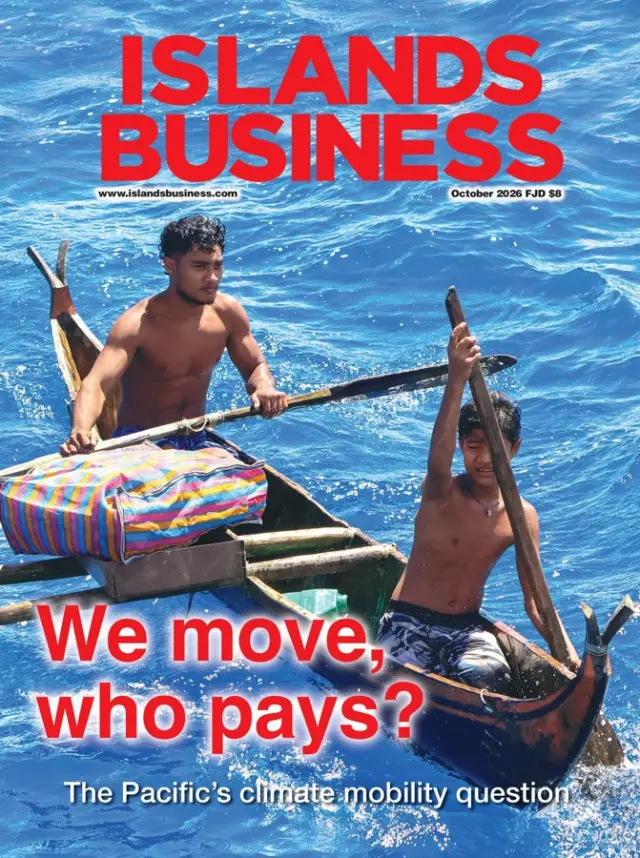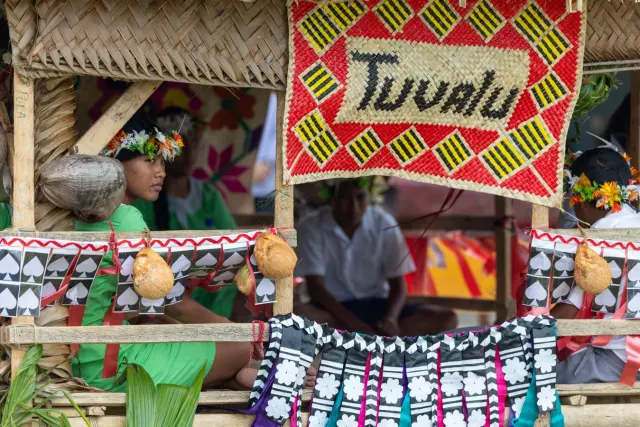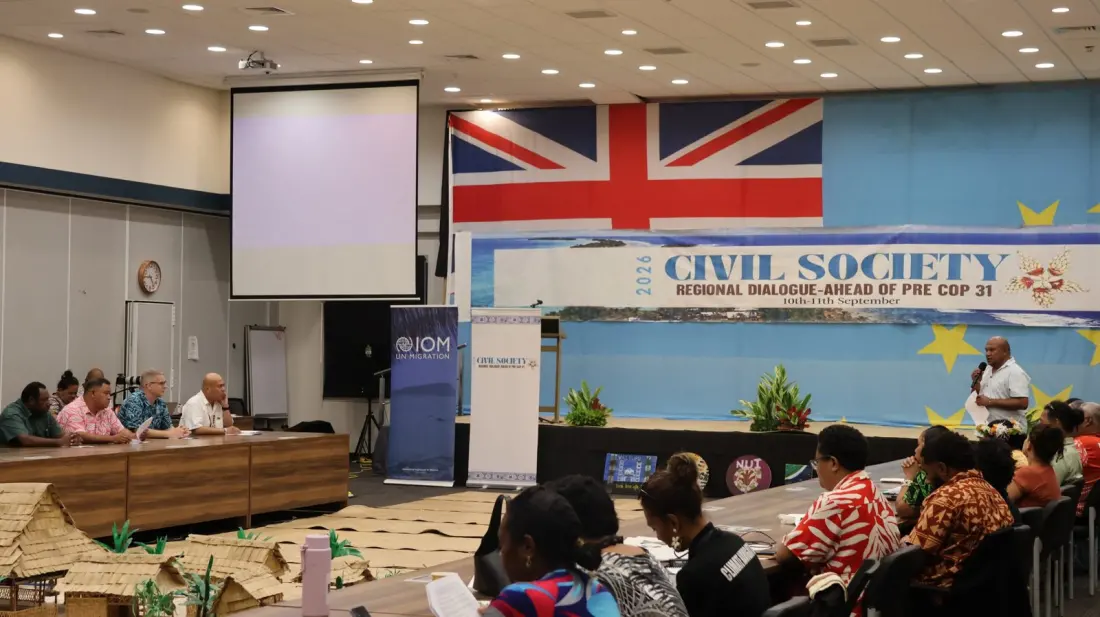
Funafuti, the narrow coral atoll that serves as Tuvalu's capital, hosted a regional gathering in September 2026 that produced one of the Pacific's sharpest statements yet on climate money. The Civil Society Regional Dialogue for Pacific Voices Ahead of Pre-COP31 and COP31 ran on September 10–11, hosted by the Government of Tuvalu and coordinated with UN, migration, church and regional NGO bodies. What came out of it — the Funafuti Call for Climate Justice — is a demand that climate finance actually reach the island communities living with rising seas, rather than getting stuck in bureaucracy or arriving as debt.
The core argument is blunt: climate finance is an obligation owed because of climate harm, not charity. Pacific organisations say money that is promised often turns up late, comes as loans that deepen national debt, or never reaches the people who need it. Small community groups closest to the frontline — those working on outer islands, in maritime villages and informal settlements — face accreditation hurdles, co-financing requirements and reporting burdens that effectively shut them out.
So the statement asks for a rethink of the whole system. That means simpler application, approval, procurement and reporting processes, lower transaction costs, and funding delivered mainly as grants rather than loans. It also wants transparent reporting on what has been committed, delivered and actually spent — and full capitalisation of the Pacific Resilience Facility, a regional fund designed to channel support directly to community-level projects.
Beyond the mechanics, the call covers what the money should fund: locally led adaptation, resilient food systems, water management and disaster preparedness. There's a strong emphasis on loss-and-damage financing, delivered as grants, that recognises losses no cheque can fully cover — ancestral land, cultural identity, traditional knowledge and communities' relationship with the ocean.
After a follow-up Pacific Pre-COP session wrapped in Nadi, Fiji, on October 8, these priorities are now heading to COP31 with the region's negotiators. For anyone who knows the Pacific as a travel destination, the stakes are easy to grasp: places like Tuvalu, Kiribati and low-lying parts of Fiji and Vanuatu are among the world's most climate-exposed, and the viability of their communities — and the cultures that welcome visitors — depends on how this funding fight plays out. Travellers who care about the region have a stake in whether tourism-adjacent infrastructure, water supplies and coastal defences get the support they need.
The statement also makes a point of backing Pacific civil society networks, arguing that local organisations bring knowledge and community experience to global talks that governments and agencies alone can't supply. Whether COP31 delivers on direct access, grant-based finance and a properly funded Pacific Resilience Facility will be the test of whether this call turns into change.
Story via Islands Business.