Premium economy feels like the smart middle option: bigger seat, better food, a fraction of business class prices. Pay cash and that logic holds. Pay with loyalty points and the maths often falls apart.
Take a typical long-haul example. If economy costs $900 cash or 40,000 points, premium economy around $1,600 or 95,000 points, and business $4,500 or 130,000 points, then premium economy gives you the worst return of the three — roughly 1.68 cents per point, against 2.25 cents in economy and 3.46 cents in business. In other words, premium economy costs nearly as many points as business while delivering far less. Given the choice, many travellers would be better off adding the extra points and flying flat.
The general rule among loyalty experts: use cash for premium economy, and spend points on the upgrade from premium to business. That's where the sweet spot sits — the jump in points is usually modest, while the leap in product is huge (lie-flat bed, lounge access, proper dining). Airlines structure upgrades differently — British Airways uses distance zones with peak and off-peak pricing, Virgin Atlantic uses distance bands, Lufthansa prices upgrades partly on how cheap your original fare was, and Air France/KLM, Delta and United all lean on dynamic pricing. On BA, upgrading one-way London to New York from World Traveller Plus to Club World on a peak date costs 30,000 Avios — the gap between the two cabins' reward rates. One catch: buy an upgradable fare, because discounted buckets often aren't.
Virgin Atlantic shook things up in 2024 by letting Flying Club members book any seat with points. Its Saver rates are strikingly low: London to New York from 6,000 points in economy, 10,500 in premium and 28,500 in business one-way; Manchester to Orlando matches that business floor too, while London to Los Angeles starts at 9,000/16,500/40,500. At those entry rates, business can be remarkable value.
There are cash savings to hunt as well. Book return fares rather than one-ways — the discount can be steep. And price connecting itineraries as separate fares: an LA to Auckland flight can be dramatically cheaper when booked alongside an independent San Francisco connection, even on the same airline and planes. It doesn't always work, but checking takes seconds.
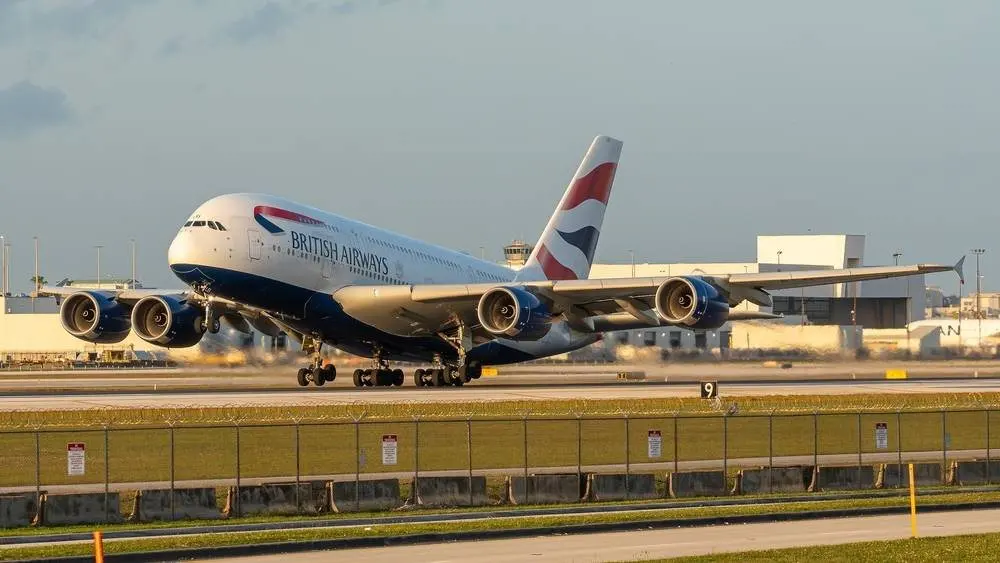
Why does premium economy occupy such an awkward rewards position? Partly by design. Airlines built it as a deliberate third tier to capture economy passengers willing to pay more — while capping how good it can get so business class passengers don't trade down. The fleet numbers show where the strategy is heading: British Airways' retrofitted A380s will go from 55 to 84 premium economy seats and from 97 to 110 business seats, while economy drops by 88 seats to 215. Premium economy is expanding at economy's expense, not business's.
For anyone sitting on a points balance, the takeaway is simple: skip the economy-to-premium upgrade, consider cash for the premium ticket, and save your points for the cabin where they actually stretch.