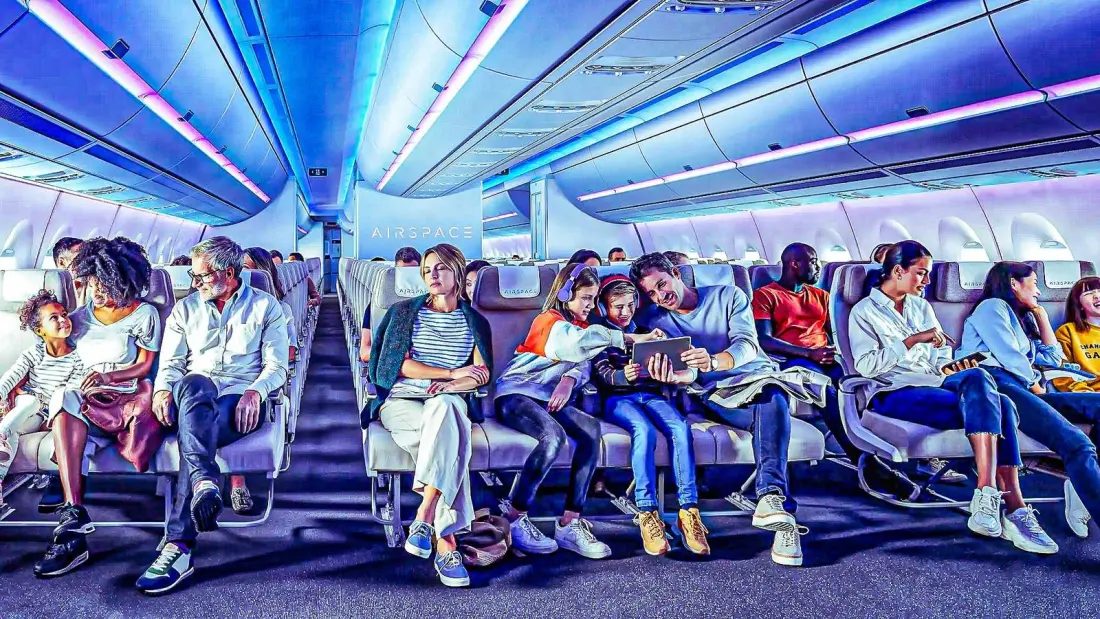
Step aboard an Airbus A350 and something feels off — in a good way. The ceiling seems higher than expected, the windows are unusually large, and the background roar is faint enough that you can hold a conversation without raising your voice. That is no accident. Airbus shaped the aircraft's interior around passenger wellbeing from day one, then wrapped it in its Airspace design language, and the result has quietly become the benchmark for what a modern long-haul cabin should feel like.
The core trick is the fuselage itself. Originally dubbed the XWB — eXtra-Wide-Body — the A350 is built from carbon-fibre composite, which allowed engineers to sculpt a wider oval cross-section with flat sidewalls. That translates into extra shoulder room at seated eye level, which airlines can spend on wider seats, broader aisles or bigger armrests. Pair that with pivoting overhead bins, lower cabin altitude, higher humidity and mood lighting designed to ease jet lag, and even a ten-hour economy seat feels less punishing than on older jets.
For premium travellers, the geometry is a gift. The wide shell comfortably accommodates 1-2-1 business-class layouts with direct aisle access and long beds that don't feel compressed. Airbus's New Production Standard adds roughly four inches of usable cabin width, and carriers are already using it for door-equipped suites and roomier premium economy. Qantas is fitting its A350-1000ULRs with first suites and a dedicated wellbeing zone for Project Sunrise flights, while SWISS has launched its four-class SWISS Senses concept, complete with enclosed first-class suites, on the type.
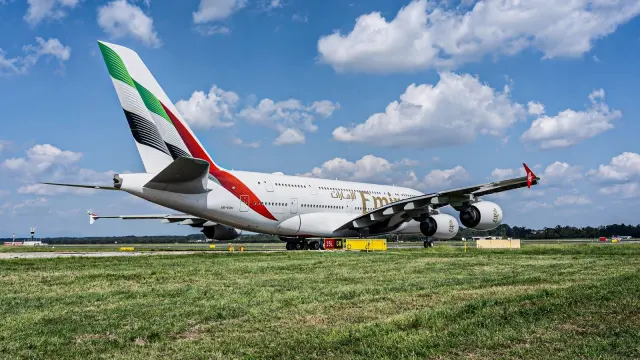
The aircraft is no niche product either. Around 730 A350s were flying with roughly 40 operators by summer 2026, led by Singapore Airlines, Qatar Airways, Cathay Pacific, Air France and Delta, with orders topping 1,400. IndiGo, Riyadh Air and Emirates are among those adding the type, and an A350F freighter is on the way. Rolls-Royce Trent XWB engines deliver double-digit fuel savings over older widebodies, which is why airlines keep stretching the platform's reach — passenger variants can fly well beyond 8,000 miles with 300 to 380 seats aboard.
Why should a holidaymaker care which metal takes them across the ocean? Because the aircraft you book shapes the flight more than most people realise. If your search results show an A350 on your route — check the equipment code A359 or A35K — you're likely to get a quieter, less fatiguing ride, bigger windows and a better shot at a modern lie-flat business seat than on an older 777 or A330. On ultra-long routes, that difference is very real.