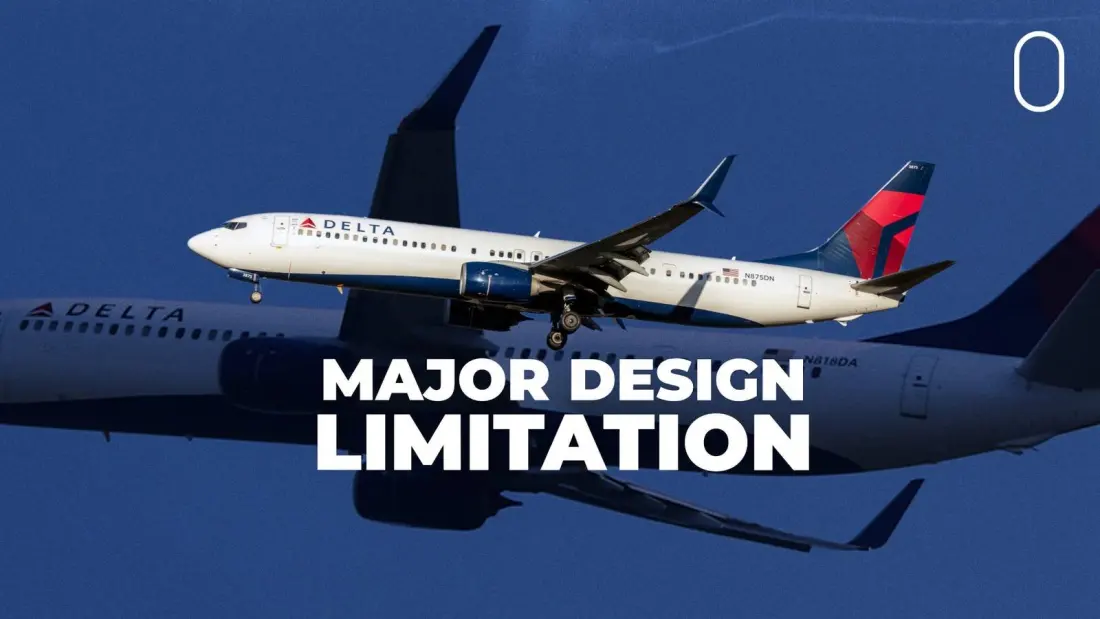
If you have ever been seated at the back of a Delta, United or Korean Air 737-900ER and wondered why the takeoff roll seems to stretch on forever, the answer comes down to a design compromise Boeing accepted when it stretched one of the world's most common jets to its limits.
The 737-900ER is the largest and heaviest version of the Next Generation 737 family. Boeing built it for one purpose: to carry a payload approaching that of the legendary 757 — often more than 200 passengers — while keeping the economics, gate compatibility and pilot type ratings of the standard 737. For airlines, that was the selling point. Crews already qualified on smaller 737s could fly it without retraining, and the aircraft could use the same gates and maintenance infrastructure as the rest of the fleet.
The catch is physics. The 737's basic design dates back to the 1960s, and Boeing's repeated stretches have pushed a fuselage designed for a much smaller plane onto wings and engines that were never meant to lift this much weight. The ER variant added extra exit doors and more fuel capacity to extend range, making it heavier still. With more mass relative to wing area than any of its siblings, it needs a longer run and higher speed to generate enough lift — hence that noticeably extended takeoff roll that leaves passengers in row 30 watching the runway markers tick past.
For the most part, this does not affect safety. Performance calculations are done for every flight, airports assign aircraft to gates and runways they can handle, and airlines routinely operate the type from shorter strips in summer heat. What it does affect is the passenger experience: performance-limited takeoffs on warm days or short runways can mean lower climb angles, reduced initial cruise altitude on some sectors, and the occasional fuel stop when the plane is fully loaded and the route is at the edge of its range.
Why should a traveller care? Because an increasing number of airlines use the 737-900ER — and its successor concept in the 737 MAX 9 — on medium and long-haul narrowbody routes that used to be the domain of roomier widebodies or the 757. If you are booking a transcontinental US flight or a hop across the Pacific to Hawaii, knowing that a 737-900ER departure means a long runway roll and potentially tighter seating helps you pick your seat (and your expectations) accordingly. It is a capable aircraft; it is just one carrying a lot more airplane than its wings were originally asked to handle.