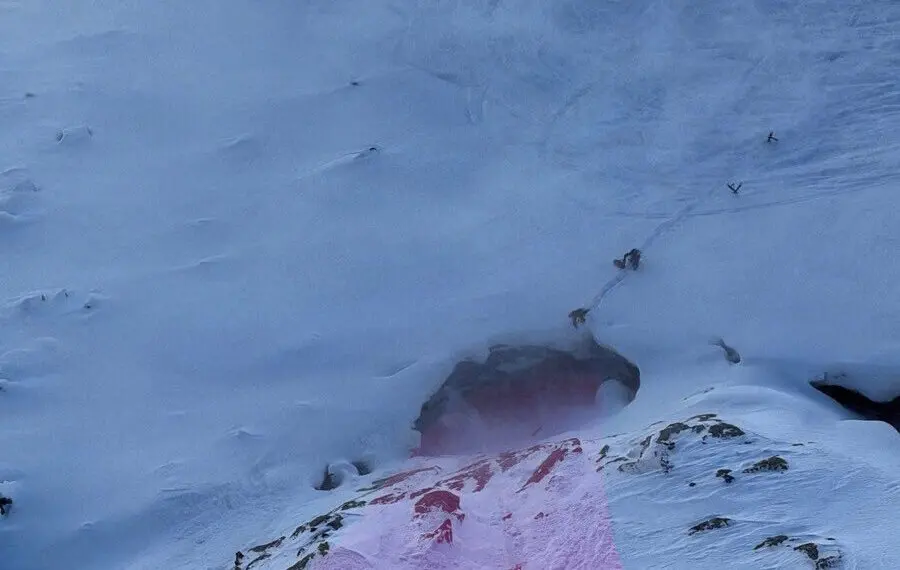
An American skier died in the Austrian Alps last weekend after triggering a slab avalanche so small it barely registered — yet it still proved fatal. The victim was off-piste below East Daunkogel Peak at Stubai Glacier resort, which opened on October 9. He left the snow-covered glacier for a steeper, rocky slope, broke a thin crust of unstable snow, and was carried roughly 50 metres into an open bergschrund, falling another 20 metres. Other skiers witnessed it and raised the alarm, but he was dead by the time rescuers reached him. Police said the slab was just 10–30cm thick and the slide 25 metres wide.
The tragedy is Europe's first avalanche fatality of the new season, and it lands against grim context. The European Avalanche Warning Service recorded 151 avalanche deaths across Europe last season, the worst toll since the 'Winter of Terror' of 1951 and the 13th deadliest year on record. Most of those deaths were in the Alps: 40 in Italy, 35 in France, 33 in Austria and 18 in Switzerland. Better safety standards since the 1950s haven't offset a huge rise in the number of people heading into the mountains.
Why did such a minor slide kill someone? The conditions were classic early season. Fresh snow had fallen on verglas — smooth, glacier-polished ice — over rock, with no time to bond. The slope faced northeast at nearly 3,000m, where short autumn days mean snow barely settles, and wind had crusted the surface over loose powder. The real killer was terrain: a crevasse lying directly below turned a survivable slide into a fatal fall, a textbook 'terrain trap.' Early-season glacier skiing looks benign because the snowpack is thin, but that thinness brings its own hazards — icy ground, open crevasses after a dry summer, and slabs that shear off easily.
Good news is arriving from the sky, though. Heavy snow is falling across the Alps this week, letting most major resorts open this weekend. Backcountry options improve too, but the avalanche report from Tirol shows conditions remain volatile: moderate risk (2 of 5) in France, a considerable 3 of 5 in Switzerland, and low risk in Austria.
The takeaway for anyone booking an early-season Alpine trip: don't read a thin snowpack as a safe one. Glacier resorts like Stubai offer reliable October skiing, but off-piste terrain there demands glacier awareness, crevasse judgement and respect for unstable crusts. If you're not trained for it, stick to marked pistes — which are more extensive by the week as the season proper gets underway.