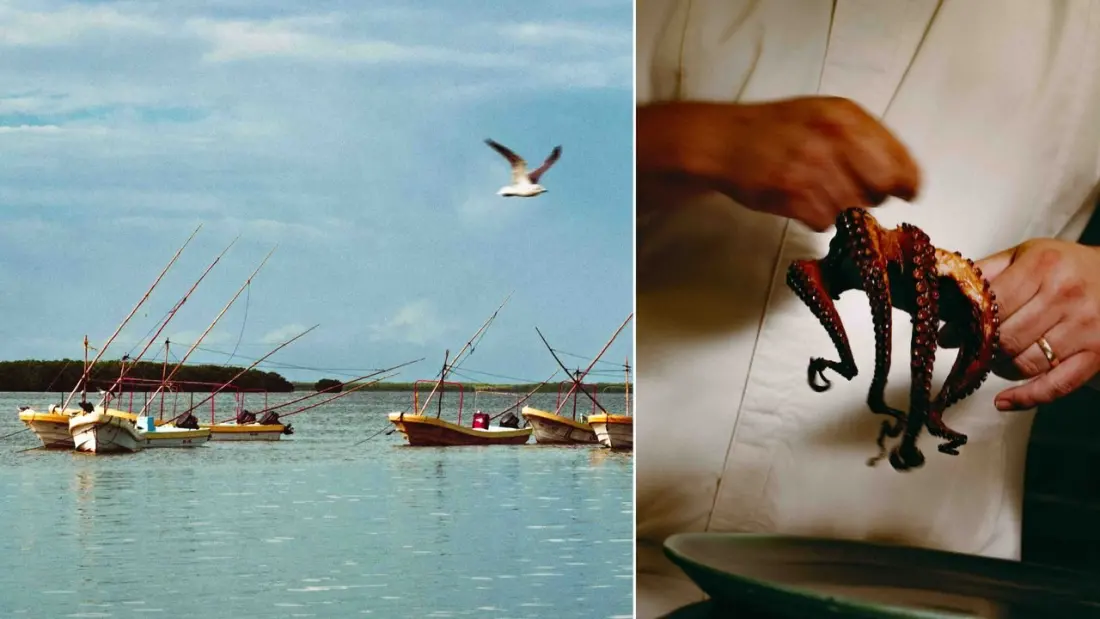
Twenty minutes by skiff from the sleepy fishing town of Río Lagartos, on Mexico's northern Yucatán coast, 55-year-old captain Limberth Orlando Alcocer Diaz is tugging lines into bathtub-warm water, hoping to pull up octopus maya — a small, coral-red species found only in this part of the Gulf of Mexico. A recent Condé Nast Traveler writer joined him at sea, along with chefs from luxury hotels including Maroma, a Belmond property about three hours away, to trace exactly where the grilled pulpo on Riviera Maya menus comes from.
What makes this fishery interesting isn't just the catch — it's the method. Local fishermen use "jimbas": two lengths of bamboo with bait lines dangling below, baited with live crab or lobster. It's a technique with Maya roots stretching back centuries. Only male octopuses take the bait, because females stay guarding their eggs in caves, refusing to eat until they die after the eggs hatch. The animals live just a year, so fishing is strictly limited to August 1 through December 15 — the "veda" bans it the rest of the year to let populations recover. On a good day, a fisherman might land 50 kilos; last season saw hauls of 70–80.
The system is reinforced by Pesca Con Futuro, an organisation founded eight years ago by biologist Citlali Gomez Lepe that links more than 60 Mexican fisheries with chefs and hotels — sourcing Gulf shrimp, Baja red lobster and Michoacán trout, among other products. Big culinary names like Gabriela Cámara use it, and at Maroma, menus now flag sustainably sourced dishes. The logic, as one fisherman put it over lunch: if you take everything today, there's nothing left tomorrow — or for the families who depend on the water.
It's not all rosy. Fishermen report illegal night diving during the closed season, chemical squirting into octopus caves, overharvested sea cucumbers bound for China, and warming waters that push octopuses into deeper seas — the species dies above roughly 80 degrees Fahrenheit. Climate pressure is real.
For travellers, the takeaway is simple: your dinner order matters here. Eating in-season seafood, asking where it came from, and trying the local specialty — pulpo rojo at El Perico Marinero in Río Lagartos, where battered, fried octopus is tossed with lime, onion and jalapeño — supports the co-ops doing it right. And Río Lagartos itself is worth the trip beyond lunch: it's the gateway to a biosphere reserve famous for flamingo colonies and pink salt lagoons, a world away from the Cancún crowds.