Pakistan has quietly become the first country in the world to formally close its airspace to Taiwanese carriers, citing Beijing's One China policy. Defence minister Khawaja Asif confirmed the move to Bloomberg News, saying the aviation division permits overflights only by mainland Chinese airlines.
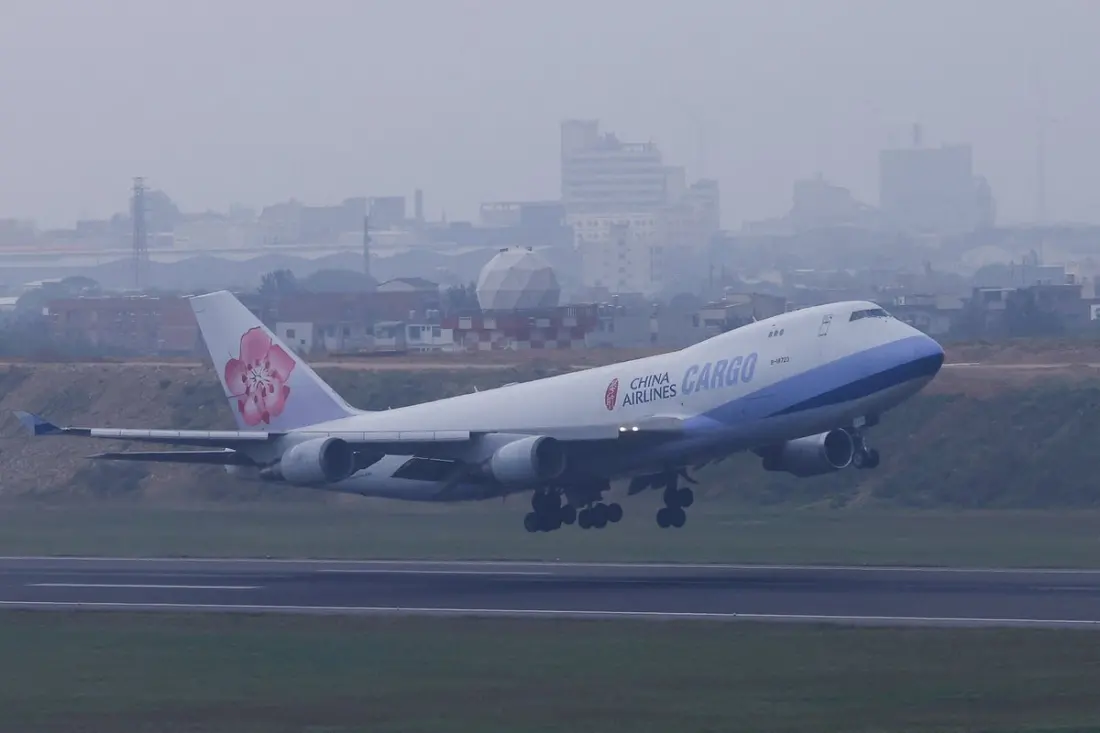
The change had already been visible in flight-tracking data before Islamabad said anything publicly. Since late October, Taiwan's China Airlines has been routing some Taipei–Europe services entirely over Russia instead of the shorter path through India, Pakistan and Turkmenistan — a Rome-bound flight on 24 October was among the first spotted on the detour. At least a dozen Asia–Europe flights have taken the longer routing since the weekend the shift began.
The situation stacks up awkwardly for Taiwanese carriers. They already cannot overfly mainland China for political reasons, and now a key stretch of the South Asian shortcut is off-limits too. Russia's airspace remains technically open, and while most Western and Asian airlines have avoided it since February 2022, Taiwan's airlines are among the few still using it — in this case out of necessity rather than choice.
Why Pakistan, and why now? Islamabad was among the first countries to establish ties with the People's Republic of China in 1951, and the two governments describe their relationship as an "all-weather" partnership. Unlike the US and most major economies, which maintain unofficial relations with Taipei, Pakistan keeps its engagement with Taiwan minimal and has repeatedly endorsed Beijing's position — most recently on 2 January, when its foreign office called Taiwan an "inalienable part" of China.
The One China principle is Beijing's baseline condition for diplomatic relations: that there is a single China, that Taiwan falls within its territory, and that the PRC is its only legitimate government. Taiwan's democratically elected government — representing some 23 million people — rejects the sovereignty claim and functions as de facto independent, but only 12 countries, mostly small states such as Belize and Tuvalu, formally recognise Taipei.
For travellers, the practical effect is longer flight times on Taiwan–Europe routes, since the detour over Russia adds distance compared with the subcontinental corridor. Anyone booking with China Airlines or EVA Air between Taipei and European cities should factor in potentially extended schedules, and keep an eye on how routings evolve. The story is also a reminder of how quickly geopolitics can redraw flight paths: airspace closures driven by diplomatic positioning can add hours to journeys with little warning, which matters for connections, arrival times and even fare levels on affected routes.
The Independent reports it has contacted Taiwan's Civil Aviation Administration for comment, so carriers' official responses — and whether more Taiwanese flights shift to Russian routings — remain to be seen. For now, Pakistan's decision stands as the first explicit airspace ban tied directly to the One China policy.
Story via The Independent Travel.