Most travellers passing through the West Midlands head straight for Birmingham and never look back. Wolverhampton — a city of just under 290,000 people about 20 minutes away by train — makes a strong case for slowing down. Founded as a market town in 985 AD, it pairs a compact, walkable centre with a genuine arts scene, centuries-old buildings and a surprising amount of green space, all without the crowds you'd fight in London or even Brum.
Art comes first here. The Wolverhampton Art Gallery, opened in 1885 in a building that once housed the School of Art, is free to enter and spans 500 years of work, with rotating shows that have included Black Art collections, Pop Art and, in 2026, a months-long exhibition dedicated to Andy Warhol. For live culture, the Wolverhampton Arts Centre keeps an intimate vibe — standing gigs cap out at 250 people — and locals swear by its acoustics. It also runs craft workshops, seasonal events and the city's annual beer festival.
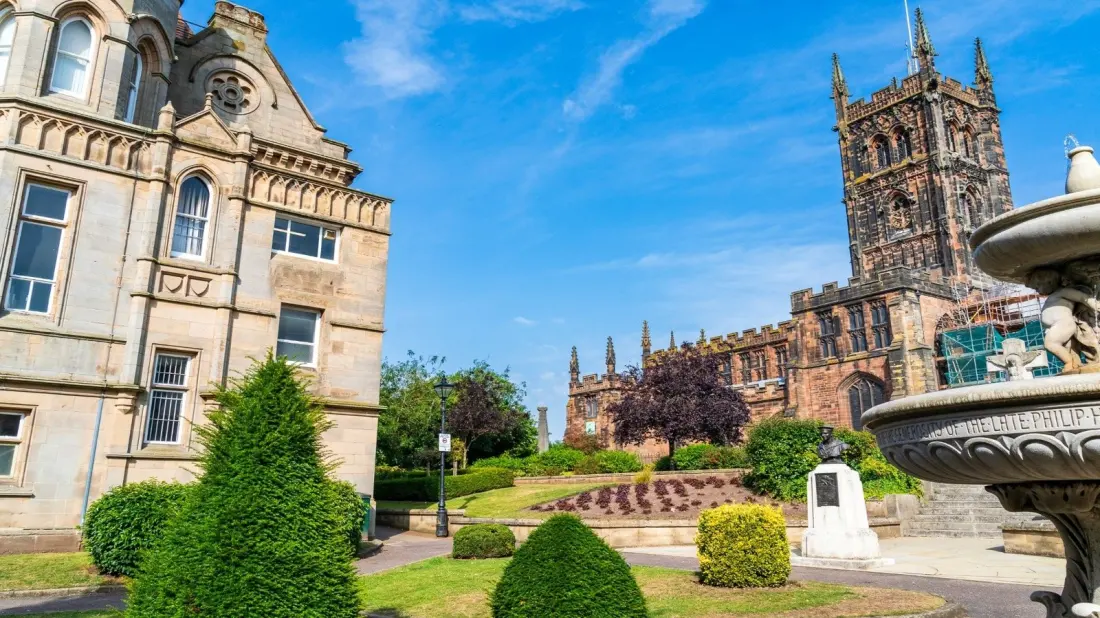
History is easy to reach on foot. St Peter's Collegiate Church, a Grade I-listed red sandstone building first constructed just nine years after the city's founding, holds carved stone figures, a 17th-century west gallery and a column carved in the 800s that stands 14 feet high. The Bantock House, meanwhile, tells the story of its family through period rooms filled with decorative glass, locally made enamels and jewellery.
Then there's the green side. The Smestow Valley Local Nature Reserve covers more than 120 acres and is the area's first nature reserve of its kind — a wildlife corridor with ponds, badgers, crested newts and even the nationally scarce digger wasp Lestiphorus bicinctus. You can hike, cycle, canoe or birdwatch, and there's a cafe and heritage centre on site. Closer to the centre, West Park is a Victorian gem with a boating lake, tennis courts, chalet tearooms, a conservatory and flower beds; look out for the glacial erratics scattered along the paths, remnants of the Ice Age dropped long before the park existed.
Logistically, it couldn't be simpler. Wolverhampton sits about halfway along the route between Liverpool (90 miles northwest) and Stratford-upon-Avon (50 miles southeast), with Birmingham just 30 minutes by car or 20 by train. Birmingham Airport is the nearest major gateway, and given the city's pedestrian-friendly layout and the region's solid public transport, there's little reason to hire a car unless you're planning day trips. Stafford, with its castle ruins and scenic trails, is an easy add-on, as is Stoke-on-Trent, 17 miles away and famous for pottery and a growing food scene.
This one is for travellers who like their city breaks low-key: culture and history within walking distance, proper parkland to decompress in, and none of the queues. If Birmingham already feels like an underrated alternative to London, Wolverhampton is one step quieter still.
Story via Islands.