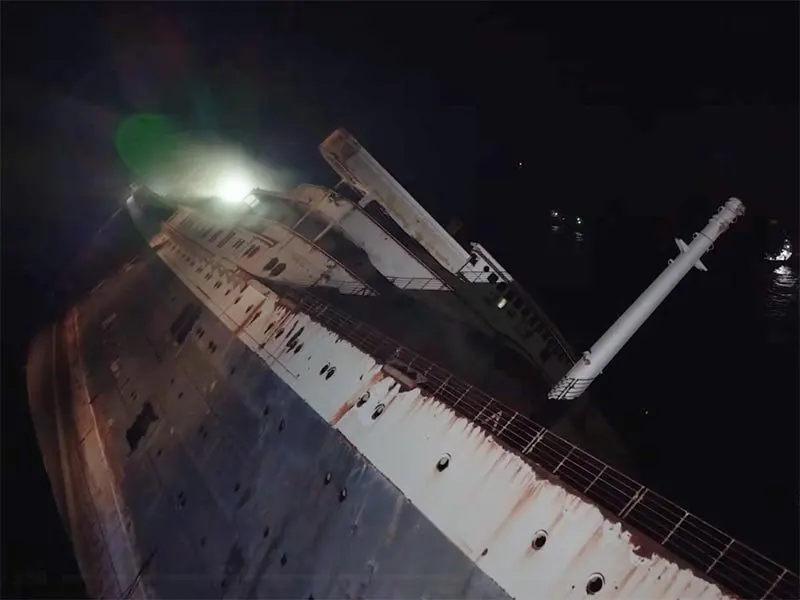
The SS United States, the legendary ocean liner that held the record for the fastest transatlantic passenger crossing, now rests on the floor of the Gulf of Mexico off Destin-Fort Walton Beach in Florida — deliberately sunk to become the world's largest artificial reef.
The assisted sinking took place on a Wednesday evening, and it ran far slower than planned. Contractors began flooding the hull at 1:00 PM CST, expecting the whole job to take about 45 minutes once it started. In the end, the operation stretched to roughly ten hours, with the ship finally slipping beneath the surface around 10:30 PM CST. The timing was also pulled forward a day from the original Thursday slot because of the weather. Okaloosa County, which financed and organized the entire project, hosted a live viewing party at AJ's Seafood and Oyster Bar in Destin, and the sinking streamed live on YouTube.
The ship's path to the seabed was a long one. Launched in 1952 to run the New York–England route, the vessel has been out of service since 1969 and still holds the Blue Riband for the quickest transatlantic crossing by a passenger liner: 3 days, 10 hours and 40 minutes. After nearly three decades docked at a pier, a rent dispute between its owners and the pier's administrators put its future in doubt. The SS United States Conservancy cared for it for 13 years, trying to save it from the scrapyard, before Okaloosa County bought the ship in August 2024.
Two years of preparation preceded the sinking. Crews emptied all 128 fuel and lubricant tanks, removed other hazardous materials, and cut strategic openings into the hull and decks so the vessel would flood and settle properly. Some of its most recognisable features were saved rather than submerged — the two six-story funnels were removed beforehand and will be preserved for a future museum.
So what happens now? County officials expect the wreck to become a dual draw: a magnet for marine life and a headline dive site. Artificial reefs like this tend to colonise quickly, attracting fish, coral growth and, in turn, the divers and anglers who follow them. For Destin-Fort Walton Beach, which already markets itself on fishing and watersports, the liner adds a one-of-a-kind underwater landmark that few destinations anywhere can match. Divers will need training and suitable certification for deep wreck dives, and it will take time for marine life to establish — but the prospect of swimming through a 1950s record-breaker is a rare hook. Even non-divers have a reason to follow the story: the preserved funnels point to a shore-side museum, and the tale of America's flagship liner getting a second life is a compelling one in its own right. Trips to see the reef by boat are likely to become part of the local charter scene as the site develops.